
I’ve always believed a truly great baked potato starts with the right technique, not just the toppings. Getting that perfect balance of crispy skin and fluffy interior takes a bit of know-how, but the results are worth it. Whether you’re making it for a weeknight dinner or a special occasion, there’s a method to elevate this classic dish. Let’s break down what makes it stand out and how you can achieve it at home.
Recipe
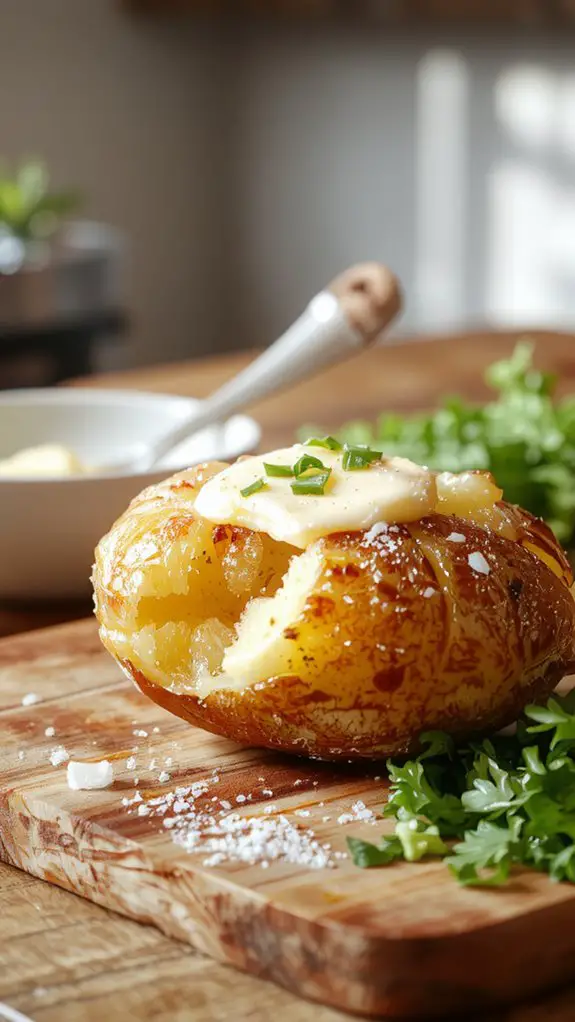
Let’s be honest: a baked potato done right is *chef’s kiss* perfection. Crispy skin that crackles with every bite, fluffy insiders that practically melt in your mouth, and the endless topping possibilities make it a meal that’s both simple and spectacular.
This recipe? It’s my go-to for a reason—it’s foolproof, customizable, and downright delicious.
The key is in the technique: scrubbing the potatoes to perfection, coating them with a bit of olive oil and salt for that irresistible crunch, and baking them low and slow until they’re perfectly tender.
Whether you’re a butter-and-sour-cream traditionalist or a loaded-potato enthusiast, this method guarantees a restaurant-worthy result every time. Trust me, once you try this, you’ll never settle for a mediocre baked potato again.
Ingredients
The key to a perfect baked potato lies in simplicity and quality. Start with the right potatoes—those with a high starch content, like russets, yield a fluffy interior and crispy skin.
Don’t skimp on the oil or seasonings; they transform a humble spud into a crave-worthy dish. Here’s what you’ll need:
- Russet potatoes: Their starchy flesh bakes up light and fluffy. Pro tip: Avoid waxy varieties like red or new potatoes—they’re better for boiling.
- Olive oil or avocado oil: Coating the skins creates that irresistible crispiness. Vegetable oil works too, but olive oil adds a richer flavor.
- Kosher salt: Essential for seasoning the skin and enhancing the flavor. Table salt can be used, but kosher salt sticks better and distributes evenly.
- Butter (optional): Adds richness when melting into the fluffy potato center. For a dairy-free option, try olive oil or vegan butter.
- Toppings (optional): Sour cream, chives, shredded cheese, or bacon bits take it to the next level. Fresh herbs like parsley or dill add a pop of freshness.
Non-negotiable: Don’t skip the oil or salt—they’re the secret to achieving that golden, crispy skin.
Little win: Serve with a sprinkle of flaky sea salt on top for a gourmet touch.
How to Make the Best Perfect Crispy Skin Method
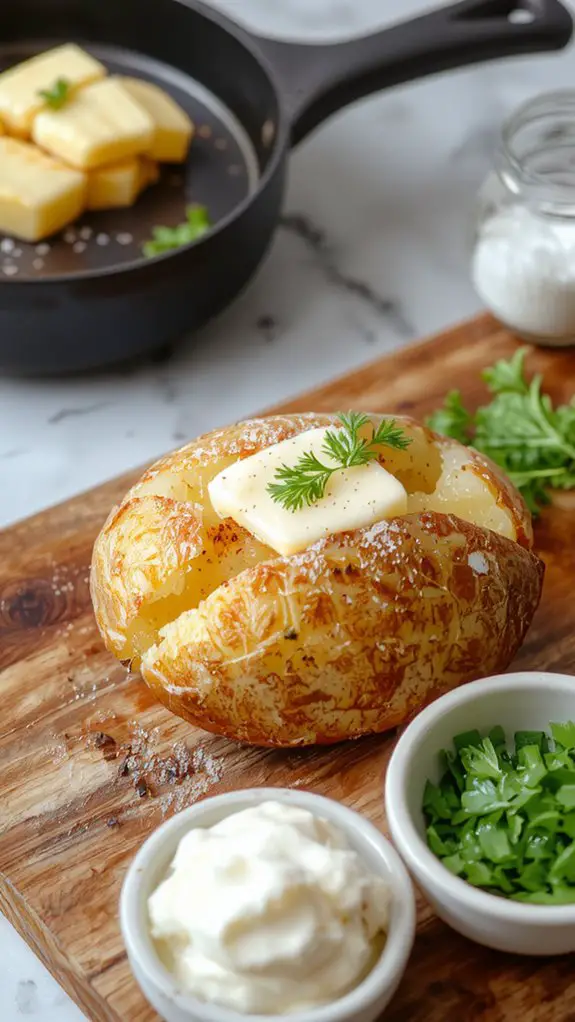
– Preheat your oven to 425°F (220°C) and place a rack in the center. This guarantees even cooking and helps achieve that crispy skin.
*Pro Tip:* Adding a baking sheet on the rack below can catch any drips and make cleanup easier.
– Scrub the potatoes thoroughly under cold water to remove dirt. Dry them completely with a clean kitchen towel—moisture on the skin can prevent crispiness.
*Watch-Out:* Skipping this step can lead to soggy skin, so take the time to dry them well.
– Poke the potatoes several times with a fork. This allows steam to escape during baking, preventing them from bursting in the oven.
*Why It Matters:* Without venting, steam buildup can cause messy explosions.
– Brush the skins lightly with olive oil and sprinkle generously with coarse salt. The oil helps crisp the skin, and the salt adds flavor and texture.
*Pro Tip:* For extra flavor, you can rub the skins with minced garlic or herbs before adding oil.
– Place the potatoes directly on the oven rack (or on a baking sheet if you prefer). Leaving space between them secures proper air circulation for even cooking.
*Visual Cue:* The skin should turn golden and feel dry to the touch when done.
– Bake for 45–60 minutes, depending on the size of the potatoes.
Test doneness by inserting a skewer or fork—it should slide in easily with no resistance.
*Flexibility:* Larger potatoes may take longer, so adjust the time as needed.
– Let the potatoes rest for 5–10 minutes after removing them from the oven. This allows the starches to set and makes them easier to handle.
*Why It Matters:* Cutting into them too soon can cause them to crumble or lose moisture.
– Slice open the potatoes and fluff the insides with a fork. Add your favorite toppings like butter, sour cream, chives, or cheese.
*Pro Tip:* For extra creaminess, warm your toppings slightly before adding them.
Nutrition
Baked potatoes are a nutritious side dish that provides essential vitamins and minerals. Here’s the nutritional information for a medium-sized baked potato with skin:
| Nutrient | Amount (Per 1 medium potato) |
|---|---|
| Calories | 161 kcal |
| Protein | 4.3 g |
| Carbohydrates | 36.5 g |
| Dietary Fiber | 3.8 g |
| Sugars | 1.7 g |
| Fat | 0.2 g |
| Vitamin C | 28% DV |
| Potassium | 26% DV |
| Vitamin B6 | 27% DV |
| Magnesium | 12% DV |
| Iron | 6% DV |
Chef Tips
Mastering the perfect baked potato starts with choosing the right spud—look for firm, unblemished russets with even shapes for consistent cooking.
I always scrub the skin thoroughly, then prick it with a fork to prevent bursting. Brushing with olive oil and sprinkling coarse salt enhances crispiness.
Bake directly on the oven rack for even heat distribution, and don’t rush it—low and slow guarantees a fluffy interior.
Let it rest before serving.