Binangkal Recipe
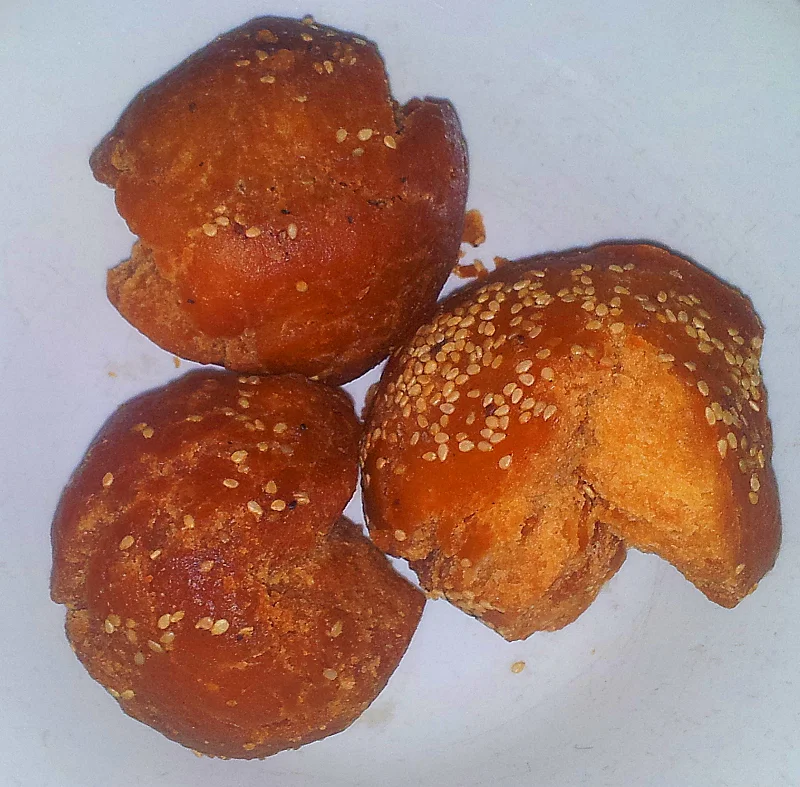
Crispy sesame-coated Filipino doughnuts with a soft, sweet centre. This binangkal recipe uses coconut milk and grated cassava for a rich, tender bite—ready in 30 minutes.
Total time
30 min
Servings
12
Calories
150
Category
Desserts
Binangkal are Filipino sesame seed balls: small, golden-brown fritters with a crisp sesame shell and a soft, lightly sweet centre. This version uses coconut milk and grated cooked cassava alongside all-purpose flour, so the dough comes together quickly and fries to a satisfying crunch. Serve them warm with coffee or as an afternoon snack—they are at their best the day they are made.
Ingredients
Makes 12 servings
- 2 cups all-purpose flour
- 1 cup coconut milk
- 1/2 cup sugar
- 1 tbsp baking powder
- 1/2 tsp salt
- 1 cup grated cooked cassava
- Sesame seeds for coating
- Oil for frying
Method
In a large bowl, mix together the flour, sugar, baking powder, and salt.
Gradually add the coconut milk and mix until smooth.
Fold in the grated cassava.
Shape the mixture into small balls and roll them in sesame seeds.
Heat oil in a pan over medium heat and fry the balls until golden brown.
Drain on paper towels and serve warm.
Cook's notes
- Keep the oil at medium heat, around 165–175°C (330–350°F). If it is too hot the sesame seeds brown before the centre cooks; if it is too cool the balls absorb oil.
- Shape the dough into small, even balls about the size of a golf ball so they fry at the same rate.
- Wet your hands lightly if the dough sticks, and press the sesame seeds on firmly so they stay put in the oil.
- Fry in batches, leaving room between the balls so the oil temperature stays steady.
- Drain on paper towels and serve warm—binangkal is at its crispest shortly after frying.
Easy swaps
- Instead of Grated cooked cassava, use Grated cooked taro or mashed potatoKeeps the soft, starchy centre. Adjust the flour if the mixture feels wet.
- Instead of Coconut milk, use Whole milkUse the same quantity. The result will be a little less rich and coconutty.
- Instead of All-purpose flour, use Gluten-free 1-to-1 baking blendChoose a blend with xanthan gum and let the dough rest for 10 minutes before shaping.
- Instead of Sesame seeds, use Crushed peanuts or desiccated coconutFor a different coating. Crushed peanuts add extra crunch; check for allergies.
Frequently asked
What is binangkal?
Binangkal is a Filipino snack made from deep-fried dough balls coated in sesame seeds. It is slightly sweet, crisp on the outside, and soft inside, and it is commonly enjoyed with coffee or as an afternoon merienda.
Why did my binangkal turn out dense or greasy?
The oil is probably too cool, or the dough is too wet. Keep the oil at medium heat (around 165–175°C / 330–350°F), and add flour a tablespoon at a time if the dough feels sticky before shaping.
Can I bake binangkal instead of frying?
Yes. Place the sesame-coated balls on a lined baking sheet, brush them lightly with oil, and bake at 190°C (375°F) for 18–22 minutes, turning once. They will be firmer and less crisp than the fried version.
Can I make binangkal gluten-free?
Yes. Replace the all-purpose flour with a gluten-free 1-to-1 baking blend that contains xanthan gum, and let the dough rest for 10 minutes before shaping. Check that your baking powder is gluten-free too.
How do I stop the sesame seeds from falling off?
Press the seeds gently into the dough and fry the balls soon after coating. A slightly tacky surface helps them adhere; if the dough is dry, moisten your hands with a little water before rolling.
Can I make the dough ahead of time?
You can shape and coat the dough balls up to 2 hours ahead and keep them covered in the fridge. Fry them straight from the fridge, adding a minute or two to the cooking time.