Blue Ribbon Dill Pickles
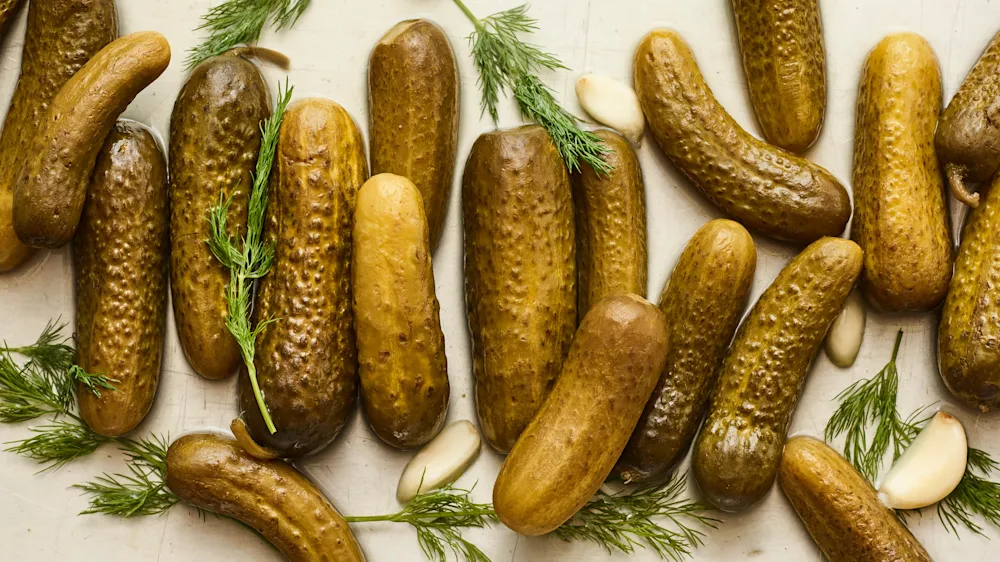
A good friend gave me this recipe many years ago after I munched down nearly a quart while visiting! I threw out ALL my other dill pickle recipes because THIS ONE is the best. Several years ago, it occurred to me to enter my pickles in the County Fair. So I did. Since I'm superintendent over in the Junior Foods & Nutrition Department, I don't get to watch the Open Class judging. So later in the day (after judging in both classes was over), I went to see how my pickles (and other canned goods) fared [pun intended!]. I couldn't find my jar of pickles. They weren't on any of the shelves, neither were they in with the "disqualified" items. Hmmm. Then I spied them! Not only did they have a big blue ribbon on them, but they also received Best of Show AND the canning award! What a thrill!!! There's nothing like winning at the fair--amongst all those good cooks--to feel validated as a successful home-canner. NOTE: I did NOT list an amount for the cucumbers since I've never measured how many pounds I use--sorry! SERVING SIZE is the number of ounces in a quart jar--to facilitate nutritional information.
Total time
90 min
Servings
32
Calories
3.7
Category
Vegetable
Crisp, tangy, and refreshingly crunchy, these Blue Ribbon Dill Pickles are the ultimate summer staple. Perfect for canning enthusiasts or quick-batch lovers, this vegan recipe captures that classic deli-style flavor using fresh cucumbers, aromatic dill, and a perfectly balanced brine. Whether you're serving them at a summer barbecue or adding a punch of flavor to your favorite vegan sandwich, these low-carb pickles are guaranteed to be a crowd-pleaser.
Ingredients
Makes 32 servings
- 7 fresh dill
- 1 cucumber
- 8 1/2 garlic clove
- 2 1/4 water
- 1/2 white vinegar
- pickling salt
Method
GET ALL OF THIS GOING BEFORE FILLING THE JARS.
Wash 7 quart jars in hot, soapy water (or dishwasher), rinse and fill with hot water; set aside.
Fill canning kettle half-full with hottest tap water; set on burner over high heat.
In a medium saucepan, fit lids and rings together, cover with water, bring to a simmer.
In a large saucepan, bring water, vinegar and salt to boil; turn off the heat; set aside.
FILL JARS: place a layer of dill at the bottom of each jar, along with one garlic clove (if used), then TIGHTLY load the cukes into the jar to the NECK of the jar (depending on size you may get two nice layers with a few small cukes in the top--)---squeeze cukes into the jar tightly--uniform size helps; add a few TINY spriglets of dill at the top, too, and another garlic clove if desired.
Once jars are loaded, pour in the brine leaving half-inch head space in each jar.
Add lid and ring to each jar, tightening evenly.
Place jars into canner with water JUST to the necks of the jars.
Bring water ALMOST to a boil (about 15 minutes--depending on how fast it heats up).
Remove jars, set on a dish towel on the kitchen counter, cover with another dish towel & let cool.
Check for seal (indented lid), label jars or lids, store in cool dark cellar or cupboard.
NOTES: When washing/scrubbing cukes, sort them into piles by size. This really helps make your jars look nicer, if you have uniform sizes (and this impresses the judges too!). And makes for easier packing, too.
Cook's notes
- Use 'pickling' or 'Kirby' cucumbers for the best crunch; they are smaller and firmer than regular slicing cucumbers.
- Always use pickling salt (canning salt) rather than table salt, as the anti-caking agents in table salt can make your brine cloudy.
- Add a grape leaf or a pinch of black tea leaves to the jar to keep the pickles extra crisp by inhibiting natural enzymes.
- Ensure your jars are thoroughly sterilized before filling to keep your pickles shelf-stable for months.
Easy swaps
- Missing fresh dill? You can substitute with 1 tablespoon of dried dill weed per jar.
- For a spicy kick, add 1-2 dried red chili peppers or a sliced jalapeño to each jar.
- If you prefer a milder flavor, use filtered water to ensure no chlorine affects the taste of the brine.
- Replace traditional white vinegar with apple cider vinegar for a slightly fruitier, more complex tang.
Frequently asked
How long do I need to wait before eating these pickles?
While you can eat them after 24 hours, the flavors really begin to shine after 2 to 3 weeks of curing in the jar.
Are these pickles vegan?
Yes, this recipe uses only plant-based ingredients like cucumbers, vinegar, water, and spices, making them 100% vegan-friendly.
Can I make these pickles without canning them?
Absolutely! You can make 'refrigerator pickles' by following the recipe, skipping the hot water bath process, and placing the jars directly in the fridge after they cool to room temperature.
You might also like
More Vegetable → Vegetable5.0
Acorn Squash Soup
 Vegetable5.0
Algerian ' Zrodiya Mcharmla' - Carrots With Vinegar
 Vegetable5.0