The Best Homemade Pupusas Recipe
The best homemade pupusas recipe reveals the surprising trick to perfect dough—what’s the secret ingredient you’re missing? Click to find out!
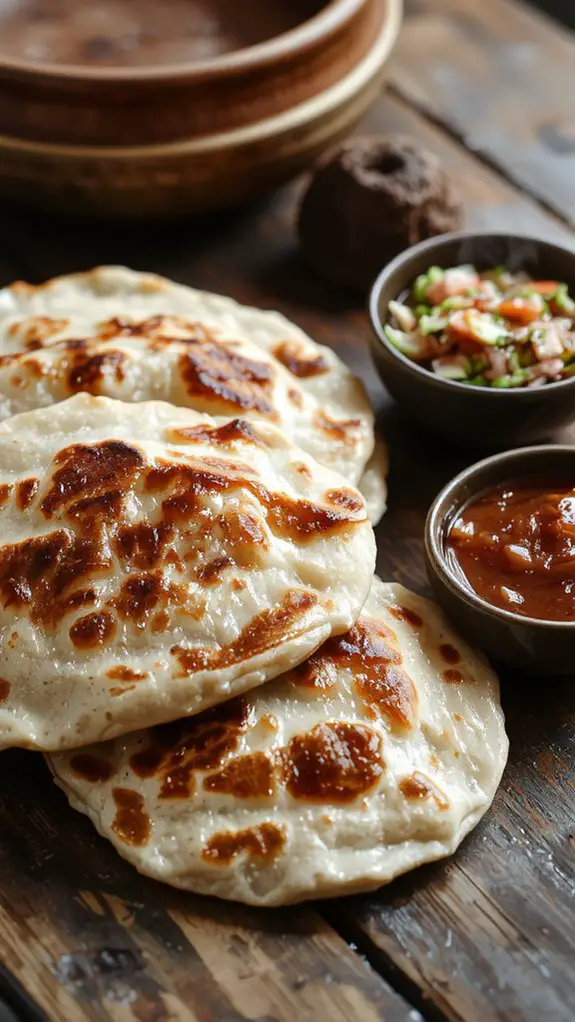
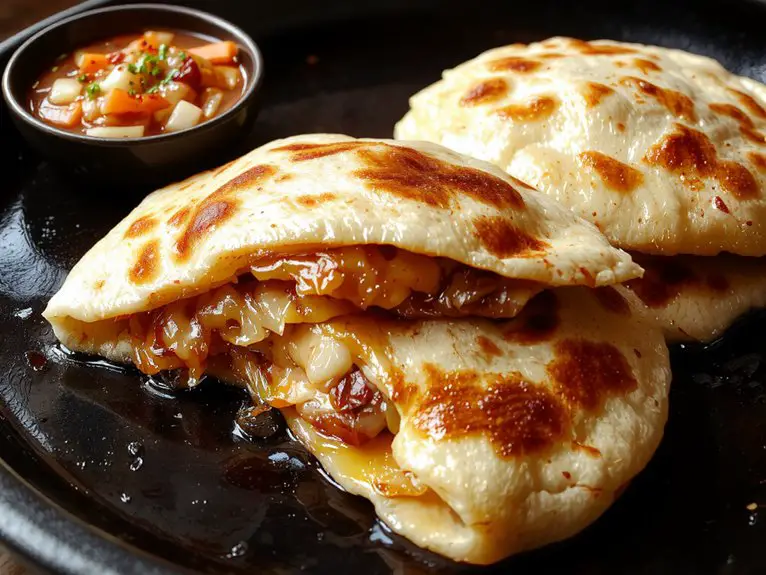
Making homemade pupusas isn’t as hard as you might think, but getting them just right takes a few key tricks. I’ve perfected the balance of masa harina and filling so each bite is soft yet sturdy. The real secret? Letting the dough rest before shaping. If you’ve ever wondered why your pupusas crack or fall apart, the answer might surprise you—and it’s simpler than you’d expect.
Recipe
Get ready to fall in love with the most satisfying, melt-in-your-mouth homemade pupusas you’ve ever tasted—I’ve made these countless times, and they never disappoint. There’s something magical about that crispy-edged, pillowy masa stuffed with gooey cheese and savory fillings, fresh off the griddle.
What makes these extra special? Hand-pressed perfection and a foolproof dough that’s easy to work with, even for beginners. Trust me, once you take that first bite—warm, cheesy, and bursting with flavor—you’ll wonder why you didn’t start making these sooner.
Let’s jump right in and create pupusas so good, they’ll rival your favorite Salvadoran spot.
Ingredients
Mastering pupusas starts with the right ingredients—fresh, simple, and authentic. While flexibility is key for substitutions, there are a few essentials that truly elevate this dish. Let’s break it down so you can craft the perfect pupusa at home, whether you’re a beginner or a seasoned pro.
- Masa harina: This corn flour is non-negotiable—it’s the foundation of pupusas. Look for brands like Maseca for authenticity.
- Water: Use warm water to hydrate the masa dough—it helps achieve the perfect pliable texture.
- Salt: A pinch enhances the masa’s natural flavor—don’t skip it.
For fillings:
- Queso fresco: Traditional and crumbly, this cheese delivers authentic flavor. Sub with mozzarella if unavailable.
- Refried beans: Use seasoned, smooth beans for a creamy filling—homemade or canned works.
- Chicharrón: Finely ground cooked pork adds richness. Swap with shredded chicken or omit for a vegetarian version.
Extras for serving:
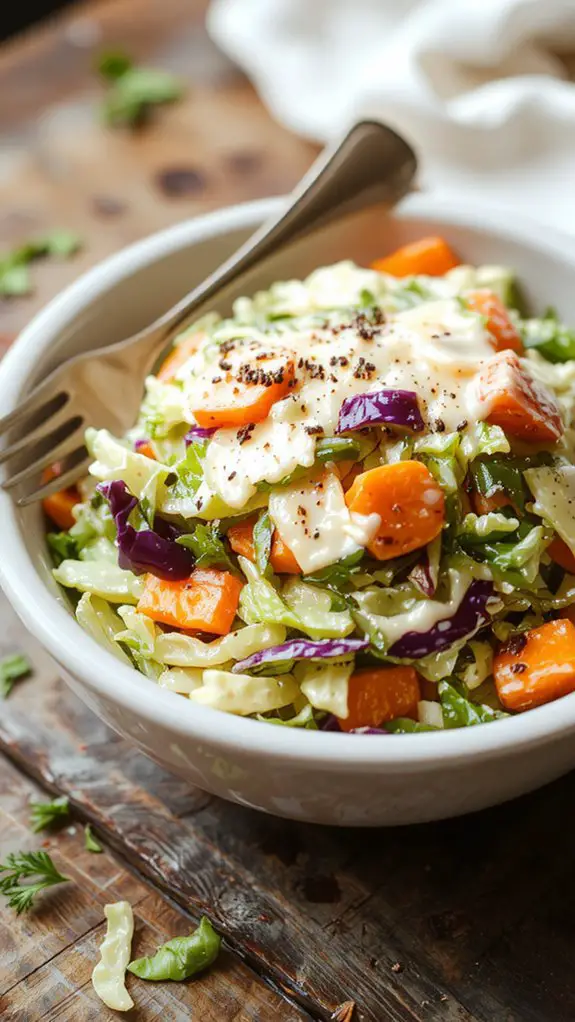
- Curtido: This tangy cabbage slaw is a must—it balances the richness of the pupusa.
- Salsa roja: A fresh tomato sauce adds a bright, spicy finish.
- Oil or lard: A light coating prevents sticking during cooking—this small step makes a big difference.
Pro tip: If you’re short on time, pre-made fillings work, but fresh masa and homemade curtido elevate the experience.
Keep your ingredients accessible and organized for a seamless cooking process.
How to Make the Best Authentic Salvadoran Pupusas
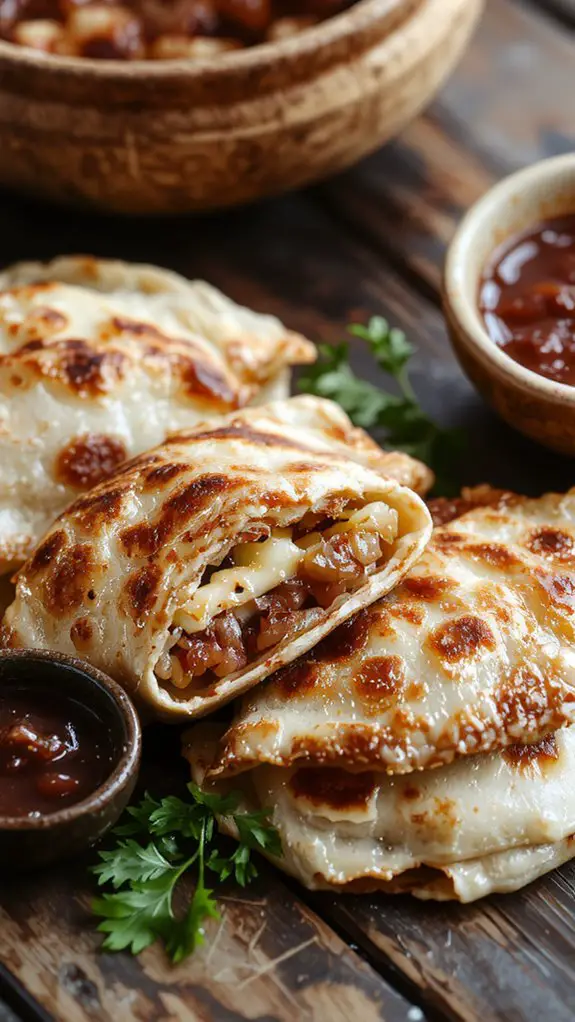
– Cook the pupusas on a hot, lightly greased skillet or griddle over medium heat. Cook for 2-3 minutes on each side, or until golden brown and slightly crispy.
*Visual cue:* The pupusas should puff slightly and have a toasty exterior.
*Flexibility:* Adjust heat as needed to prevent burning while ensuring thorough cooking.
– Serve immediately with curtido (fermented cabbage slaw) and tomato salsa on the side.
*Why this matters:* Freshly cooked pupusas are warm, soft, and at their most delicious.
*Time-saving trick:* Make the curtido ahead of time for a quick, complete meal.
Nutrition
Pupusas are a traditional Salvadoran dish made from corn dough and stuffed with various fillings. They are a good source of carbohydrates and protein, depending on the ingredients used.
| Nutrition Facts | Per Serving (1 pupusa, approx. 100g) |
|---|---|
| Calories | 250 |
| Total Fat | 8g |
| Saturated Fat | 3g |
| Cholesterol | 15mg |
| Sodium | 300mg |
| Total Carbs | 35g |
| Dietary Fiber | 2g |
| Sugars | 1g |
| Protein | 8g |
Chef Tips
To get the best results when making pupusas, I’ve found that keeping the dough moist is key—it should feel soft but not sticky.
Always rest the dough for 15 minutes before shaping to make it easier to work with. Use a light touch when flattening the pupusas to avoid tearing.
Cook them on medium heat to guarantee they’re golden brown without burning.
What to Serve With This Recipe

Leave a Review or Ask a Question
Your rating, tips, and questions help other home cooks. Tell us how it turned out or ask anything before you make it.