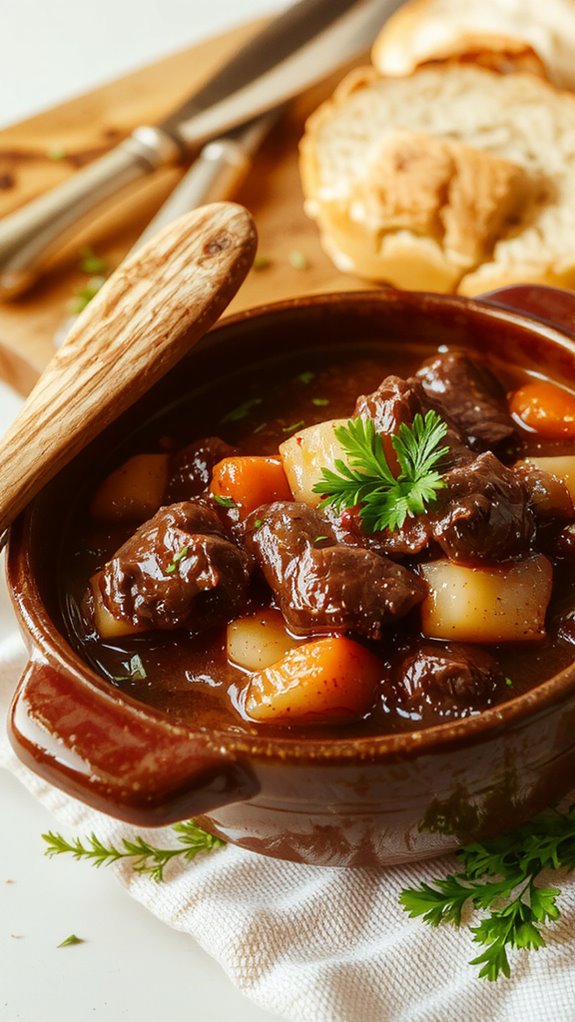

I’ve found that the best homemade chicken broth starts with roasting bones or a whole bird for depth of flavor. Simmering them in cold water with aromatics like onions, carrots, and garlic extracts a rich, savory essence. Skimming the foam guarantees clarity, while straining yields a clean, versatile base. Mastering the balance of time and ingredients can elevate your soups, stews, and sauces. There’s more to uncover about getting it just right.
Recipe
There’s nothing quite like a pot of homemade chicken broth simmering on the stove—rich, golden, and packed with deep, savory flavor that store-bought versions just can’t match. This recipe is my go-to because it’s foolproof, versatile, and fills the kitchen with the kind of warmth that feels like a hug.
The secret? Roasting the bones first for extra depth, then letting them mingle with aromatics like garlic, onions, and herbs until every sip is pure comfort. Whether you’re sipping it straight, using it as a base for soups, or stirring it into risottos, this broth is a game-changer.
Trust me, once you taste the difference, you’ll never go back to the carton stuff.
Ingredients
The secret to a rich, flavorful chicken broth lies in the quality of your ingredients—each one plays a pivotal role in building depth and complexity. Here’s what you’ll need, along with insider tips to make your broth shine:
– Whole Chicken or Chicken Bones: The foundation of your broth. A mix of bones (backs, necks, feet) adds collagen for body, while meaty pieces (wings, thighs) boost flavor.
*Pro tip: Roast bones first for a deeper, caramelized taste.*
- Cold Water: Always start with cold water to slowly extract flavors—hot water can cloud the broth.
- Onions, Carrots, and Celery (Mirepoix): The holy trinity of broth. Leave skins on onions for a golden hue.
*No carrots? Swap in parsnips for earthiness.*
- Garlic: Smash cloves (no need to peel) for a subtle, savory backbone.
- Bay Leaves and Peppercorns: Essential for aromatic depth.
*Skip dried herbs? Fresh thyme or parsley stems work too.*
– Apple Cider Vinegar (optional): A splash helps draw minerals from bones.
*No vinegar? Lemon juice works in a pinch.*
– Salt: Add sparingly at the end to control seasoning.
*Non-negotiable*: Time. Simmer low and slow (at least 4 hours, ideally 12) for maximum flavor extraction.
*Little win*: Toss in a Parmesan rind for umami richness!
How to Make the Best Key Ingredient Tips

- Strain and Cool: Remove the chicken and vegetables using a slotted spoon or tongs. Strain the broth through a fine-mesh sieve or cheesecloth into a large bowl or container. Discard the solids.
- Store: Let the broth cool completely before refrigerating or freezing. Skim off any solidified fat from the top if desired. Store in airtight containers for up to 5 days in the fridge or freeze for up to 3 months.
Pro Tips:
- For a richer broth, roast the chicken bones and vegetables in the oven before adding them to the pot.
- Use a slow cooker for hands-off simmering—set it on low for 6-8 hours.
- Add a splash of apple cider vinegar while simmering to help extract more nutrients from the bones.
Watch-Out Warnings:
- Avoid boiling the broth vigorously, as it can make it cloudy and diminish the flavor.
- Don’t skip skimming the foam—it can make the broth taste muddy.
- Be cautious when handling hot broth—always use heat-safe tools and allow it to cool slightly before straining.
Nutrition
Homemade chicken broth is not only flavorful but also packed with essential nutrients. Below is the nutritional breakdown per serving (1 cup).
| Nutrient | Amount |
|---|---|
| Calories | 86 |
| Protein | 6 g |
| Fat | 3 g |
| Carbohydrates | 8 g |
| Sodium | 480 mg |
| Calcium | 20 mg |
Chef Tips
Making chicken broth at home is easier when you’ve got a few tricks up your sleeve. First, roast your chicken bones for deeper flavor. Keep the heat low to avoid cloudiness, and skim off foam for clarity.
Add veggies like onions and carrots early but save herbs for the last hour. Strain carefully, and refrigerate overnight to remove fat easily.
Freeze leftovers in ice cube trays for convenience.