The Best Homemade Thai Green Curry Recipe
Crafting the perfect Thai green curry hinges on fresh ingredients and precise techniques—discover the secret to unmatched flavor and richness.
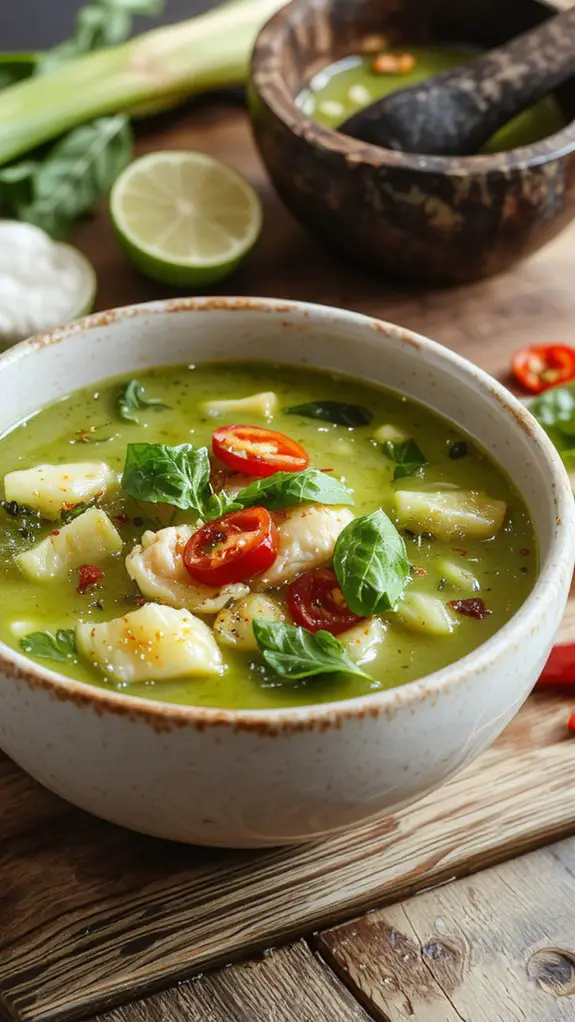
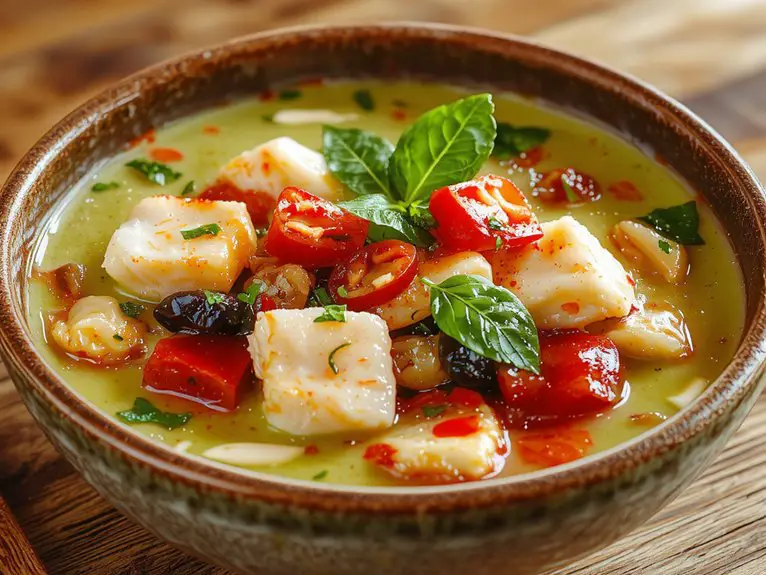
I’ve always believed that a great Thai green curry balances bold flavors with creamy coconut milk, but getting it just right takes more than tossing ingredients together. The secret lies in the paste—fresh herbs, spices, and a touch of patience. If you’ve ever wondered how to achieve that perfect harmony of heat, sweetness, and depth, there’s a method I rely on that might change how you make it at home.
Recipe
This Thai Green Curry is hands down the best homemade version you’ll ever make—bold, fragrant, and bursting with authentic flavors that will transport you straight to Bangkok. What sets it apart? Freshly made green curry paste, creamy coconut milk, and a harmony of spices that balance heat, sweetness, and tanginess perfectly.
I’ve been perfecting this recipe for years, and it’s become a staple in my kitchen because it’s just that good. Imagine tender chicken or tofu swimming in a velvety, aromatic sauce, paired with crisp veggies and a hint of lime.
It’s cozy enough for a weeknight but impressive enough to wow guests. Trust me, once you taste this, takeout will never compare. Let’s get cooking!
Ingredients
To make an authentic Thai green curry that bursts with flavor, it’s essential to start with the right ingredients. Freshness is key here—don’t skimp on herbs or spices, as they’re the backbone of this dish. If you’re missing something, though, I’ve included some smart swaps to keep things flexible.
For the Green Curry Paste:
- Fresh green chilies – Use Thai green chilies for authentic heat, but jalapeños work in a pinch.
- Lemongrass – Look for firm stalks; dried or frozen lemongrass can substitute if fresh isn’t available.
- Galangal – Fresh is best for its citrusy sharpness, but ginger can step in if needed.
- Kaffir lime leaves – These are non-negotiable for their unique flavor. Freeze extra leaves for later use.
- Garlic – Use fresh cloves for maximum punch.
- Shallots – Red onions can substitute, but shallots add a sweeter depth.
- Fish sauce – Essential for umami; soy sauce can work for a vegetarian version.
For the Curry:
- Coconut milk – Full-fat is a must for creaminess; light versions water down the flavor.
- Protein – Chicken thighs are ideal for tenderness, but tofu, shrimp, or beef work beautifully too.
- Vegetables – Bamboo shoots, Thai eggplant, or green beans are traditional, but use what’s seasonal or on hand.
- Thai basil – Adds a peppery sweetness; Italian basil is a decent alternative.
Little Wins:
- Sugar – Palm sugar lends a rich sweetness, but brown sugar is fine.
- Lime juice – A squeeze at the end brightens the entire dish.
- Chili oil – Drizzle on top for an extra kick and glossy finish.
How to Make the Best Authentic Thai Curry Recipe
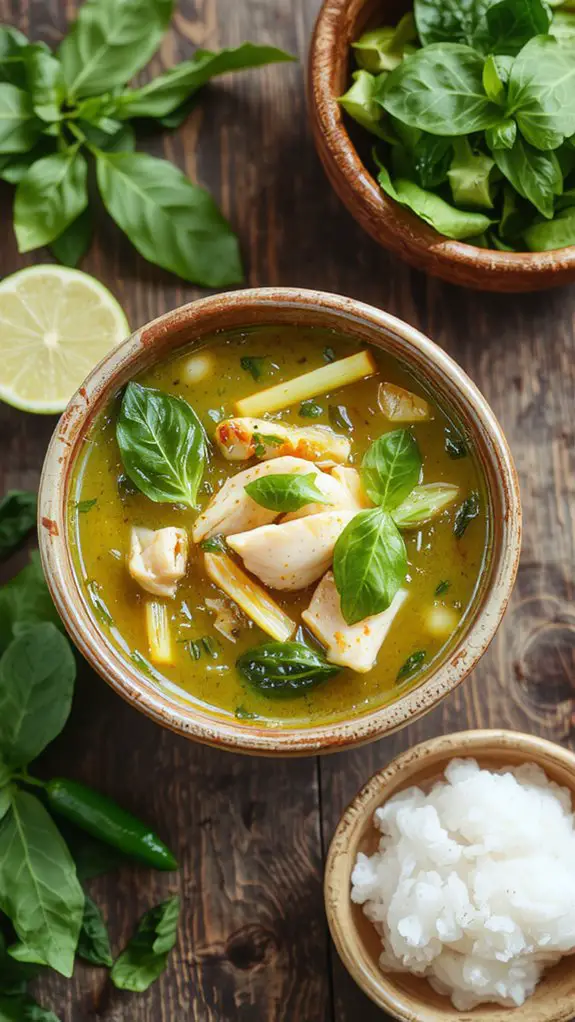
– Prepare Ingredients: Chop all vegetables, slice the protein (if using), and measure out the curry paste, coconut milk, and fish sauce. Having everything ready saves time and guarantees smooth cooking.
Pro Tip: Use fresh lemongrass and kaffir lime leaves for authentic flavor—just bruise them slightly to release their aroma.
– Heat the Pan: Place a large wok or skillet over medium heat and add a splash of oil. Swirl it around to coat the surface evenly.
Watch-Out: Avoid overheating the oil; it can burn the curry paste and ruin the flavor.
– Cook the Curry Paste: Add the green curry paste to the pan and sauté for 1-2 minutes until fragrant. This step intensifies the flavors.
Why It Matters: Cooking the paste releases its oils and aromas, creating a richer base for the curry.
– Add Coconut Milk: Pour in the coconut milk gradually, stirring constantly to blend it with the curry paste. Bring it to a gentle simmer.
Pro Tip: Use full-fat coconut milk for a creamier texture—shake the can well before opening.
– Incorporate Protein: Add your choice of protein (chicken, shrimp, tofu) to the simmering curry. Cook until it’s just done—overcooking can dry it out.
Visual Cue: The protein should be opaque and firm but still tender.
– Add Vegetables: Toss in your vegetables (like bell peppers, eggplant, or bamboo shoots) and cook until they’re tender-crisp.
Flexibility: Adjust cooking time based on the veggies—delicate ones like spinach should go in last.
– Season the Curry: Stir in fish sauce, palm sugar, and a splash of lime juice. Taste and adjust seasoning as needed.
Pro Tip: Balance is key—aim for a harmonious blend of salty, sweet, sour, and spicy.
– Finish with Herbs: Add fresh Thai basil and kaffir lime leaves just before serving. Their fresh aroma elevates the dish.
Why It Matters: Adding herbs at the end preserves their vibrant flavor and color.
– Serve Immediately: Ladle the curry over steamed jasmine rice and garnish with sliced chili or cilantro for extra flair.
Pro Tip: For a complete meal, serve with a side of cucumber salad or spring rolls.
Nutrition
Thai Green Curry is a flavorful dish packed with fresh ingredients. Here’s a breakdown of its nutritional value per serving:
| Nutrient | Amount per Serving |
|---|---|
| Calories | 350 kcal |
| Protein | 18 g |
| Carbohydrates | 20 g |
| Fat | 22 g |
| Saturated Fat | 10 g |
| Fiber | 3 g |
| Sugar | 8 g |
| Sodium | 800 mg |
Chef Tips
While making Thai Green Curry, I’ve found that using fresh herbs and spices makes all the difference—don’t skip the lemongrass, kaffir lime leaves, or Thai basil.
Toast the curry paste in oil to deepen its flavor before adding coconut milk.
Simmer gently to avoid curdling.
Taste as you go and adjust seasoning with fish sauce, palm sugar, or lime juice.
Fresh garnishes like cilantro elevate the dish.
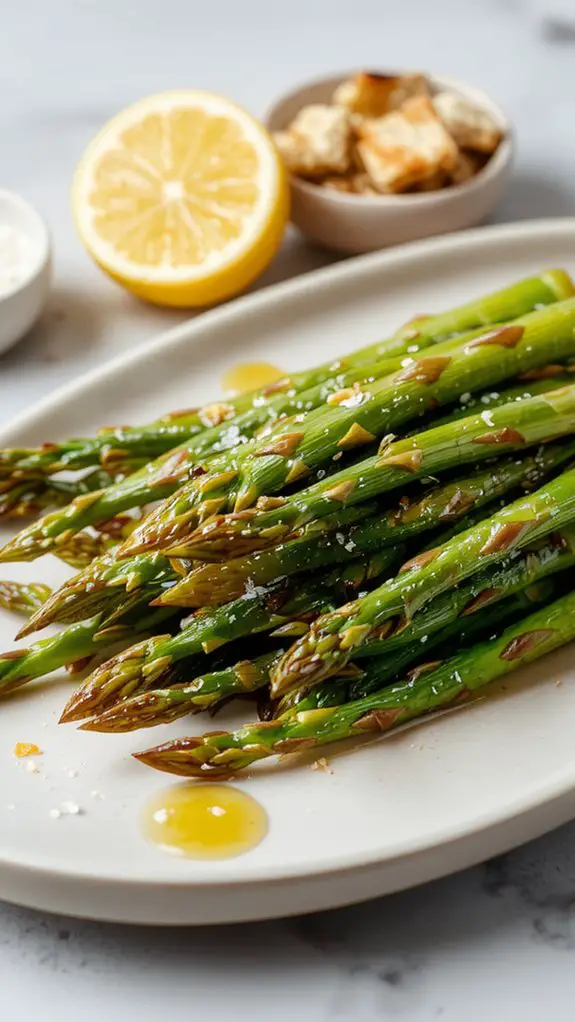
What to Serve With This Recipe



Leave a Review or Ask a Question
Your rating, tips, and questions help other home cooks. Tell us how it turned out or ask anything before you make it.