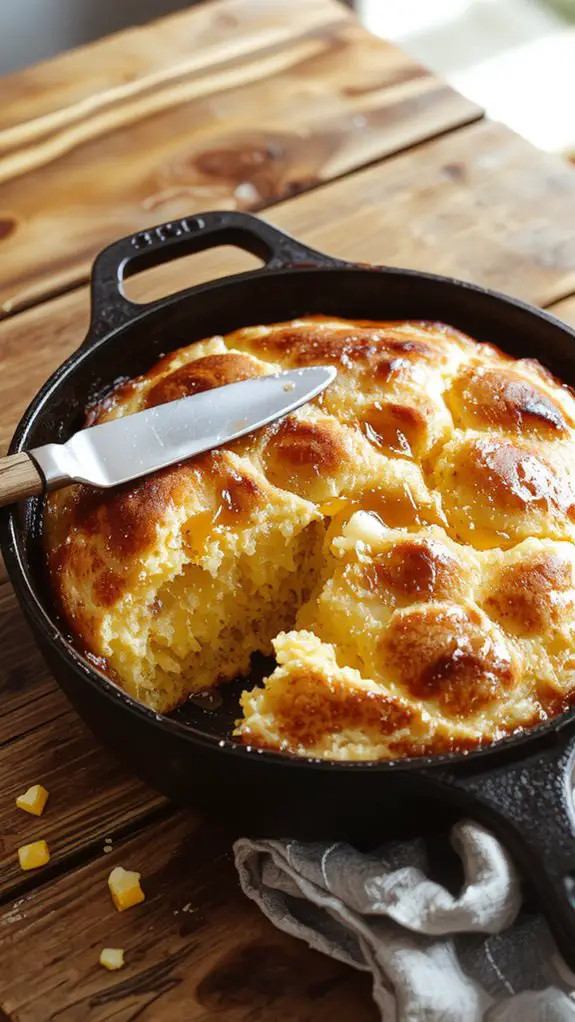
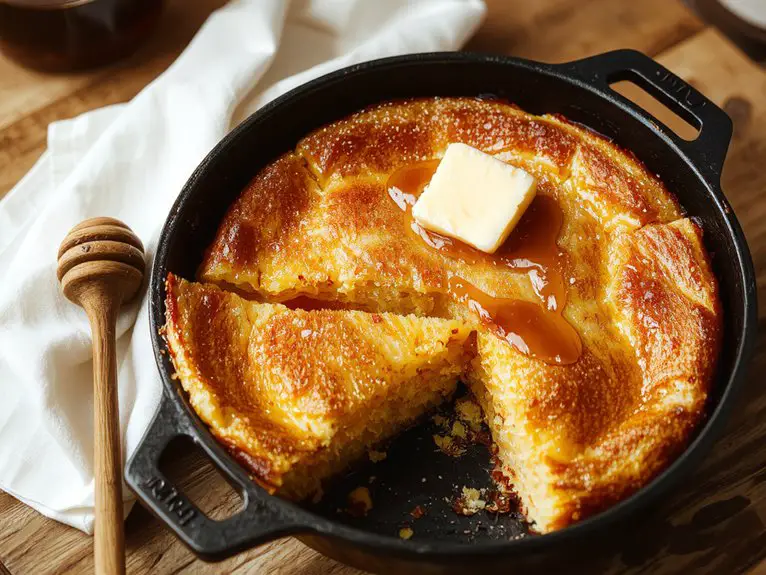
I’ve tried countless cornbread recipes, but this one stands out for its perfect balance of sweetness and texture. The edges crisp up beautifully, while the inside stays tender and moist. It’s simple enough for a weeknight dinner yet impressive enough to serve guests. The secret lies in the combination of ingredients and a few subtle techniques. If you’re curious about how to achieve that golden, fluffy perfection, let’s get started.
Recipe
There’s nothing quite like the smell of warm cornbread fresh out of the oven—golden, slightly crisp on the edges, and so tender it practically melts in your mouth. This recipe? It’s the one I swear by, the kind that turns first-time bakers into instant believers.
The secret? A perfect balance of sweet and savory, with just the right amount of buttery richness to make every bite irresistible.
Whether you’re pairing it with chili, smothering it in honey, or eating it straight from the pan (no judgment here), this cornbread is guaranteed to become a staple in your kitchen. Trust me, once you try it, there’s no going back.
Ingredients
Creating the perfect cornbread starts with the right ingredients—each one plays a vital role in achieving that golden, crumbly texture and rich, savory-sweet flavor. Here’s the breakdown of what you’ll need, along with insider tips and substitutions to make it your own:
- Cornmeal (medium grind): The star of the show—medium grind gives the best texture. Don’t use fine or coarse unless you’re okay with a different mouthfeel.
- All-purpose flour: Balances the cornmeal for a tender crumb.
- Granulated sugar: Adds a subtle sweetness. Adjust to taste—some love it sweeter, some less so.
- Baking powder & baking soda: Essential for that perfect rise. Don’t skip or substitute.
- Salt: Enhances all the flavors. Use kosher salt for even distribution.
- Eggs: Bind everything together. Large eggs work best here.
- Buttermilk: Adds moisture and tang. No buttermilk? Use 1 cup whole milk + 1 tbsp white vinegar or lemon juice.
- Unsalted butter (melted): For richness and flavor. Salted butter works too—just reduce added salt slightly.
- Vegetable oil: Adds moisture and guarantees a tender crumb. You can use all butter, but oil makes it extra moist.
- Honey or maple syrup (optional): A drizzle adds depth and sweetness. Highly recommended for a gourmet touch.
Pro Tip: If you want a richer flavor, try substituting half the buttermilk with sour cream or Greek yogurt—it’s a game-changer!
Non-Negotiables: Fresh cornmeal and buttermilk are worth the effort—they make all the difference.
Little Win: Add a handful of sharp cheddar or jalapeños to elevate your cornbread into savory perfection!
How to Make the Best Buttery Cornbread Recipe
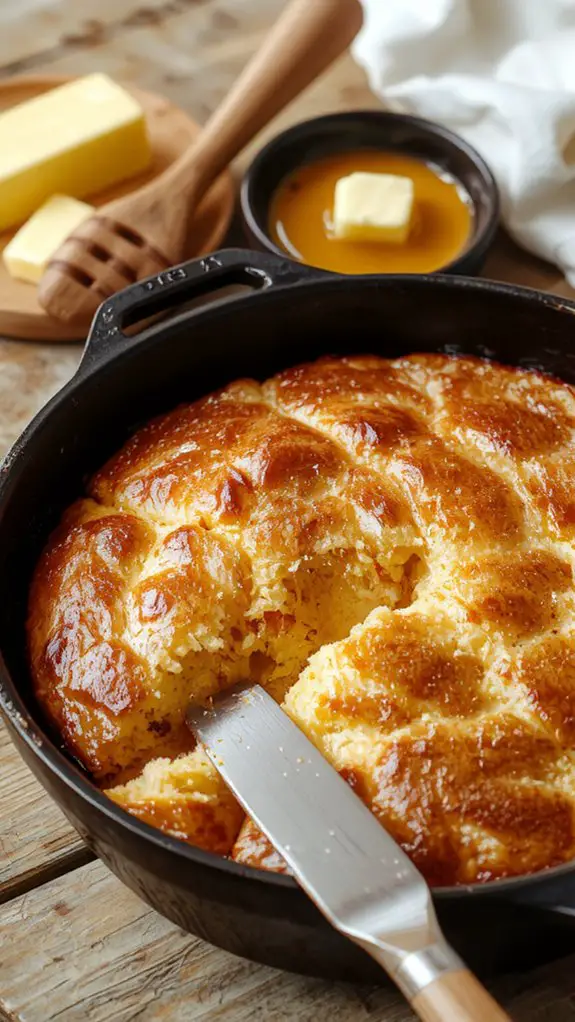
- Preheat your oven to 400°F (200°C) and grease a 9-inch cast-iron skillet or baking dish with butter or oil. Heating the skillet before pouring in the batter guarantees a crispy crust, a hallmark of perfect cornbread.
- In a large bowl, whisk together 1 cup of cornmeal, 1 cup of all-purpose flour, 1/4 cup of sugar (optional for sweetness), 1 tablespoon of baking powder, and 1/2 teaspoon of salt. Mixing the dry ingredients first secures even distribution of leavening agents, which is essential for a fluffy rise.
- In a separate bowl, whisk together 1 cup of buttermilk (or a quick substitute: mix 1 cup of milk with 1 tablespoon of lemon juice or vinegar), 1/2 cup of melted butter, and 2 large eggs.
- Combining the wet ingredients separately prevents overmixing when they meet the dry ingredients.
- Pour the wet ingredients into the dry ingredients and gently fold until just combined. Overmixing activates the gluten, leading to a dense texture—stop when you see no streaks of flour for tender cornbread.
- Pour the batter into the prepared skillet or baking dish and smooth the top with a spatula. Baking immediately guarantees the leavening agents don’t lose their effectiveness, resulting in a light and airy crumb.
- Bake for 20-25 minutes, or until the top is golden brown and a toothpick inserted into the center comes out clean. Avoid opening the oven too early; patience secures an even bake and prevents sinking.
- Let the cornbread cool in the skillet for 5 minutes before slicing. This brief rest allows the interior to set, making it easier to cut without crumbling. Serve warm with butter or honey for the ultimate experience.
Nutrition
Cornbread is a classic dish that offers a good balance of carbohydrates and fats. Below is the nutritional breakdown per serving.
| Nutrient | Amount per Serving |
|---|---|
| Calories | 198 kcal |
| Total Fat | 7 g |
| Saturated Fat | 1 g |
| Cholesterol | 17 mg |
| Sodium | 330 mg |
| Total Carbs | 29 g |
| Dietary Fiber | 1 g |
| Sugars | 8 g |
| Protein | 4 g |
Chef Tips
If you’re aiming for perfect cornbread every time, I’d suggest paying close attention to the texture of your batter.
It should be thick yet pourable, not too runny.
Preheat your cast-iron skillet for a crispier crust, and don’t overmix or your bread will turn dense.
Use fresh cornmeal for the best flavor, and let the batter rest for 10 minutes before baking for even consistency.