The Best Homemade Gyudon Recipe
Savory slices of beef simmered in sweet soy broth over fluffy rice—discover the secret to perfect gyudon that outshines any restaurant version.
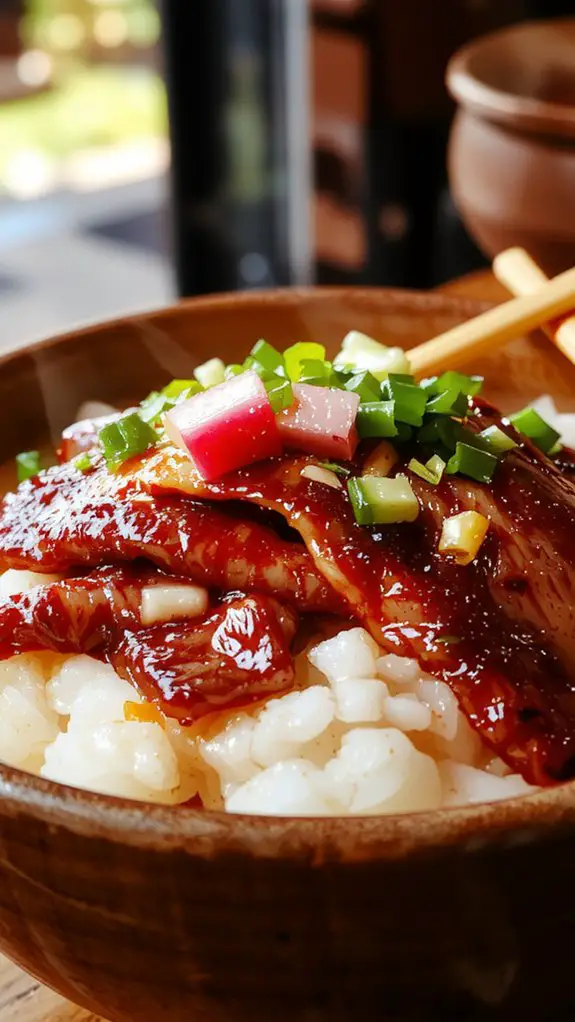
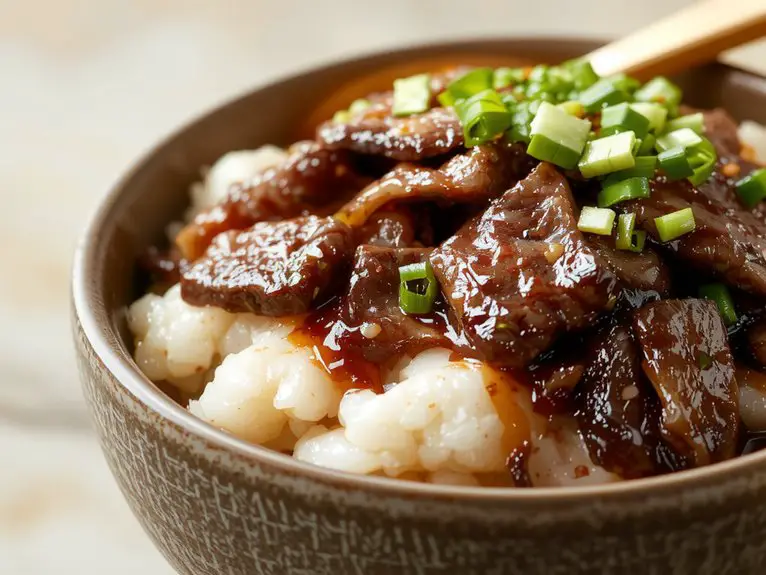
I’ve spent years perfecting my gyudon recipe, and I’m convinced this version beats any restaurant bowl. The secret lies in the balance of sweet and savory, with thinly sliced beef that melts in your mouth and onions caramelized just right. But what really sets it apart is a technique most home cooks overlook—one that transforms simple ingredients into something extraordinary. You’ll want to see how it’s done.
Recipe
There’s something magical about a bowl of gyudon—tender slices of beef simmered in a sweet-savory sauce, piled high over steaming rice, and finished with a perfectly runny egg. Once you try this homemade version, you’ll never settle for takeout again.
The secret? A simple but game-changing combo of mirin, soy sauce, and a touch of sugar that transforms basic ingredients into something unforgettable. I’ve made this dish more times than I can count, tweaking it until every bite is pure comfort—juicy beef, caramelized onions, and that rich, glossy sauce soaking into every grain of rice.
Trust me, one taste and you’ll be hooked.
Ingredients
To make authentic gyudon at home, you’ll need thinly sliced beef and a savory-sweet sauce that clings to every bite. Here’s what you’ll need, with insider tips to nail the flavors:
- Thinly sliced beef (shabu-shabu or sukiyaki cut): The key to tender gyudon—freeze the beef for 30 minutes first for easier slicing. *Substitute*: Flank steak sliced against the grain.
- Yellow onion: Thinly sliced for sweetness that balances the sauce. *Don’t skip*—it’s the backbone of flavor.
- Dashi stock: Use homemade or instant (like Hondashi) for umami depth. *Swap*: Light chicken broth + a pinch of MSG in a pinch.
- Soy sauce: Opt for Japanese soy sauce (usukuchi or koikuchi) for authentic balance. *Non-negotiable*—it’s the soul of the dish.
- Mirin: Sweet rice wine adds gloss and complexity. *Substitute*: 1 tsp sugar + 1 tbsp sake or white wine if needed.
- Sugar: Just a touch to round out the sauce. Adjust to taste.
- Optional upgrades: A splash of sake for depth, or a raw egg yolk on top for richness.
*Pro tip*: Simmer the onions until jammy—they’ll melt into the sauce and beef for the perfect texture.
How to Make the Best Authentic Japanese Gyudon Recipe
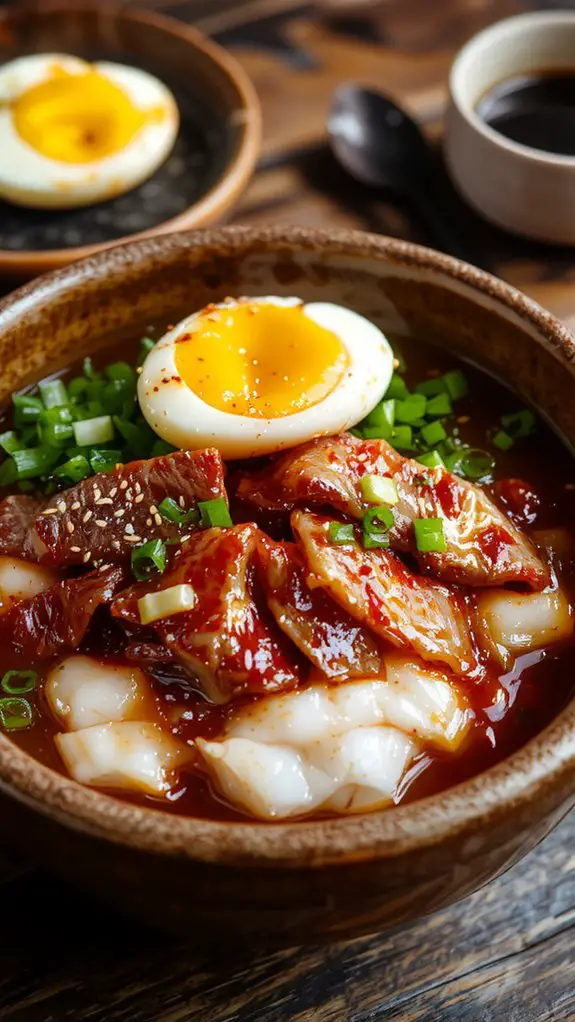
6. Serve over rice – Spoon the beef and sauce over steamed rice while hot. The warmth helps the flavors soak into the rice.
Pro Tips:
- Use freshly cooked rice for the best texture.
- Garnish with pickled ginger or scallions for brightness.
- Leftovers? Store the beef and sauce separately to prevent the rice from getting soggy.
Watch-Outs:
- Don’t overcrowd the pan when browning the beef—it’ll steam instead of sear.
- Adjust sweetness by reducing mirin if preferred.
- Low-sodium soy sauce works if you’re cutting salt.
Nutrition
Gyudon is a popular Japanese dish featuring thinly sliced beef and onions simmered in a savory sauce, served over rice. Below is the nutritional breakdown per serving.
| Nutrient | Amount per Serving |
|---|---|
| Calories | 550 kcal |
| Protein | 25 g |
| Fat | 18 g |
| Carbohydrates | 70 g |
| Sodium | 1200 mg |
Chef Tips
Making great gyudon isn’t just about ingredients—it’s about technique. I always slice the beef paper-thin while partially frozen for even cooking.
Simmer the onions first to sweeten the broth, then add the beef in batches to prevent overcrowding.
Don’t boil—keep it at a gentle simmer to avoid toughness.
Finish with a splash of mirin for balance. Serve immediately over hot rice for the best texture.
What to Serve With This Recipe


Leave a Review or Ask a Question
Your rating, tips, and questions help other home cooks. Tell us how it turned out or ask anything before you make it.