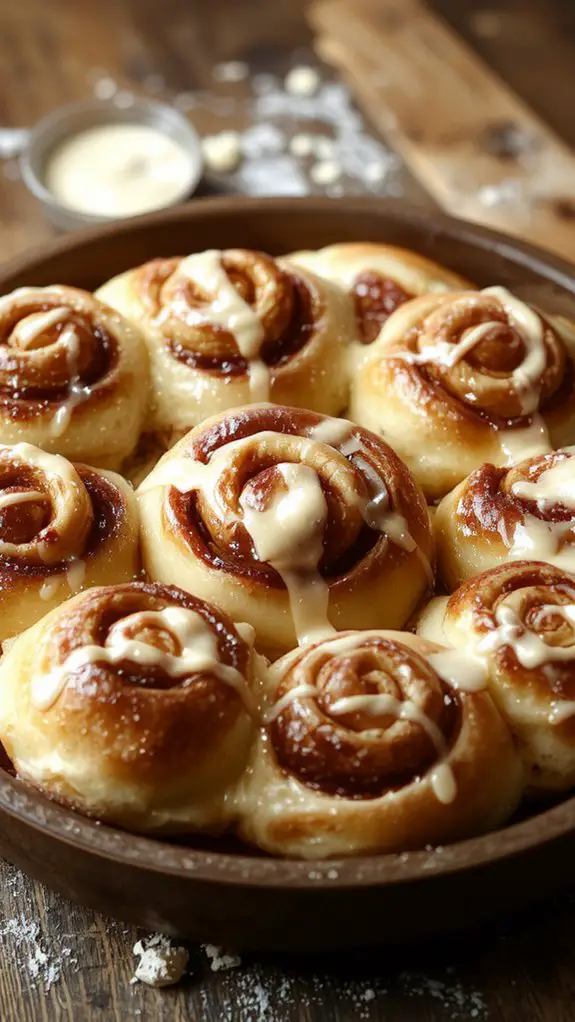
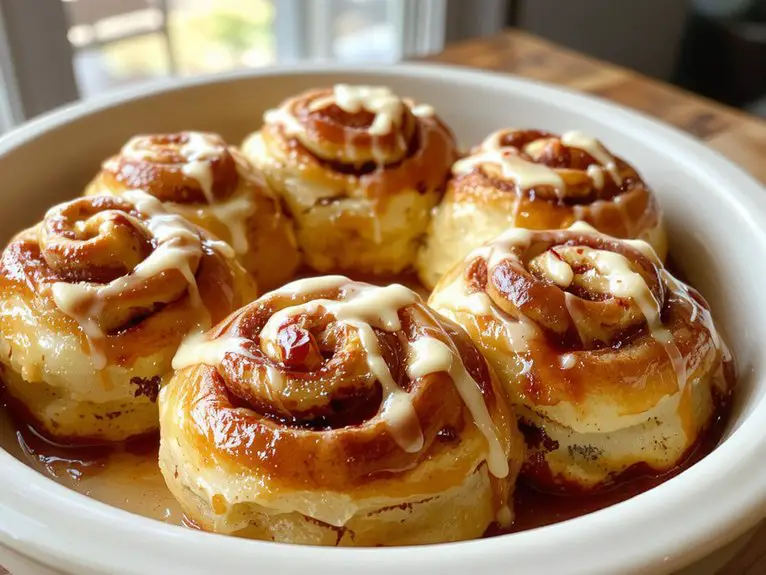
I’ve always believed that mastering a great cinnamon roll recipe is worth the effort. The contrast of soft, pillowy dough with a rich, gooey filling is hard to resist. What makes this recipe stand out is its blend of warmth, sweetness, and simplicity. There’s something satisfying about pulling a pan of freshly baked rolls from the oven, their aroma filling the kitchen. The final touch? A glaze that ties it all together perfectly.
Recipe
Let me tell you, these cinnamon rolls are the ultimate indulgence—soft, fluffy, and dripping with gooey cinnamon goodness. I’ve been making this recipe for years, and it’s never once failed to wow everyone who tries it.
The secret? A rich dough made with warm milk and a hint of butter, paired with a generous swirl of cinnamon sugar that caramelizes perfectly in the oven. Fresh out of the oven, they’re topped with a silky cream cheese glaze that melts into every nook and cranny.
The aroma alone will have your kitchen smelling like a bakery, and that first bite? Pure bliss. Trust me, once you try these, they’ll become a weekend tradition. You’ve got this!
Ingredients
The secret to next-level cinnamon rolls? It’s all in the ingredients. High-quality butter and fresh spices make the difference between good and *unforgettable*. Here’s what you’ll need—plus pro swaps to keep it stress-free.
For the Dough:
- Bread flour (or all-purpose in a pinch) – The higher protein content gives structure and chew.
- Whole milk, warmed – Creates a tender crumb. Swap with 2% or plant-based milk, but avoid skim—it lacks richness.
- Granulated sugar – Just enough to feed the yeast and add subtle sweetness.
- Active dry yeast – Check the expiry date! Dead yeast = flat rolls.
- Eggs – Room temperature blends smoother. Cold eggs? Soak them in warm water for 5 minutes.
- Unsalted butter, melted – Controls salt levels. Salted butter works, but reduce added salt by ¼ tsp.
- Salt – Balances sweetness. Diamond Crystal is ideal (less salty by volume than Morton’s).
For the Filling:
- Dark brown sugar – Its molasses depth beats light brown sugar. No substitutes here.
- Ground cinnamon – Freshly opened for maximum punch. Pre-ground? Toast it in a dry pan for 30 seconds to revive.
- Unsalted butter, softened – Not melted! Spreadable consistency is key.
For the Glaze (Optional but Non-Negotiable):
- Cream cheese, room temp – Full-fat only. Low-fat versions can split.
- Powdered sugar – Sift it to avoid lumps.
- Vanilla extract – Pure, not imitation. This tiny splash adds luxury.
- Heavy cream – Thins the glaze perfectly. Milk works, but cream adds silkiness.
Little Wins:
- A pinch of cardamom in the filling for a floral twist.
- Flaky sea salt on top of the glaze for contrast.
How to Make the Best “Follow Recipe Steps Exactly
– Prepare the Dough**: Begin by activating the yeast. Warm the milk to around 110°F (use a thermometer to avoid overheating) and whisk in the sugar and yeast. Let it sit for 5-10 minutes until foamy. This step confirms** the yeast is alive and ready to work its magic.
Pro tip: If your yeast doesn’t foam, it may be expired—replace it before proceeding.
– Mix Wet Ingredients: In a large bowl, combine the foamy yeast mixture with melted butter, eggs, and a pinch of salt. Whisk until smooth. The eggs should be at room temperature to prevent the butter from solidifying.
Pro tip: Crack eggs into a separate bowl first to avoid shell fragments.
– Add Dry Ingredients: Gradually add the flour to the wet mixture, stirring with a wooden spoon or dough hook attachment on low speed. Mix until a shaggy dough forms. Be cautious not to overmix—just combine until no dry patches remain.
Pro tip: Reserve a little flour for kneading to adjust consistency later.
– Knead the Dough: Turn the dough onto a lightly floured surface and knead for about 8-10 minutes until smooth and elastic. It should feel slightly tacky but not sticky.
Visual cue: The dough should spring back when poked gently.
Pro tip: If using a stand mixer, knead on medium speed for 5-7 minutes.
– First Rise: Place the dough in a greased bowl, cover with a damp towel or plastic wrap, and let it rise in a warm spot for 1-1.5 hours until doubled in size.
Why? This allows the yeast to ferment and create air pockets for a soft, fluffy texture.
Pro tip: If your kitchen is cold, place the bowl in the oven with the light on for consistent warmth.
– Prepare the Filling: While the dough rises, mix softened butter, brown sugar, and cinnamon in a bowl until smooth. Make sure the butter is soft but not melted for easy spreading.
Pro tip: Add a pinch of salt to balance the sweetness.
– Roll and Fill: Punch down the risen dough to release air bubbles. Roll it out on a floured surface into a rectangle about ¼ inch thick. Spread the cinnamon filling evenly, leaving a small border around the edges.
Why? This prevents the filling from leaking out during baking.
Pro tip: Use a pastry brush or offset spatula for even distribution.
– Shape the Rolls: Starting from the long edge, tightly roll the dough into a log. Use a sharp knife or unflavored dental floss to cut into 12 even slices.
Pro tip: Floss gives cleaner cuts without squishing the dough.
– Second Rise: Arrange the rolls in a greased baking dish, leaving space between them to expand. Cover and let rise for 30-45 minutes until puffy.
Visual cue: The rolls should touch each other slightly.
Pro tip: For overnight preparation, refrigerate after shaping and let them rise slowly overnight.
– Preheat and Bake: Preheat the oven to 375°F (190°C) while the rolls rise. Bake for 20-25 minutes until golden brown and cooked through.
Watch-out: Overbaking can dry them out, so check at the 20-minute mark.
Pro tip: Tent with foil if the tops brown too quickly.
– Make the Glaze****: While the rolls bake, whisk powdered sugar, milk, and vanilla extract into a smooth glaze. Adjust consistency by adding more milk or sugar as needed.
Pro tip: Warm slightly for easier drizzling.
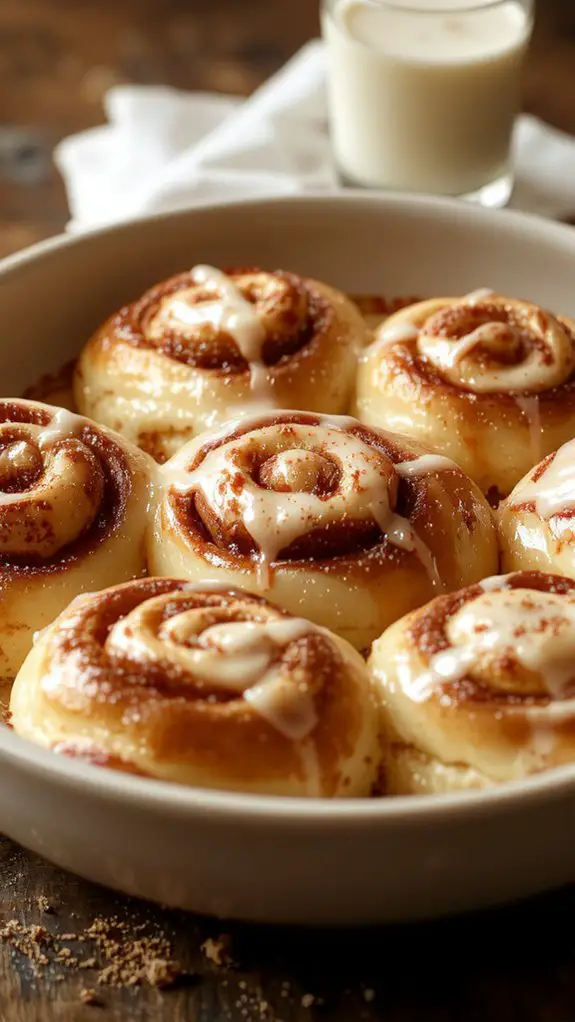
– Finish and Serve: Remove the rolls from the oven and let them cool for 5 minutes before drizzling with glaze. Serve warm for the ultimate cinnamon roll experience.
Pro tip: Store leftovers in an airtight container and reheat gently in the microwave.
Nutrition
Cinnamon rolls are a delicious treat, but they can be high in calories and sugar. Here is the nutritional breakdown for a typical cinnamon roll:
| Nutrient | Amount per Serving |
|---|---|
| Calories | 320 |
| Total Fat | 12g |
| Saturated Fat | 6g |
| Cholesterol | 35mg |
| Sodium | 300mg |
| Total Carbs | 48g |
| Dietary Fiber | 1g |
| Sugars | 25g |
| Protein | 5g |
Chef Tips
While cinnamon rolls may seem simple, achieving the perfect texture and flavor requires a bit of finesse. I always proof my yeast first—it guarantees active fermentation.
Don’t over-knead the dough; it should stay soft. Roll it tightly to avoid gaps.
Warm your filling slightly so it spreads easily. Bake until golden, not dark—overbaking dries them out.
Glaze while warm for maximum absorption.