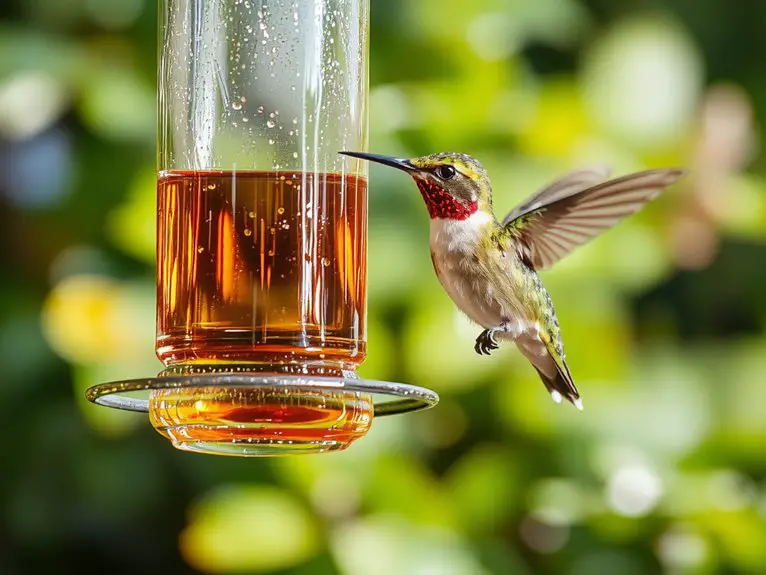
I’ve found that creating a homemade hummingbird feeder is simpler than most think, but it’s easy to make mistakes that could harm these delicate birds. Using the wrong ingredients or neglecting cleanliness can turn a well-meaning effort into a problem. The key lies in a straightforward recipe that mimics nature while ensuring safety. If you’re curious about the exact steps and what to avoid, there’s more to uncover about this delicate balance.
Recipe
There’s something magical about watching hummingbirds dart around your yard—tiny, iridescent jewels sipping nectar from a feeder you made yourself. If you’ve ever wanted to attract these dazzling little visitors with a homemade feeder, this recipe is your golden ticket.
Forget store-bought mixes filled with artificial dyes and preservatives; this simple, natural nectar is all you need to keep hummingbirds coming back for more. Made with just two pantry staples, it’s foolproof, fast, and so much better than anything you’ll find on a shelf.
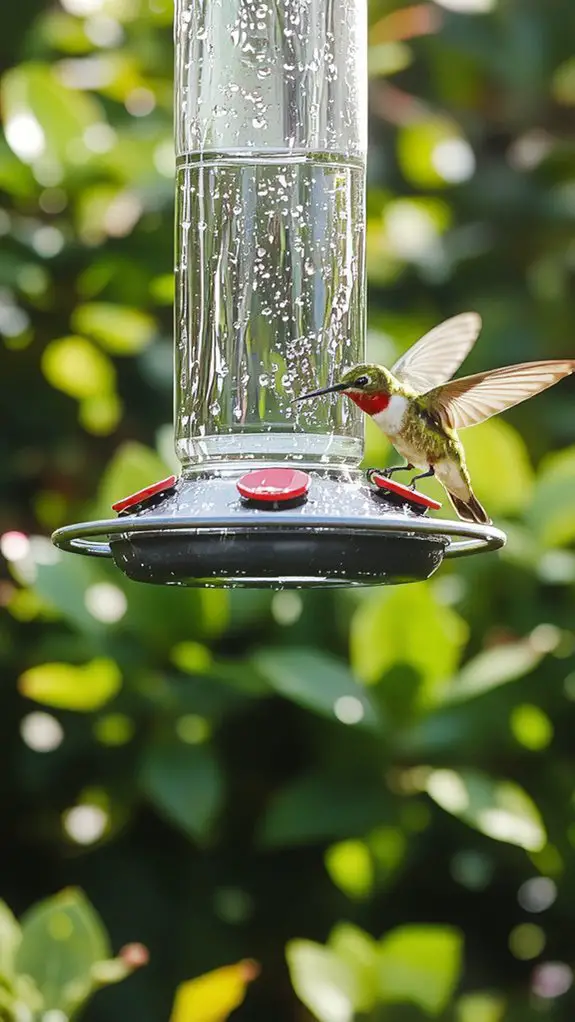
Imagine this: a bright red feeder (their favorite color!) filled with crystal-clear, sugar-rich nectar, buzzing with happy hummers all season long. Trust me, once you try this, you’ll never go back to the packaged stuff.
Let’s get mixing!
Ingredients
Creating a homemade hummingbird feeder is simpler than you might think, and the right ingredients can make all the difference in attracting these tiny, vibrant birds. The key is to use safe, natural components that mimic the nectar they’d find in flowers, while avoiding anything harmful like artificial dyes or sweeteners.
Below are the essentials you’ll need, along with some insider tips to guarantee your feeder becomes a hummingbird hotspot.
- Granulated Sugar: The backbone of the nectar, sucrose is the closest match to natural flower nectar. Always use plain white sugar—avoid brown sugar, honey, or artificial sweeteners, as they can harm hummingbirds.
- Water: Use filtered or boiled water to confirm it’s free of impurities that could affect the birds’ health.
- Red Ribbon or Feeder: While food coloring is a no-go (it’s toxic to hummingbirds), a red ribbon tied to the feeder or a red feeder itself will act as a natural attractant.
- Optional: Flower Extract: A drop of natural flower extract, like hibiscus or lavender, can enhance the nectar’s floral aroma, making it irresistible to hummingbirds.
Pro Tip: Stick to a 1:4 sugar-to-water ratio—too strong can dehydrate the birds, and too weak won’t provide enough energy.
Always let the nectar cool completely before filling the feeder.
How to Make the Best Sugar Water Recipe
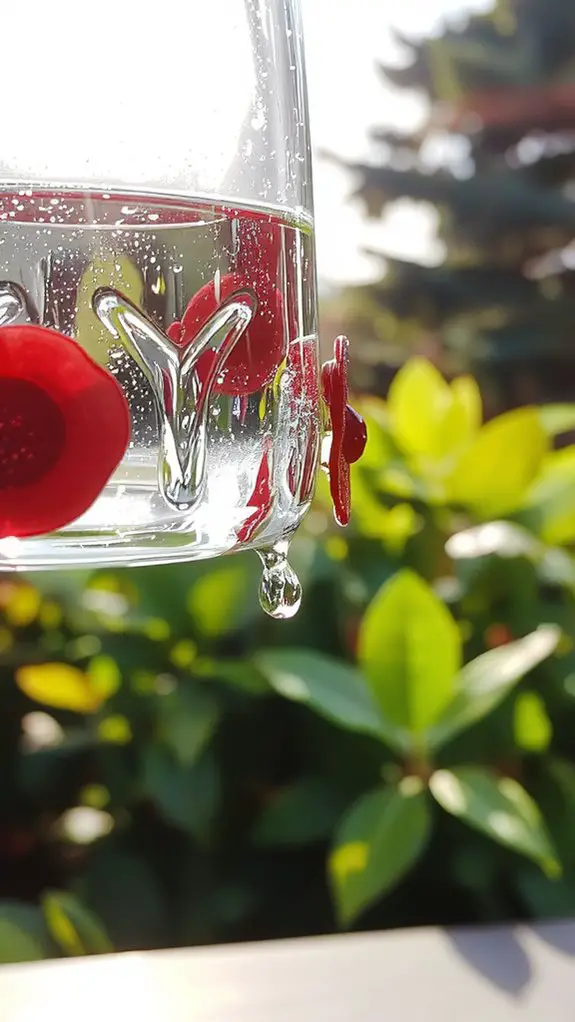
– Clean every 2-3 days – Rinse the feeder with hot water (no soap!) and scrub with a bottle brush to prevent mold.
*Why:* Fermented or moldy nectar can make birds sick.
– Adjust for weather – In extreme heat, replace nectar daily. In cooler temps, every 3-4 days is fine.
*Flexibility:* Reduce the sugar ratio to 1:5 in summer for easier digestion.
Nutrition
Homemade hummingbird feeders provide essential nutrients for hummingbirds. The recipe typically uses a simple sugar solution.
Nutrient Amount per Serving
Calories 16 kcal
Sugars 4 g
Carbohydrates 4 g
Protein 0 g
Fat 0 g
Chef Tips
To make the best sugar solution for your hummingbird feeder, I always boil the water first. This guarantees it dissolves the sugar fully and removes impurities.
I use a 1:4 ratio of sugar to water—never honey or artificial sweeteners, as they harm hummingbirds.
Clean the feeder weekly with hot water to prevent mold.
Avoid red dye; the feeder’s color attracts them naturally.
Refill promptly to keep them returning.