
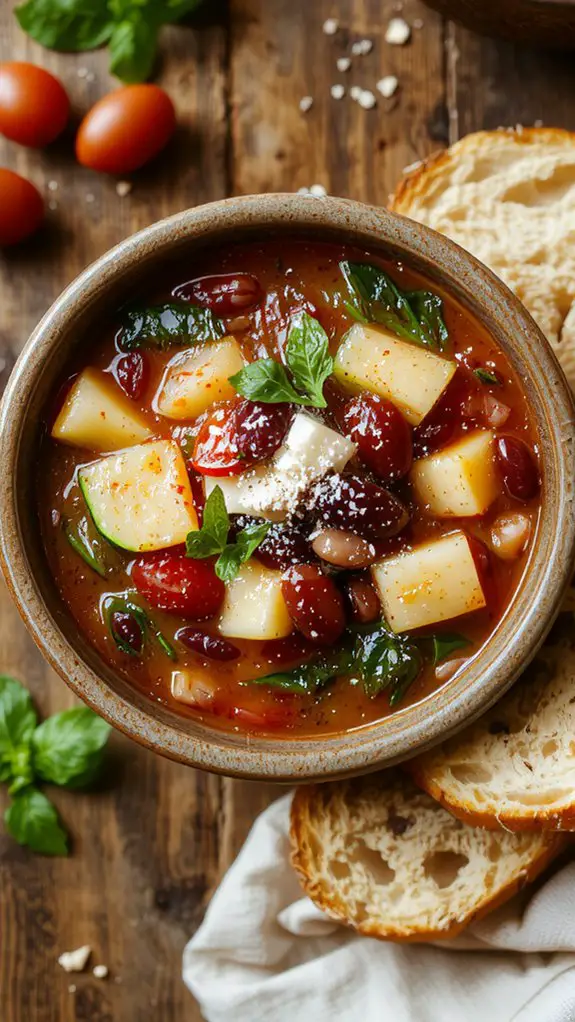
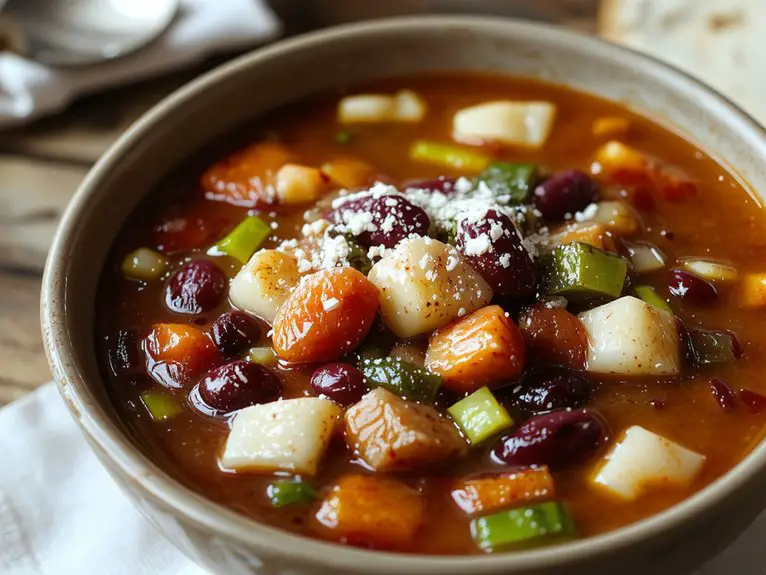
I’ve always found minestrone soup to be the perfect blend of comfort and nutrition, especially when made from scratch. This recipe brings together fresh vegetables, hearty beans, and aromatic herbs for a dish that’s both satisfying and versatile. Whether you’re looking for a cozy meal or a way to use up seasonal produce, this version might just surprise you with its depth of flavor. Let’s see what makes it stand out.
Recipe
This minestrone soup is the kind of recipe that will make you want to ditch canned soups forever—seriously, it’s that good. Packed with fresh veggies, tender beans, and a savory broth that’s simmered to perfection, it’s hearty, wholesome, and bursting with flavor.
What makes it special? The combination of fresh herbs like basil and parsley, along with a splash of olive oil stirred in at the end, gives it that authentic Italian touch. Plus, it’s incredibly versatile—you can toss in whatever veggies you have on hand, and it’ll still turn out amazing.
Imagine a bowl filled with comforting warmth, each spoonful loaded with tender vegetables, chewy pasta, and a broth so rich it feels like a hug. Whether you’re cooking for a crowd or just want leftovers to last all week, this recipe is a game-changer.
Trust me, once you try it, you’ll wonder why you ever settled for anything else.
Ingredients
To make a truly comforting and flavorful minestrone soup, start with fresh, high-quality ingredients that build layers of depth. This classic Italian soup is all about balance—robust vegetables, tender beans, and a rich broth.
- Olive oil: Use a good-quality extra-virgin olive oil for sautéing the vegetables—it adds a rich, fruity base that’s non-negotiable.
- Onion, celery, and carrots: This trio is the foundation of the soup, providing sweetness and depth. Fresh is best!
- Garlic: Essential for that aromatic punch—don’t skimp.
- Zucchini: Adds a tender, fresh element. Swap in yellow squash if you prefer.
- Potatoes: Choose starchy potatoes like Russets for creaminess, or swap in sweet potatoes for a twist.
- Canned diced tomatoes: Use fire-roasted for extra smokiness,
How to Make the Best Classic Minestrone Soup Recipe
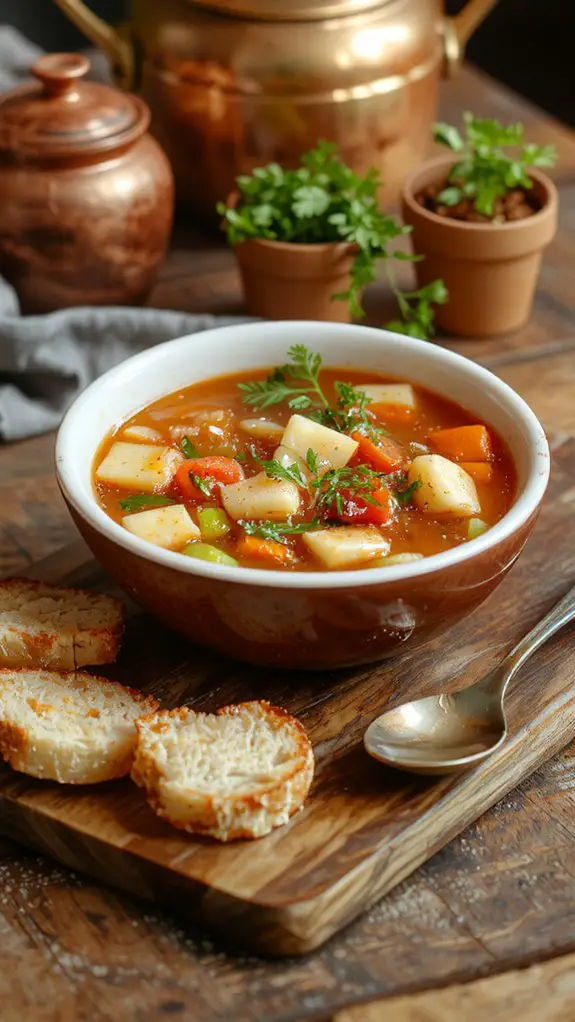
Heat olive oil in a large pot over medium heat. Sautéing the vegetables in oil first helps to release their flavors and create a rich base for the soup.
Add chopped onions, carrots, celery, and garlic. Cook until softened, about 5-7 minutes. This step builds the foundation of flavor, so don’t rush it—softened veggies are key.
Stir in diced tomatoes, vegetable broth, and water. These liquids create the soup’s heartiness. Use low-sodium broth to control the saltiness.
Add dried herbs like basil, oregano, and bay leaves. Dried herbs infuse the soup with depth; bay leaves are a classic touch—just remember to remove them before serving.
Bring to a boil, then reduce heat and simmer for 20 minutes. Simmering allows the flavors to meld. Cover the pot partially to prevent too much liquid from evaporating.
Add diced potatoes, zucchini, and green beans. These vegetables cook at the same rate, ensuring everything is tender without overcooking.
Stir in cooked pasta or rice. Add these toward the end to keep them from getting mushy. If using uncooked pasta, add it earlier and adjust cooking time.
Finish with kidney beans and chopped spinach. These add protein and freshness. Spinach wilts quickly, so add it just before serving.
Season with salt, pepper, and a splash of olive oil. Taste as you season—adding oil at the end enhances richness and glossiness.
Serve hot with grated Parmesan cheese and crusty bread. Parmesan adds a savory finish, and bread is perfect for dipping. Pro tip: Let the soup rest for 10 minutes before serving to let flavors deepen even more.
Nutrition
Minestrone soup is packed with nutrients, offering a wholesome meal option. Here’s the nutritional breakdown per serving.
| Nutrient | Amount |
|---|---|
| Calories | 220 kcal |
| Protein | 10 g |
| Fat | 5 g |
| Carbohydrates | 35 g |
| Fiber | 8 g |
| Sodium | 480 mg |
Chef Tips
When I make minestrone soup, I always start by sautéing the onions and garlic first to build a rich flavor base.
I use fresh vegetables and beans for the best texture.
Don’t overcook the pasta—add it near the end.
A splash of olive oil before serving adds depth.
Simmer longer for richer flavors, and adjust seasoning with salt, pepper, or herbs to taste.
