
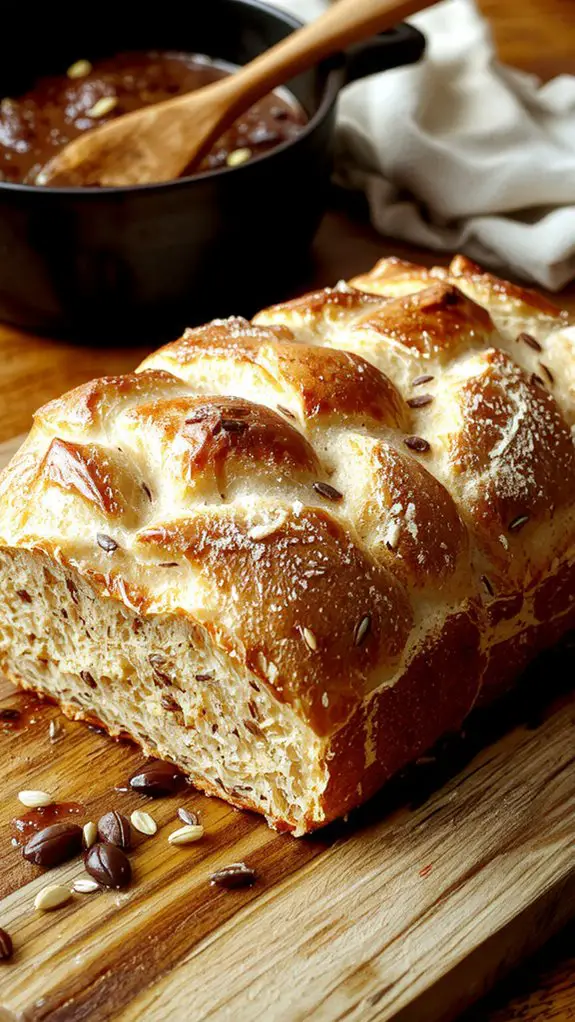
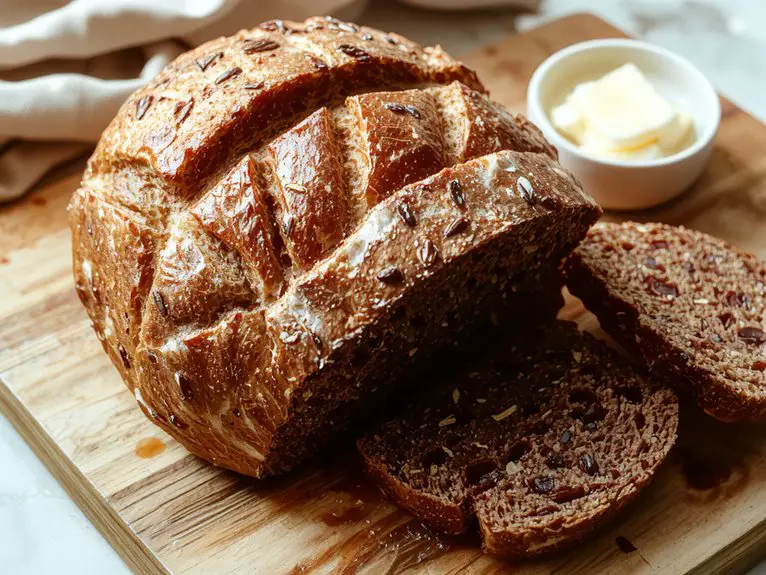
There’s something deeply satisfying about baking rye bread at home—the earthy aroma of caraway seeds, the dense yet tender crumb, and that perfect balance of tang and sweetness. I’ve tweaked this recipe over the years to get it just right, but I’m curious—what’s your secret for achieving that ideal crust? Maybe we can swap notes and uncover something new.
Recipe
If you’ve ever thought baking rye bread at home was too complicated, let me stop you right there—this recipe is a game-changer. Made with hearty rye flour, a touch of molasses for depth, and a hint of caraway seeds for that classic rye flavor, this loaf is everything you love about artisan bakery bread but achievable in your own kitchen.
The crust is perfectly crisp, the crumb is tender and slightly chewy, and the aroma? Unbeatable. Whether you’re a seasoned baker or a first-timer, this recipe is forgiving, fun, and guaranteed to impress.
Plus, there’s something so satisfying about slicing into a loaf you made yourself. Trust me, once you try this, store-bought rye bread just won’t cut it anymore. Let’s get baking!
Ingredients
The magic of homemade rye bread lies in its simplicity and depth of flavor. Choosing the right ingredients guarantees a hearty loaf with that perfect balance of chewiness and crust.
Here’s what you’ll need, along with some insider tips to elevate your bake:
For the Bread:
- Rye Flour: The star of the show—opt for dark rye flour for a richer, deeper flavor. Light rye works too but yields a milder taste.
- Bread Flour: Essential for structure. Its higher gluten content secures your loaf doesn’t turn dense.
- Caraway Seeds: Non-negotiable for that classic rye bread aroma. If you’re not a fan, fennel seeds or cocoa powder can add complexity instead.
- Active Dry Yeast: Proof it to confirm it’s alive and kicking. Instant yeast works as well—no proofing needed.
- Warm Water: Around 110°F (43°C) is ideal for activating the yeast. Too hot, and it’ll kill it.
- Molasses: Adds a subtle sweetness and darkens the crust. Honey or maple syrup can substitute in a pinch.
- Salt: Enhances flavor and controls yeast activity. Don’t skip it.
Optional Extras:
- Beer or Coffee: Swap out some water for a malty beer or strong coffee to deepen the flavor profile.
- Butter: Brushing melted butter on the warm loaf gives it a glossy, irresistible finish.
With these ingredients, you’re set to create a loaf that’s as good as your local bakery’s—or even better.
How to Make the Best Classic Rye Bread Recipe
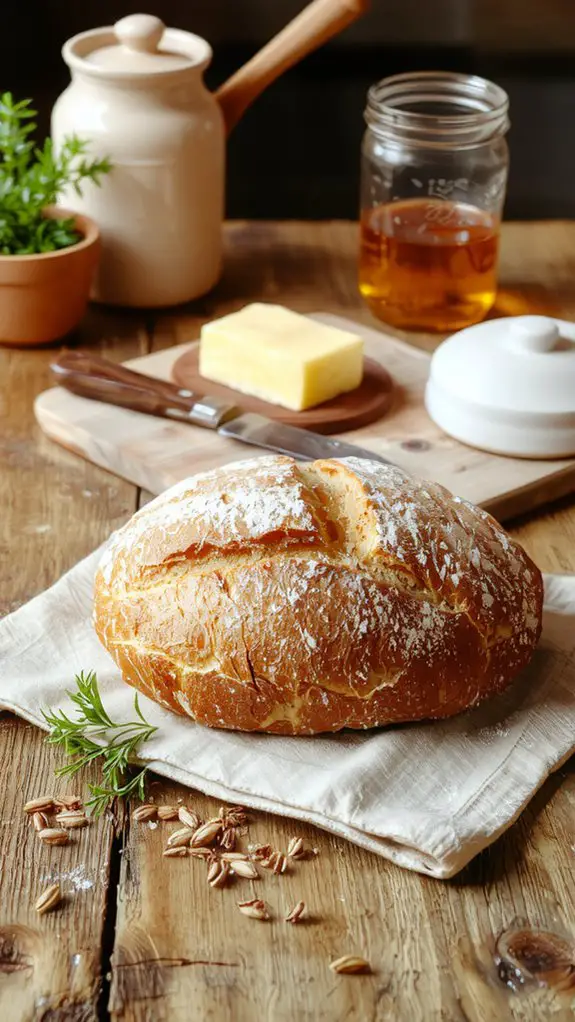
- Mix the dry ingredients: In a large bowl, combine rye flour, all-purpose flour, salt, and caraway seeds. Whisk thoroughly to guarantee even distribution—this prevents clumps and secures consistent flavor.
- Activate the yeast: Warm water to about 110°F (43°C)—too hot kills yeast, too cold won’t activate it. Dissolve sugar in the water, then sprinkle yeast on top. Let sit for 5–10 minutes until foamy. If it doesn’t foam, start over with fresh yeast.
- Combine wet and dry: Pour the yeast mixture and molasses into the dry ingredients. Stir with a wooden spoon until a shaggy dough forms. The molasses adds moisture and depth—don’t skip it!
- Knead the dough: Turn onto a floured surface and knead for 8–10 minutes until smooth and elastic. Rye dough is stickier than wheat—resist adding too much extra flour. Use a bench scraper to help handle it.
- First rise: Place dough in a greased bowl, cover with a damp towel, and let rise in a warm spot for 1–1.5 hours until doubled. Rye rises slower than white bread—patience is key.
- Shape and second rise: Punch down the dough, shape into a loaf, and place in a greased 9×5-inch pan. Cover and let rise again for 45–60 minutes until just above the pan rim. Overproofing causes collapse.
- Bake: Preheat oven to 375°F (190°C). Bake for 30–35 minutes until the loaf sounds hollow when tapped. Tent with foil if browning too fast.
Cool completely on a wire rack before slicing—this prevents gummy texture.
– Storage tip: Wrap cooled bread in a towel or paper bag to keep crust crisp. Freeze slices for longer storage; toast straight from the freezer.
Pro Tips:
- For extra tang, use a sourdough starter instead of yeast.
- Brush baked loaf with melted butter for a softer crust.
- Toast caraway seeds lightly before adding for deeper flavor.
Watch Out:
- Over-kneading makes rye bread dense. Stop when smooth but slightly tacky.
- Cutting too soon releases steam, leading to a soggy crumb. Wait at least 2 hours.
Nutrition
This rye bread recipe provides a wholesome option for those seeking a hearty and healthy bread. Below is the nutritional breakdown per serving.
| Nutrient | Amount per Serving |
|---|---|
| Calories | 120 |
| Total Fat | 1.5g |
| Saturated Fat | 0.2g |
| Cholesterol | 0mg |
| Sodium | 250mg |
| Total Carbs | 24g |
| Dietary Fiber | 3g |
| Sugars | 1g |
| Protein | 4g |
Chef Tips
Mastering this rye bread recipe starts with properly preparing the dough. I always knead it just until smooth to avoid overworking it.
Resting the dough in a warm spot guarantees proper fermentation.
I score the loaf deeply to control expansion during baking.
A preheated oven and a pan of water create the ideal crust.
Letting it cool completely before slicing keeps the texture perfect.
