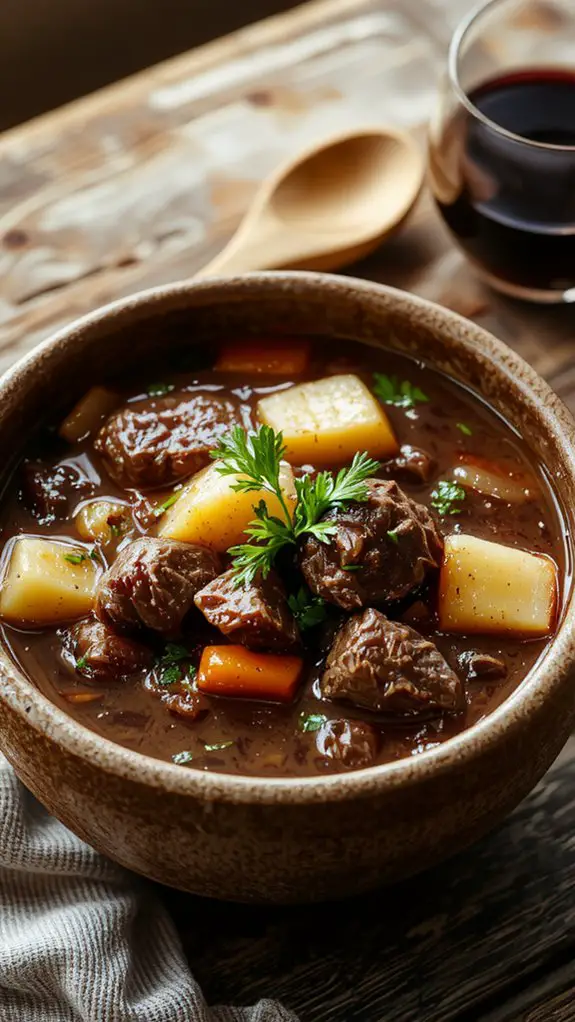
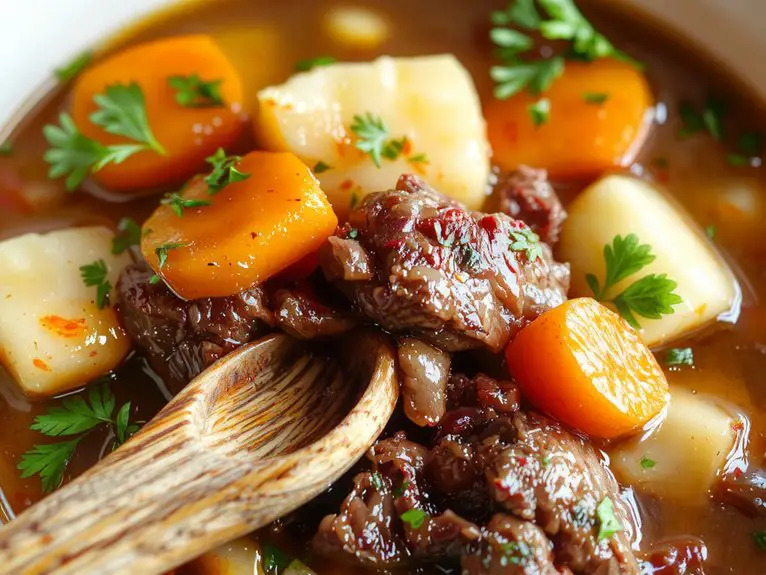
I’ve spent years perfecting my beef stew recipe, and I’m confident it’s the one you’ll want to make again and again. The secret lies in the balance of tender beef, hearty vegetables, and a deeply flavorful broth that’s both comforting and satisfying. I’ll share the steps to achieve that melt-in-your-mouth texture and rich taste, so you can see why this stew stands out. Let’s get started—your next favorite meal is just a simmer away.
Recipe
Trust me when I say this homemade beef stew is the ultimate winter comfort food—it’s cozy, hearty, and packed with layers of flavor that will have everyone asking for seconds.
Made with tender chunks of beef, hearty vegetables, and a rich, savory broth, this stew is simmered low and slow to perfection.
The secret? A splash of red wine and a touch of tomato paste, which add depth and complexity to every spoonful. My family swears by this recipe, and it’s become a staple on chilly nights when we’re craving something soul-warming.
Picture fork-tender beef melting in your mouth, carrots and potatoes soaking up that savory broth, and a hint of thyme tying it all together.
Even if you’ve never made stew before, this recipe is foolproof—just toss everything in the pot and let time work its magic.
Ingredients
When it comes to crafting the ultimate homemade beef stew, the ingredients you choose can make or break the dish. Start with high-quality beef chuck—its marbling guarantees tender, flavorful meat after hours of simmering. Pair it with aromatic vegetables, like onions, carrots, and celery, to build a rich foundation of flavor. For a stew that’s both hearty and balanced, these ingredients are key:
- Beef chuck: Opt for well-marbled cuts for maximum tenderness.
- Olive oil: Use it to sear the beef—it creates a caramelized crust that boosts depth.
- Onions, carrots, celery: A classic trio that adds sweetness and savoriness.
- Garlic: Fresh cloves are a must for aromatic depth.
- Tomato paste: Adds umami and richness—don’t skip it!
- Red wine (or substitute with beef broth): Enhances complexity; a dry variety works best.
- Beef broth: Use low-sodium for better control over seasoning.
- Potatoes: Yukon Golds hold their shape beautifully.
- Bay leaves: Essential for subtle herbal notes.
- Thyme: Fresh or dried, it lends earthy warmth.
- Salt and black pepper: Adjust to taste throughout cooking.
Pro tip: For a richer stew, consider adding mushrooms or parsnips for extra layers of flavor. And if you’re out of red wine, a splash of balsamic vinegar in the broth works wonders.
These ingredients come together to create a stew that’s comforting, flavorful, and worth every minute of prep.
How to Make the Best Homemade Beef Stew Recipe
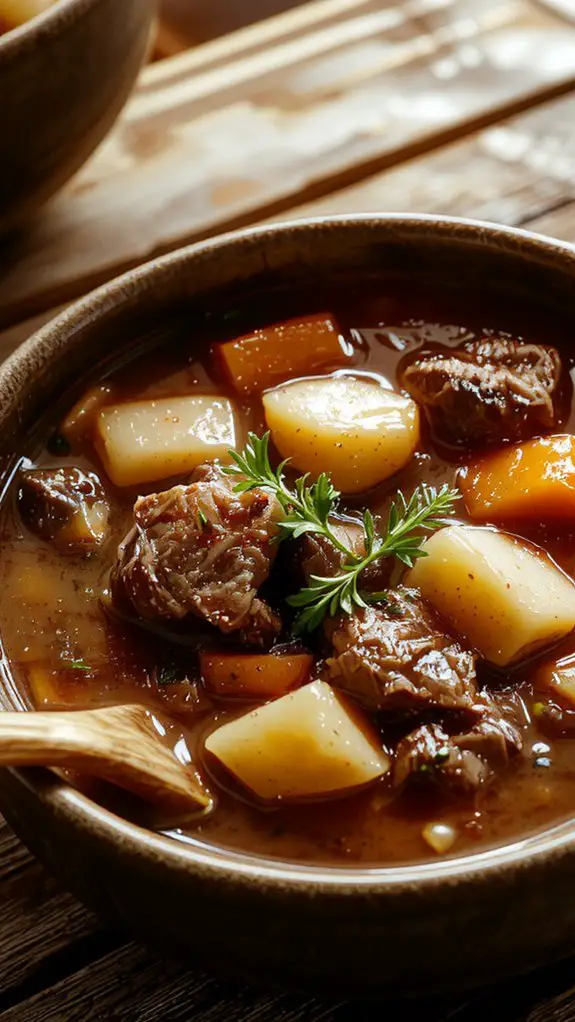
Prep the Beef: Start by patting the beef cubes dry with a paper towel—this helps them brown better. Season generously with salt and pepper.
Heating a large pot or Dutch oven over medium-high heat, add a tablespoon of oil. Brown the beef in batches, making certain each piece gets a good sear but doesn’t overcrowd the pan. Remove and set aside.
Sauté the Aromatics: In the same pot, add chopped onions, carrots, and celery. Cook until softened and slightly caramelized, about 5-7 minutes. This builds a deep flavor base for the stew.
Don’t rush this step!
Deglaze the Pot: Pour in a cup of red wine or beef broth, scraping up the browned bits from the bottom of the pot. These bits are packed with flavor, so don’t skip this vital step.
Add the Beef Back and Simmer: Return the browned beef to the pot. Stir in garlic, tomato paste, and a bay leaf. Pour in enough beef broth to just cover the meat.
Bring to a gentle boil, then reduce the heat to low, cover, and simmer for at least 1.5 hours, or until the beef is tender.
Incorporate the Veggies: About 30 minutes before the stew is done, add diced potatoes, sliced carrots, and any other hearty vegetables you like. This guarantees they’re cooked through but not mushy.
Thicken the Stew: If you prefer a thicker stew, mix a tablespoon of cornstarch with two tablespoons of cold water. Stir this slurry into the stew and let it simmer for a few minutes until the sauce thickens.
Final Touches: Taste and adjust seasoning with salt and pepper. Remove the bay leaf. For a fresh finish, sprinkle chopped parsley or thyme on top before serving.
Pro Tips: If you’re short on time, a pressure cooker can cut the cooking time in half. For extra richness, stir in a tablespoon of butter or a splash of cream at the end.
Watch-Out Warnings: Avoid boiling the stew vigorously after adding the cornstarch slurry, as it can break down and thin out the sauce. Also, don’t add delicate vegetables like peas too early—they’ll turn mushy.
Nutrition
This beef stew recipe offers a hearty and nutritious meal. Below is the nutritional information per serving:
| Nutrient | Amount |
|---|---|
| Calories | 350 |
| Protein | 25g |
| Fat | 12g |
| Carbohydrates | 30g |
| Fiber | 5g |
| Sugar | 6g |
| Sodium | 800mg |
Chef Tips
To guarantee your beef stew turns out flavorful and tender, I always recommend browning the meat in batches before simmering. Don’t overcrowd the pan, or it’ll steam instead of sear.
Use a mix of root vegetables for depth, and deglaze the pot with red wine or broth for extra richness. Simmer on low heat to avoid toughening the meat.
Taste and adjust seasoning before serving.