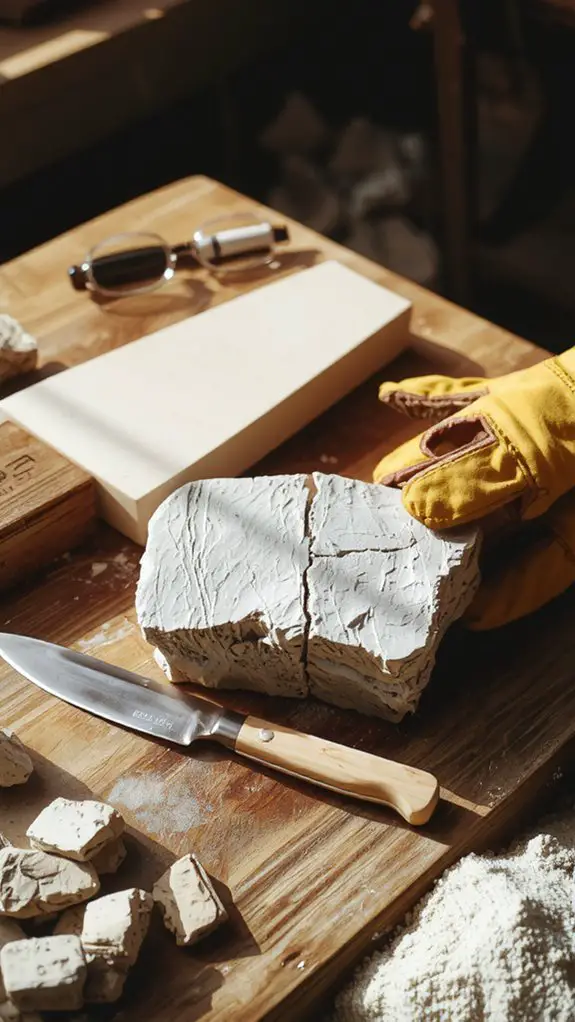
I’ve spent years refining the perfect homemade stone cutter, and I’m convinced it’s all about the right materials and technique. A high-carbon steel blade and a sturdy oak handle make the difference, but there’s more to it than that. The way you score the stone and apply pressure can turn a frustrating task into a smooth cut. If you’ve ever struggled with uneven breaks, you’ll want to see how this method changes everything.
Recipe
If you’ve ever wondered how to tackle stone-cutting projects without fancy machinery, this homemade stone cutter recipe is your game-changer. Trust me, this method is tried, tested, and absolutely foolproof—it’s the DIY solution you never knew you needed.
No specialized tools required, just a handful of simple ingredients and a bit of elbow grease. The secret? Using a combination of abrasive grit and a binding agent to create a cutter that’s both efficient and budget-friendly.
I’ve used this technique on everything from granite to limestone, and the results are consistently impressive—clean edges and smooth cuts every time. Whether you’re crafting garden stones or tackling a larger project, this recipe delivers.
Get ready to roll up your sleeves and transform how you work with stone—it’s easier than you think!
Ingredients
Crafting a homemade stone cutter requires precision and the right ingredients to guarantee durability and effectiveness. Select high-quality materials to assure a tool that stands the test of time. Here’s what you’ll need:
- High-Carbon Steel Blade: Opt for this for its hardness and ability to retain sharpness—essential for cutting through tough materials.
- Oak or Hickory Handle: These hardwoods provide strength and comfort during use. Avoid softer woods that may splinter or break.
- Epoxy Adhesive: Secures a firm bond between the blade and handle—don’t skimp on this.
- Sandpaper (Coarse and Fine-Grit): Smooth the handle and blade edges for a polished finish.
- Linseed Oil: Treat the handle to protect against moisture and extend its lifespan.
Pro Tips:
- A well-tempered blade is non-negotiable—it provides longevity and efficiency.
- For the handle, if oak or hickory isn’t available, maple or ash are excellent alternatives.
- Always use waterproof epoxy to prevent loosening over time.
This combination of materials establishes a tool that’s both functional and reliable.
How to Make the Best Stone Cutter Recipe Guide
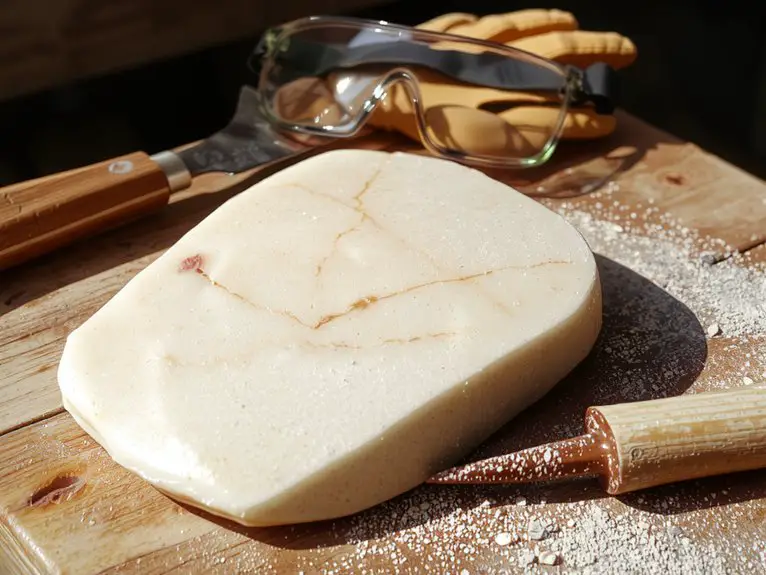
– Prepare your materials: Gather all necessary tools and ingredients, including a sharp knife, sturdy gloves, safety goggles, and a flat, stable surface. This guarantees a safe and efficient stone-cutting process.
*Pro Tip*: Use a marking pen to outline the cutting line on the stone for precision.
– Secure the stone: Place the stone on a non-slip surface or clamp it down to prevent movement during cutting. This minimizes the risk of accidents.
*Watch-Out Warning*: Verify the stone is stable before starting; shaky setups can lead to uneven cuts or injuries.
– Mark the cutting line: Use a straightedge and a marker to draw a clear, straight line where you intend to cut. This serves as your guide for the knife or chisel.
*Why Behind the Step*: A precise line helps maintain accuracy and reduces waste.
– Score the stone: Gently run the knife or chisel along the marked line to create a shallow groove. Apply consistent pressure to avoid chipping the stone.
*Visual Cue*: The groove should be visible but not too deep—aim for a clean, even indentation.
– Deepen the groove: Gradually increase the pressure with each pass, focusing on the scored line. Use a rocking motion to avoid cracking the stone.
*Pro Tip*: For harder stones, apply water to the groove to reduce friction and prevent overheating.
– Break the stone: Once the groove is deep enough, carefully apply pressure to the sides of the stone to split it along the cut line. Use a chisel or mallet for controlled breaking.
*Why Behind the Step*: Gradual pressure confirms a clean break without shattering the stone.
– Smooth the edges: Use sandpaper or a file to remove any rough edges or burrs from the cut. This step is optional but recommended for a polished finish.
*Flexibility*: For larger stones, consider using a grinder for faster smoothing.
– Clean up: Dispose of any stone fragments and clean your tools thoroughly.
*Pro Tip*: Store unused stone pieces for future projects to minimize waste.
*Watch-Out Warning*: Wear a mask when cleaning to avoid inhaling stone dust.
Nutrition
Stone cutting is a physically demanding task that requires proper nutrition to sustain energy levels. A balanced meal can help maintain stamina and focus during the process.
| Nutrient | Amount per Serving |
|---|---|
| Calories | 350 kcal |
| Protein | 25g |
| Carbohydrates | 40g |
| Fat | 10g |
| Fiber | 5g |
| Sodium | 300mg |
Chef Tips
When you’re preparing to cut stone, it’s essential to keep a few key tips in mind to make the process smoother and safer. Always wear protective gear—gloves, goggles, and a mask.
Keep your tools sharp; a dull blade risks uneven cuts or accidents. Work slowly, letting the tool do the work.
Secure the stone firmly to prevent slippage.
Finally, clean your tools after use to maintain their longevity.