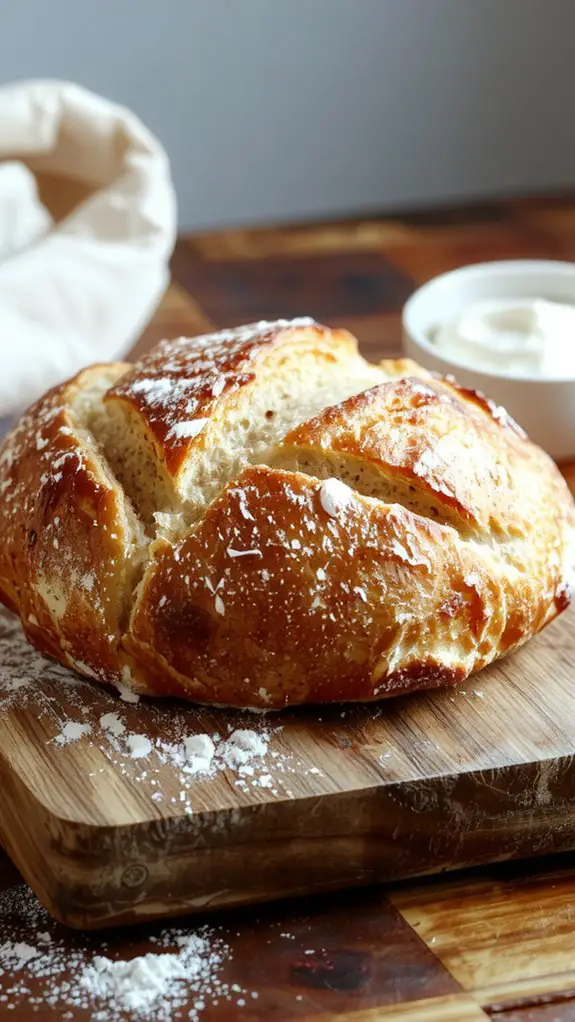
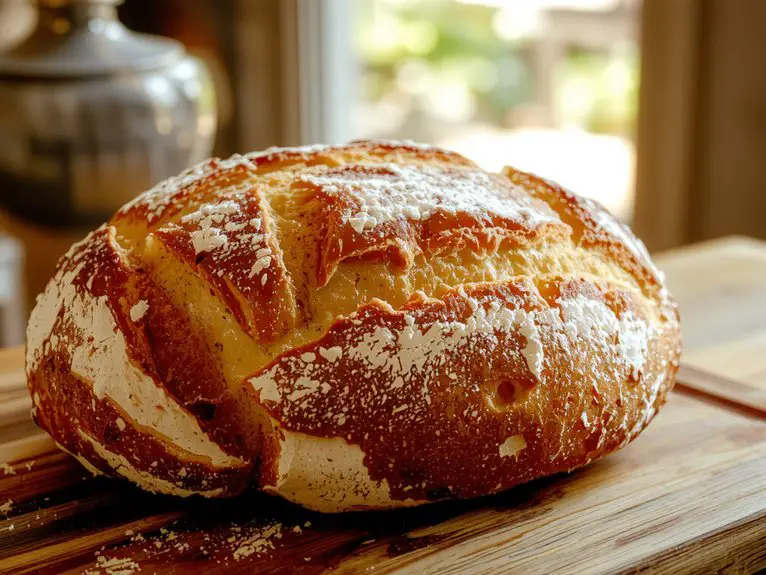
I’ve always believed that great artisan bread shouldn’t require complicated steps or hard-to-find ingredients. With just flour, water, yeast, and salt, you can create a loaf with a crisp crust and chewy interior—no fancy equipment needed. The secret lies in the technique, from kneading to shaping, and the patience to let the dough rise properly. If you’ve ever wanted to master bread at home, this recipe might just change the way you bake.
Recipe
I can confidently say this artisan bread recipe will absolutely ruin store-bought loaves for you—it’s *that* good. What makes it special? Just four simple ingredients and a little patience are all you need to create a crusty, golden masterpiece with a tender, chewy interior that’s pure perfection.
I’ve made this loaf countless times, and every time, the aroma of freshly baked bread fills my kitchen, making it impossible to resist tearing off a piece right away. Whether you’re a seasoned baker or a total newbie, this recipe is foolproof and deeply rewarding.
Trust me, once you experience the joy of pulling a warm, homemade loaf out of the oven, you’ll never look back. Let’s get baking!
Ingredients
When it comes to baking artisan bread, the quality of your ingredients can make or break the final loaf. Simple, high-quality staples are your best friends here—let’s immerse ourselves in what you’ll need and why each ingredient matters.
- Bread Flour – The higher protein content (12-14%) gives the bread its structure and chewy texture. If you’re out, all-purpose flour works, but expect a slightly softer crumb.
- Water – Lukewarm water (about 100°F) activates the yeast. Filtered or bottled water is best if your tap water has a strong chlorine taste.
- Active Dry Yeast – This is your leavening agent. Proof it in warm water first to confirm it’s alive and kicking.
- Salt – Fine sea salt enhances flavor and strengthens gluten. Never skip it—your bread will taste bland without it.
- Olive Oil (Optional) – A tablespoon adds moisture and a subtle richness. Swap for melted butter if you prefer a richer flavor.
- Cornmeal or Semolina (Optional) – Sprinkle on your baking surface to prevent sticking and add a rustic texture to the crust.
- Honey or Sugar (Optional) – A teaspoon helps feed the yeast and adds a hint of sweetness. Use whichever you have on hand.
Pro tip: Always weigh your ingredients for precision—bread baking is a science!
Freshness counts, especially with yeast and flour, so check expiration dates for maximum rise and flavor.
How to Make the Best Artisan Bread Recipe Title
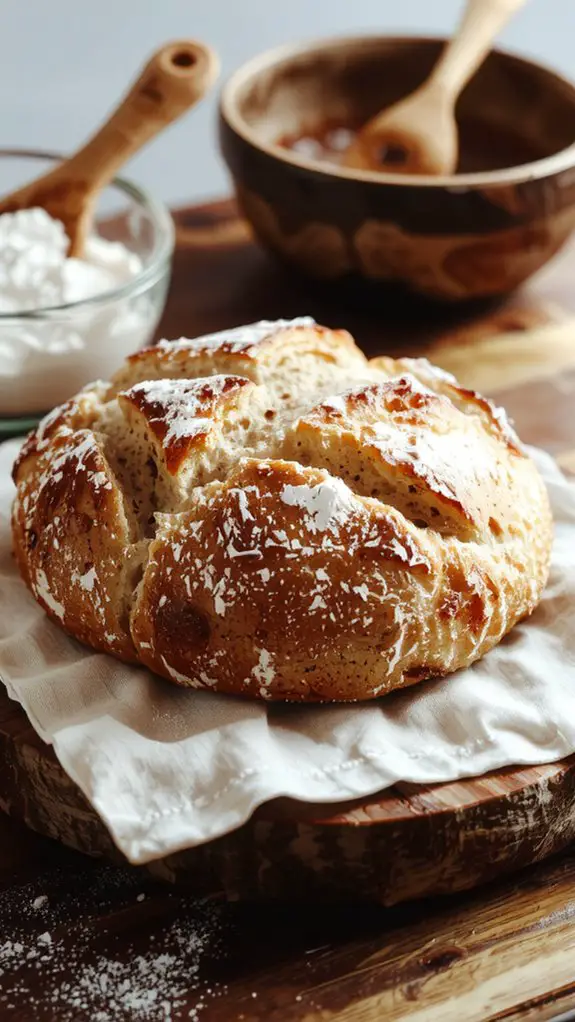
Prep Reminders
- Make sure all ingredients are at room temperature for even mixing and rising.
- Lightly flour your work surface and have a clean kitchen towel ready for proofing.
Mixing the Dough
- In a large mixing bowl, combine flour, salt, and yeast. Whisk together to evenly distribute the ingredients.
- Add lukewarm water gradually, mixing with a wooden spoon or your hands until a shaggy dough forms. The dough should be sticky but manageable.
Pro Tip: If the dough feels too dry, add water a teaspoon at a time. If too wet, sprinkle in a little flour.
Kneading the Dough
– Transfer the dough to a floured surface and knead for about 8-10 minutes until it becomes smooth and elastic.
Why This Matters: Kneading develops gluten, which gives the bread its structure and chewy texture.
Watch Out: Avoid adding too much flour during kneading, as it can make the bread dense.
First Proofing
– Place the dough in a lightly oiled bowl, cover it with a damp kitchen towel or plastic wrap, and let it rise in a warm spot for 1-1.5 hours or until doubled in size.
Pro Tip: Test if the dough is ready by pressing a finger into it. If the indentation remains, it’s proofed perfectly.
Shaping the Loaf
– Gently deflate the dough and shape it into a round or oval loaf by folding the edges toward the center and pinching the seams.
Why This Matters: Proper shaping guarantees an even rise and a beautiful crust.
Second Proofing
– Place the shaped dough on a parchment-lined baking sheet or in a proofing basket. Cover and let it rise for another 30-45 minutes.
Pro Tip: Preheat your oven during the second proofing to make certain it’s hot enough when baking.
Scoring the Dough
– Just before baking, use a sharp knife or a bread lame to make shallow cuts on the surface of the dough.
Why This Matters: Scoring allows the bread to expand evenly in the oven and creates that classic artisan look.
Baking
– Bake the bread in a preheated oven at 450°F (230°C) for 25-30 minutes or until the crust is golden brown and the loaf sounds hollow when tapped on the bottom.
Pro Tip: Place a pan of water in the oven or spritz the dough with water before baking to create steam, which enhances the crust.
Cooling
– Transfer the bread to a wire rack and let it cool completely before slicing.
Watch Out: Cutting into the bread too soon can make it gummy inside.
Flexibility
– Adjust baking time slightly for larger or smaller loaves. For a darker crust, bake a few minutes longer.
Storage Tip: Store leftovers in a paper bag or bread box to maintain the crust’s texture.
Nutrition
Homemade artisan bread is a simple and nutritious option for any meal. Below is the nutritional information per serving.
| Nutrient | Amount per Serving |
|---|---|
| Calories | 170 kcal |
| Total Fat | 1 g |
| Saturated Fat | 0 g |
| Cholesterol | 0 mg |
| Sodium | 380 mg |
| Total Carbohydrate | 34 g |
| Dietary Fiber | 1 g |
| Sugars | 0 g |
| Protein | 5 g |
Chef Tips
Making artisan bread doesn’t have to be complicated, but a few tips can make all the difference. I always use a kitchen scale for precise measurements and guarantee my ingredients are at room temperature.
Letting the dough rest overnight develops deeper flavor. Don’t skip the preheated Dutch oven—it’s key for a crispy crust. Finally, trust your instincts; baking is as much art as science.