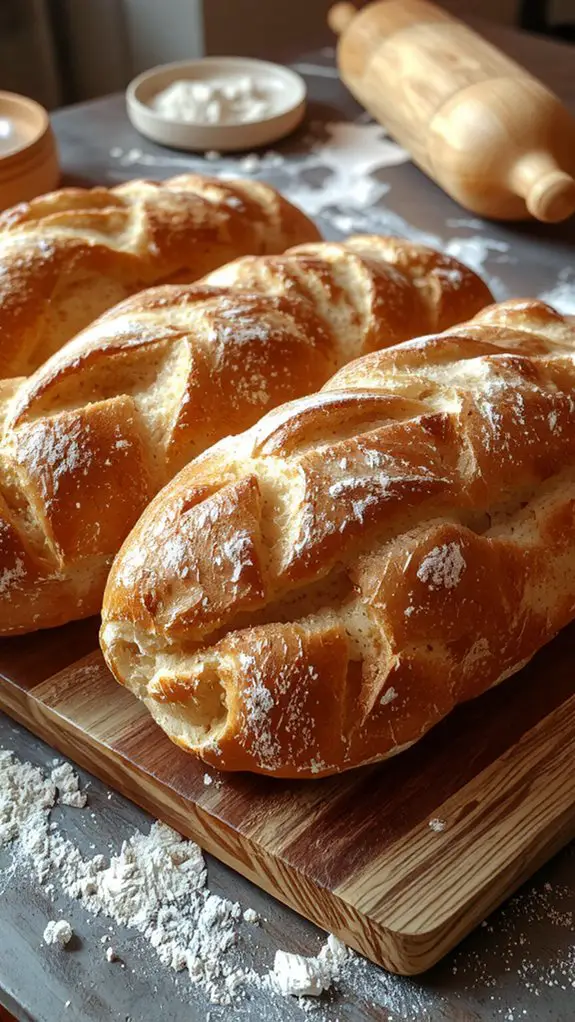
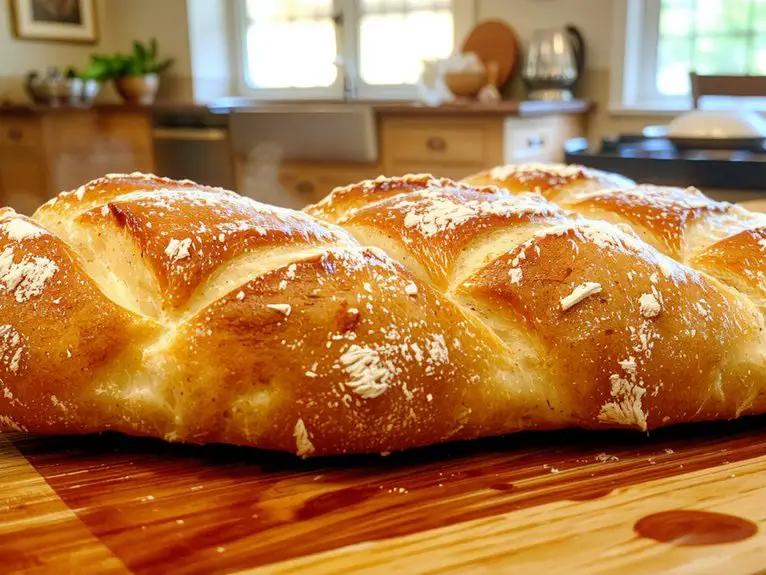
I’ve spent years perfecting my baguette recipe, and I’m convinced the secret lies in just four simple ingredients. The right technique transforms flour, water, yeast, and salt into a crusty golden loaf with a soft, airy interior. But there’s a trick to achieving that signature crackle—one most home bakers overlook. If you’re ready to elevate your bread game, let’s break down what makes this recipe stand out.
Recipe
There’s nothing quite like the smell of freshly baked baguette wafting through your kitchen—crispy on the outside, pillowy on the inside, and impossible to resist tearing into.
This recipe isn’t just about bread; it’s about mastering the art of simplicity. With just four ingredients—flour, water, salt, and yeast—you’ll create a baguette that rivals any bakery’s.
The secret? Patience. A slow rise brings out that deep, complex flavor that makes store-bought versions pale in comparison.
Imagine biting into a slice with its crackling crust and airy, chewy crumb—pure bliss.
Whether you’re a seasoned baker or a first-timer, this recipe is foolproof and rewarding. Trust me, once you’ve tasted homemade baguette, there’s no going back.
Ingredients
Crafting the perfect baguette starts with selecting the right ingredients—each plays a pivotal role in achieving that iconic crusty exterior and airy, chewy interior. Stick to high-quality basics, and you’ll be surprised how simple it’s to create bakery-worthy bread at home. Here’s what you’ll need:
- Bread Flour (500g): The high protein content is essential for gluten development, giving your baguette its signature chew. Avoid all-purpose flour—it won’t deliver the same structure.
- Water (350g, lukewarm): Water temperature matters! Lukewarm water activates the yeast without killing it, guaranteeing a good rise.
- Active Dry Yeast (7g): Fresh yeast can work too, but dry yeast is more accessible and reliable. Proof it in the water to confirm it’s alive and active.
- Salt (10g): Salt enhances flavor and strengthens the dough. Don’t skip it—your baguette will taste bland without it.
- Optional: Diastatic Malt Powder (2g): This secret baker’s trick boosts fermentation and gives the crust a deeper golden color. If you don’t have it, a pinch of sugar can help the yeast thrive.
Pro Tip: Use filtered or bottled water if your tap water has a strong chlorine taste—it can affect the yeast’s performance.
Substitutions: If bread flour isn’t available, you can use all-purpose flour in a pinch, but expect a slightly denser crumb.
Non-Negotiables: Bread flour and salt are non-negotiable for texture and flavor. Don’t compromise here.
Little Wins: For an extra glossy crust, brush the baguettes with water before baking. It’s a small step that makes a big difference.
How to Make the Best Authentic French Baguette Recipe
- Start by activating the yeast: In a small bowl, mix warm water (around 110°F) with a pinch of sugar and the yeast. Let it sit for 5-10 minutes until frothy. This step verifies your yeast is alive and ready to work its magic.
- Mix the dough: Combine the flour and salt in a large bowl. Gradually add the yeast mixture, stirring until a shaggy dough forms. Avoid overmixing—it should come together without being overly smooth.
- Knead the dough: Turn the dough onto a lightly floured surface and knead for about 10 minutes. You’re aiming for a smooth, elastic texture. If the dough is too sticky, add a sprinkle of flour, but don’t overdo it—too much flour leads to a dense baguette.
- First rise: Place the dough in a lightly oiled bowl, cover it with a clean kitchen towel, and let it rise in a warm spot for 1-2 hours, or until it doubles in size. Patience is essential here; this step builds flavor and structure.
- Shape the baguettes: Gently deflate the dough and divide it into equal portions. Roll each piece into a long, thin log, tapering the ends slightly. Use your palms to coax it into the classic baguette shape.
- Second rise: Place the shaped baguettes on a floured baking sheet or baguette pan, cover them, and let them rise for another 30-45 minutes. This short rest guarantees a light, airy texture.
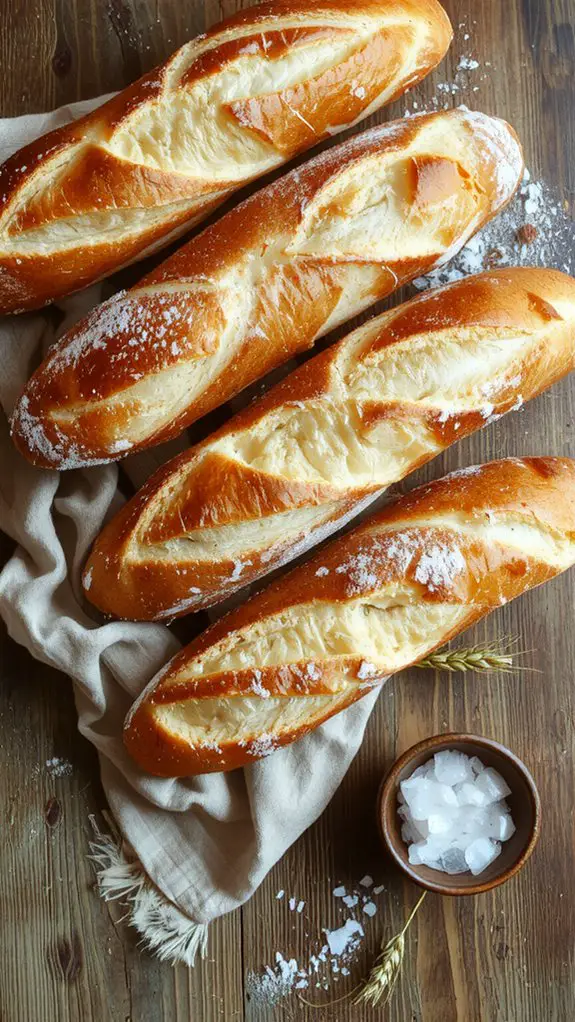
- Preheat and score: While the dough rises, preheat your oven to 475°F (245°C) and place a shallow pan on the bottom rack. Just before baking, make 3-4 diagonal slashes on each baguette with a sharp knife or razor blade. This allows steam to escape and gives that signature crusty look.
- Bake with steam: Fill the preheated pan with boiling water to create steam, then place the baguettes in the oven. Bake for 20-25 minutes, or until the crust is golden brown and sounds hollow when tapped. Steam is vital for a crispy crust.
- Cool completely: Transfer the baguettes to a wire rack and let them cool completely before slicing. Cutting into them too early can trap steam and soften the crust.
Nutrition
2 slices (56g) of homemade baguette provide:
| Nutrient | Amount |
|---|---|
| Calories | 140 |
| Total Fat | 0.5g |
| Sodium | 280mg |
| Total Carbs | 28g |
| Protein | 5g |
Chef Tips
Understanding the nutritional value of homemade baguettes helps me make informed choices, but mastering the technique also plays a big role in achieving great results.
I always use high-protein flour for better structure and let the dough rest longer for flavor. Scoring the top deeply guarantees even rising.
A hot oven with steam creates that perfect crust. Practice makes the process easier over time.