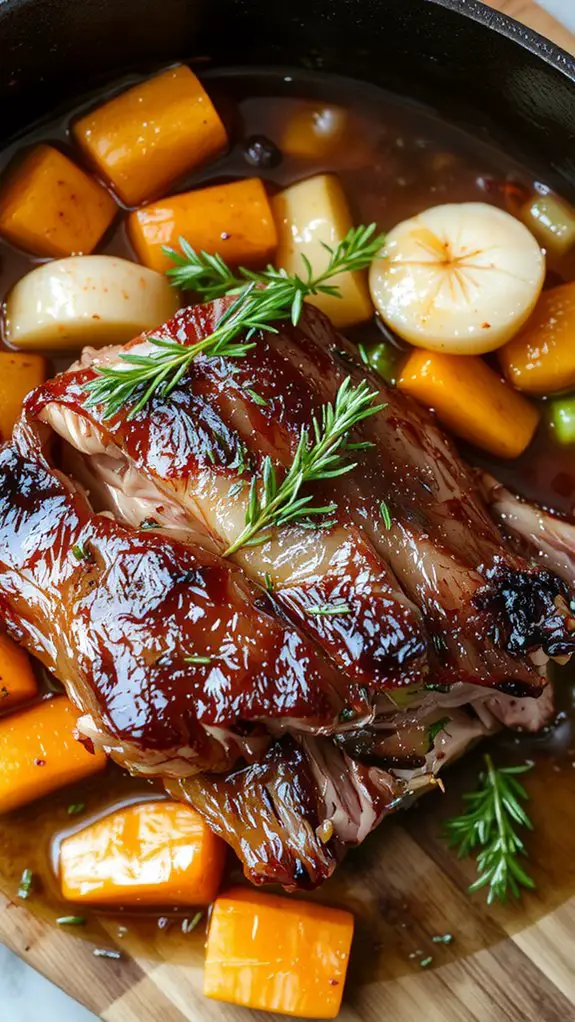
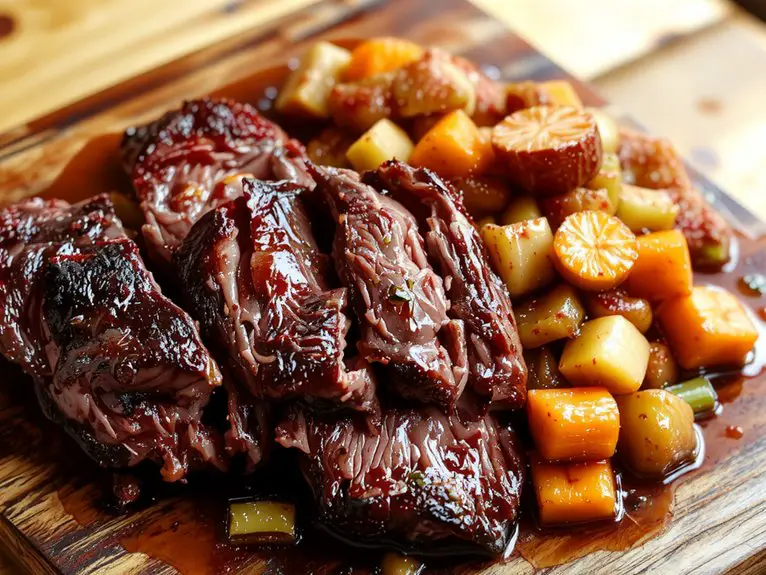
I’ve always believed a great pot roast is a blend of patience and simplicity, with a focus on technique that transforms humble ingredients into something extraordinary. The key lies in the sear, the slow cook, and the right balance of flavors. Yet, even with these elements, there’s a detail often overlooked that can elevate it further. What you’re missing might just change how you approach this classic dish forever.
Recipe
There’s nothing quite like the smell of a pot roast slow-cooking in your kitchen—rich, savory, and downright comforting.
This recipe? It’s the ultimate Sunday dinner showstopper, the kind that makes everyone hover around the oven, impatiently waiting for that first tender bite.
What sets it apart? A perfect sear on the beef locks in flavor, while a mix of garlic, rosemary, and red wine creates a sauce so good, you’ll want to drink it with a spoon.
And the meat? Fall-apart tender, practically melting into the buttery carrots and potatoes.
Trust me, once you try this version, you’ll never go back to the bland, dry roasts of the past. Let’s make magic happen.
Ingredients
To create the ultimate homemade pot roast, the right ingredients are key. Opt for a well-marbled cut of beef for maximum flavor and tenderness, and don’t skimp on aromatics—they build the foundation of the dish. Here’s what you’ll need, along with insider tips and swaps to make it your own:
Meat:
– 3-4 pounds chuck roast**: This cut is rich in connective tissue, which breaks down into melt-in-your-mouth tenderness during slow cooking. (Can substitute with brisket or bottom round**, but chuck is ideal.)
Aromatics & Vegetables:
- 1 large onion, chopped: Adds sweetness and depth.
- 4 cloves garlic, minced: Essential for robust flavor.
- 3-4 carrots, peeled and chopped: Caramelize beautifully and add natural sweetness.
- 3 stalks celery, chopped: Enhances the savory base of the dish.
- 2-3 medium potatoes, chopped: Russets or Yukon Golds hold up well and soak up the juices.
Liquid & Seasoning:
- 2 cups beef broth: Provides the base for the gravy. (Swap with chicken broth or water if needed.)
- 1 cup red wine: Adds complexity and richness. (Omit if preferred or use balsamic vinegar for depth.)
- 2 tablespoons tomato paste: Intensifies the savory flavor.
- 1 tablespoon Worcestershire sauce: A secret weapon for umami.
- 2 sprigs fresh thyme: Infuses herbal notes. (Dried thyme works in a pinch—use 1 teaspoon.)
- 2 bay leaves: Non-negotiable for that classic pot roast aroma.
Fat & Thickening:
- 2 tablespoons olive oil or unsalted butter: For searing the meat to lock in flavor.
- 2 tablespoons all-purpose flour: Helps thicken the sauce. (Use cornstarch as a gluten-free alternative.)
Optional Extras:
- 1 cup mushrooms, sliced: Introduce an earthy flavor.
- 1 tablespoon Dijon mustard: Adds a subtle tang.
- Fresh parsley, for garnish: A bright, fresh finish.
Pro Tip: Sear the meat well—it’s the secret to a rich, caramelized crust that adds depth to the final dish.
And if you’re short on time, a slow cooker works just as well as the oven for this recipe.
How to Make the Best Classic Comfort Pot Roast
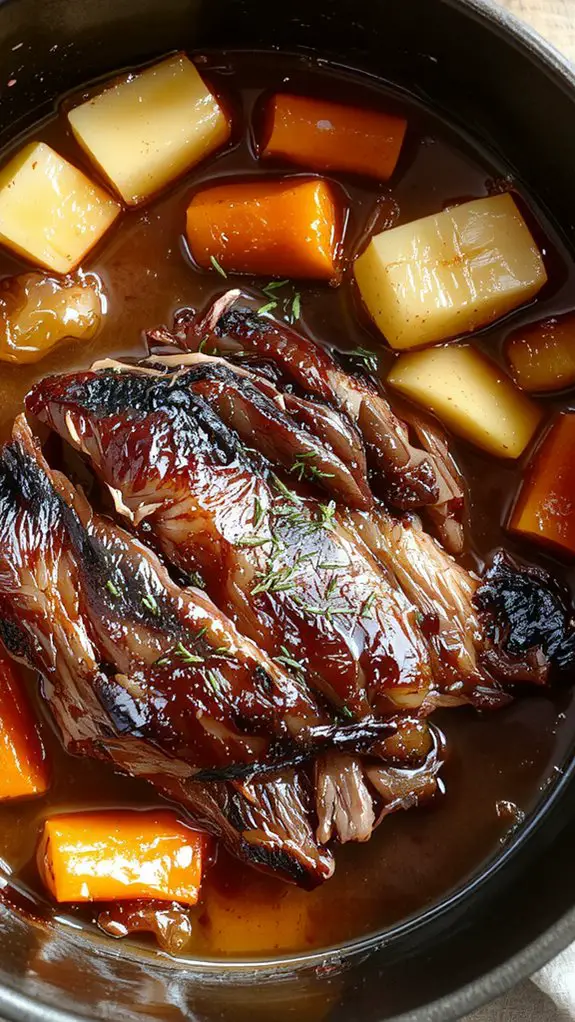
Cover and braise in the oven for 3-4 hours. Check for fork-tenderness—the meat should pull apart easily. Too tough? Give it another 30 minutes.
Rest the roast for 15 minutes before slicing. This keeps the juices inside.
While it rests, skim excess fat from the braising liquid and reduce it slightly for a luscious gravy.
Serve with the reduced sauce and tender vegetables. Pair with mashed potatoes or crusty bread to soak up every drop.
Flexibility note: For a quicker version, use a pressure cooker (about 90 minutes on high pressure).
Nutrition
Understanding the nutritional content of your homemade pot roast is essential for maintaining a balanced diet.
| Nutrition Facts | Per Serving |
|---|---|
| Calories | 350 kcal |
| Protein | 30 g |
| Fat | 15 g |
| Carbohydrates | 20 g |
| Fiber | 3 g |
| Sugar | 4 g |
| Cholesterol | 85 mg |
| Sodium | 500 mg |
Chef Tips
Mastering a pot roast starts with a few simple tricks. I always sear the meat first to lock in flavor and create a rich crust.
Use a heavy, oven-safe pot for even heat distribution. Add broth slowly, just enough to cover halfway.
Low and slow is key—don’t rush the cooking process. Finally, let it rest before slicing to keep the meat tender and juicy. Perfect every time.