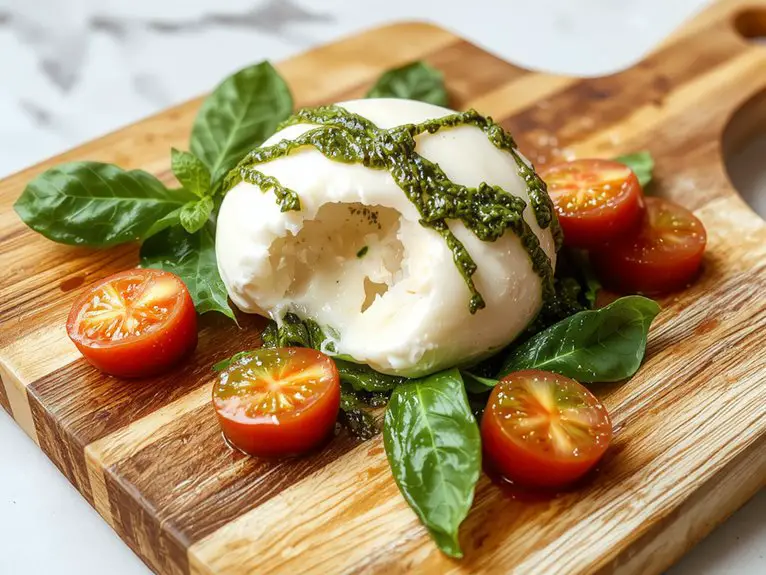
Making homemade burrata might seem intimidating, but I promise it’s simpler than you think. With just a few fresh ingredients and patience, you’ll craft a creamy, delicate cheese that puts store-bought versions to shame. The secret lies in the technique—stretching the curds just right to form that perfect pouch. Once you taste the rich, velvety center, you’ll wonder why you didn’t try this sooner. Let’s get started.
Recipe
Let me tell you a little secret: making burrata at home is easier than you think, and once you taste the creamy, dreamy goodness of homemade cheese, you’ll never go back to store-bought.
This recipe is a game-changer—simple, rewarding, and packed with flavor. Using just a few high-quality ingredients like fresh milk, cream, and rennet, you’ll craft a burrata that’s unbelievably smooth and silky on the inside, with a delicate outer pouch that bursts with rich creaminess.
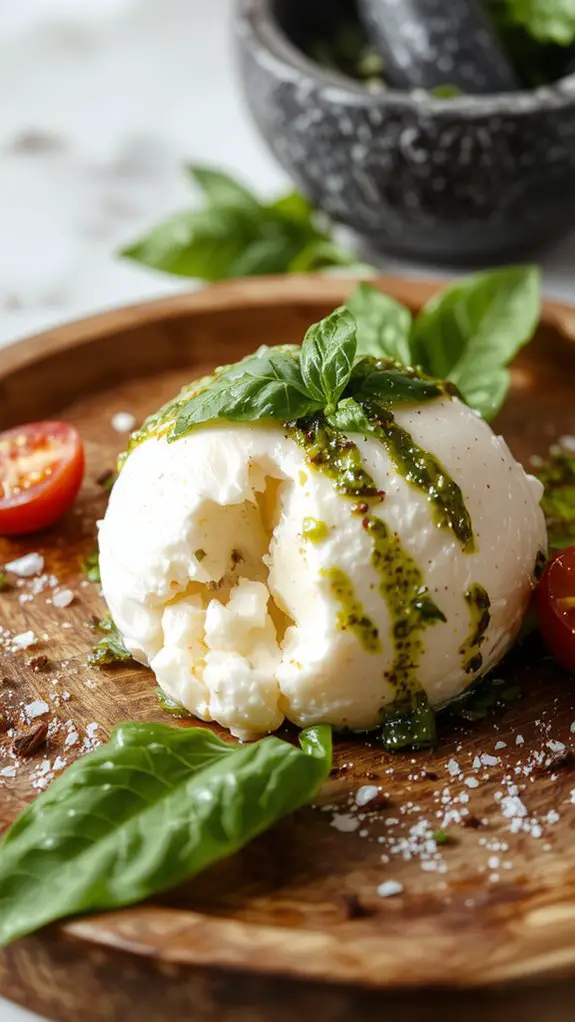
Imagine tearing into that pillowy cheese, oozing with decadence, and pairing it with ripe tomatoes, basil, and a drizzle of olive oil—it’s pure perfection.
Trust me, this burrata will impress everyone at your table, and you’ll feel like a cheese-making pro. Let’s get started—you’ve got this!
Ingredients
Making burrata at home is easier than you think, but the magic lies in the quality of your ingredients. Freshness is non-negotiable—this isn’t the time to skimp. Here’s what you’ll need to craft that creamy, dreamy center and delicate outer shell:
For the Mozzarella Shell:
- 1 gallon whole milk (not ultra-pasteurized) – The higher the fat content, the silkier the texture. Ultra-pasteurized milk won’t coagulate properly, so check the label.
- 1/4 tsp citric acid – This guarantees the milk curdles perfectly. No citric acid? Lemon juice works in a pinch, but it’ll add a slight tang.
- 1/4 rennet tablet (or 1/4 tsp liquid rennet) – Non-negotiable for proper curd formation. Vegetarian? Use microbial rennet.
- 1 tsp kosher salt – Enhances flavor without overpowering the delicate cheese.
For the Burrata Filling (Stracciatella):
- 1 cup fresh mozzarella curds (or torn fresh mozzarella) – The fresher, the better. Store-bought is fine, but homemade takes it next-level.
- 1/2 cup heavy cream – Don’t substitute with half-and-half; the richness is key for that luscious pull.
- 1/4 tsp flaky sea salt – Balances the creaminess. Maldon salt adds a nice crunch.
Pro Tips:
- Warm the milk slowly—too fast, and you risk breaking the curds.
- Use a thermometer for precision; 90°F for rennet activation, 175°F for stretching.
- Fresh cream is a must—older cream can taste sour and ruin the filling’s sweetness.
Little Wins:
- A drizzle of good olive oil and a sprinkle of freshly cracked pepper on finished burrata? Chef’s kiss.
- Fresh basil leaves for serving add a fragrant, garden-fresh touch.
How to Make the Best Creamy Burrata With Basil Pesto Recipe
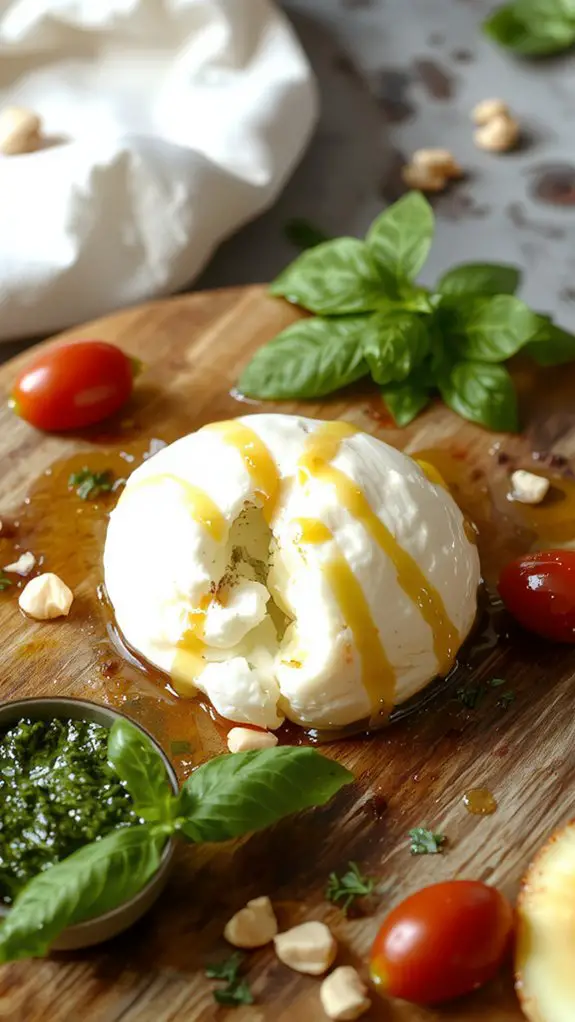
Begin by preparing the burrata dough. Combine fresh mozzarella curds with warm water in a large bowl, kneading gently until the mixture becomes smooth and elastic. This step is essential for achieving that signature creamy center.
Pro tip: Use gloves if the mixture feels too warm to handle—it’ll make kneading easier.
Shape the dough into small balls. Gently stretch the dough into thin, pliable sheets, careful not to tear them. This guarantees the burrata has a delicate outer layer.
Watch out: Overhandling the dough can make it tough, so work quickly and confidently.
Fill the dough with fresh cream. Place a spoonful of heavy cream in the center of each sheet, then fold the edges over to seal. The cream is what creates that luscious, melt-in-your-mouth interior.
Visual cue: The dough should be soft and slightly translucent when held up to the light.
Immerse the burrata in cold water. After sealing, dunk each burrata in a bowl of ice water for a few seconds to help it hold its shape. This step secures the outer layer remains firm while the inside stays creamy.
Pro tip: Keep the water ice-cold for best results.
Prepare the basil pesto. Blend fresh basil leaves, pine nuts, garlic, Parmesan cheese, and olive oil until smooth. This vibrant pesto adds a fresh, herby contrast to the creamy burrata.
Time-saving trick: Use a food processor for a quicker, consistent blend.
Assemble and serve. Place the burrata on a plate, drizzle generously with basil pesto, and garnish with extra basil leaves or cherry tomatoes.
Flexibility: You can also add a sprinkle of sea salt or cracked pepper for extra flavor.
Visual cue: The dish should look inviting and vibrant, with the creamy burrata at the center.
Nutrition
Homemade Burrata is rich in nutrients, providing essential vitamins and minerals. Here’s a breakdown of its nutritional content per serving (100g):
| Nutrient | Amount |
|---|---|
| Calories | 340 kcal |
| Protein | 18g |
| Fat | 28g |
| Carbohydrates | 2g |
| Calcium | 500mg |
| Sodium | 400mg |
Chef Tips
Though burrata might seem intimidating to make, I’ve found that a few simple tips can turn it into a rewarding process.
Use fresh, high-quality ingredients, especially the milk and cream—they’re the heart of the dish.
Keep everything cool to prevent the curds from breaking.
Work the mozzarella gently to maintain its delicate texture.
Finally, practice patience; shaping and filling take time but yield a creamy masterpiece.