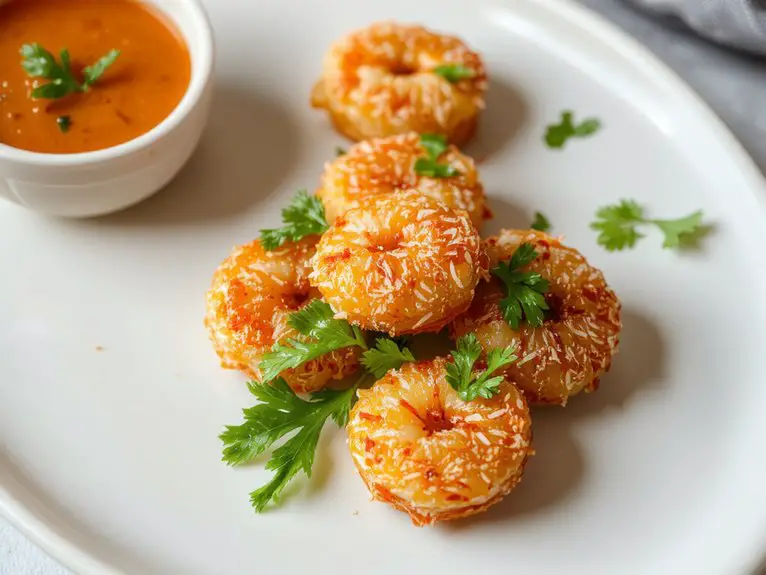
I’ve spent years perfecting my coconut shrimp recipe, and I’m convinced this version hits all the right notes. The secret lies in the balance of crispy coconut coating and tender shrimp, fried just until golden. But there’s more to it than that—the right oil, the perfect dip, and a few tricks I’ve picked up along the way. If you’re after that restaurant-quality crunch at home, you’ll want to see how it’s done.
Recipe
There’s something about crispy, golden coconut shrimp that feels like a tropical vacation on a plate—and this homemade version? It’s *the* recipe you’ll want to keep in your back pocket forever.
With tender, juicy shrimp coated in a crunchy, sweet coconut crust, every bite is pure bliss. The secret? A perfectly balanced batter and a quick dip in hot oil to achieve that irresistible golden crunch.
I’ve made this countless times for everything from weeknight dinners to fancy appetizers, and it never fails to wow. Serve it with a zesty dipping sauce, and you’ll have a crowd-pleaser that’s as easy to make as it’s delicious.
Trust me, once you try this, you’ll never look at restaurant coconut shrimp the same way again!
Ingredients
Crafting coconut shrimp at home starts with selecting the right ingredients—quality matters here. Fresh, large shrimp are the star, and the coconut coating is where the magic happens. Opt for unsweetened shredded coconut for that perfect balance of flavor and texture.
Here’s everything you’ll need to nail this recipe:
- Large shrimp (16-20 count): Peeled and deveined, tails left on for easy handling. Fresh shrimp yield the best flavor, but frozen works if thawed properly.
- Unsweetened shredded coconut: The key to achieving that crispy, golden crust. Sweetened coconut can burn easily, so stick with unsweetened.
- Panko breadcrumbs: Adds extra crunch. Regular breadcrumbs can be substituted if needed.
- All-purpose flour: Essential for binding the coconut coating to the shrimp.
- Eggs: Whisked to create the sticky layer that holds everything together.
- Coconut oil: For frying—it enhances the coconut flavor beautifully. Substitute with vegetable oil if preferred.
- Salt and pepper: A pinch to season the shrimp. Don’t skip this step!
- Cornstarch: Optional, but adding a tablespoon to the flour mixture helps create an extra crispy crust.
- Lime wedges: For serving—fresh lime juice cuts through the richness and adds a zesty kick.
Pro tip: If you’re short on time, pre-peeled shrimp can save you a step, just make sure they’re deveined.
And don’t skimp on the coconut oil—it’s what gives this dish its signature tropical flair.
How to Make the Best Crispy Coconut Shrimp Recipe
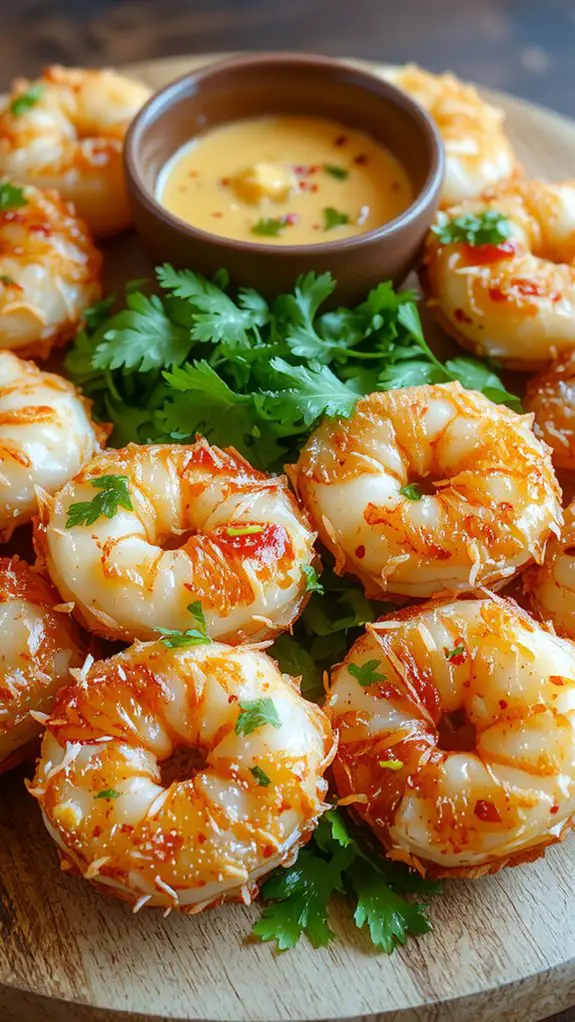
Prepare the shrimp: Start by peeling and deveining the shrimp, leaving the tails intact for easier handling and presentation.
Pat them dry with a paper towel—this helps the coating stick better and guarantees maximum crispiness.
Set up your dredging station: Arrange three shallow bowls—one with all-purpose flour, seasoned with a pinch of salt and pepper; one with beaten eggs; and one with a mix of shredded coconut and breadcrumbs.
This assembly line makes the coating process quick and mess-free.
Coat the shrimp: Dredge each shrimp in the flour first, shaking off any excess.
Dip it into the beaten eggs, letting the excess drip off, and then press it into the coconut mixture, making certain it’s fully coated.
Pro tip: Press gently to help the coating adhere without falling off during frying.
Heat the oil: Fill a deep skillet or pot with about 2 inches of oil and heat it to 350°F (175°C).
Use a candy thermometer to monitor the temperature—too hot, and the coconut will burn; too cool, and the shrimp will absorb too much oil.
Fry the shrimp: Working in small batches, carefully place the coated shrimp into the hot oil.
Fry for 2-3 minutes or until golden brown and crispy.
Watch closely to avoid overcooking, as shrimp cook quickly.
Drain on a paper towel-lined plate to remove excess oil.
Serve immediately: Coconut shrimp are best enjoyed hot and crispy.
Serve with a tangy dipping sauce like sweet chili or citrus aioli for a perfect balance of flavors.
Pro tip: If you’re prepping ahead, you can reheat them in the oven at 350°F (175°C) for 5-7 minutes to restore crispiness.
Nutrition
Coconut shrimp is a delicious and indulgent dish, but it’s important to be mindful of its nutritional content. Below is the nutritional breakdown per serving.
| Nutrition Facts | Per Serving |
|---|---|
| Calories | 320 kcal |
| Total Fat | 18 g |
| Saturated Fat | 10 g |
| Cholesterol | 120 mg |
| Sodium | 380 mg |
| Carbohydrates | 25 g |
| Fiber | 2 g |
| Sugar | 3 g |
| Protein | 15 g |
Chef Tips
To get the best results with homemade coconut shrimp, I always make sure the shrimp are thoroughly dried before dredging—it helps the coating stick better.
Use sweetened coconut flakes for extra crunch and flavor.
Fry in small batches to maintain oil temperature. Serve immediately with a spicy-sweet dipping sauce.
For a lighter version, bake at 400°F until golden.
Don’t skip the panko—it adds texture.