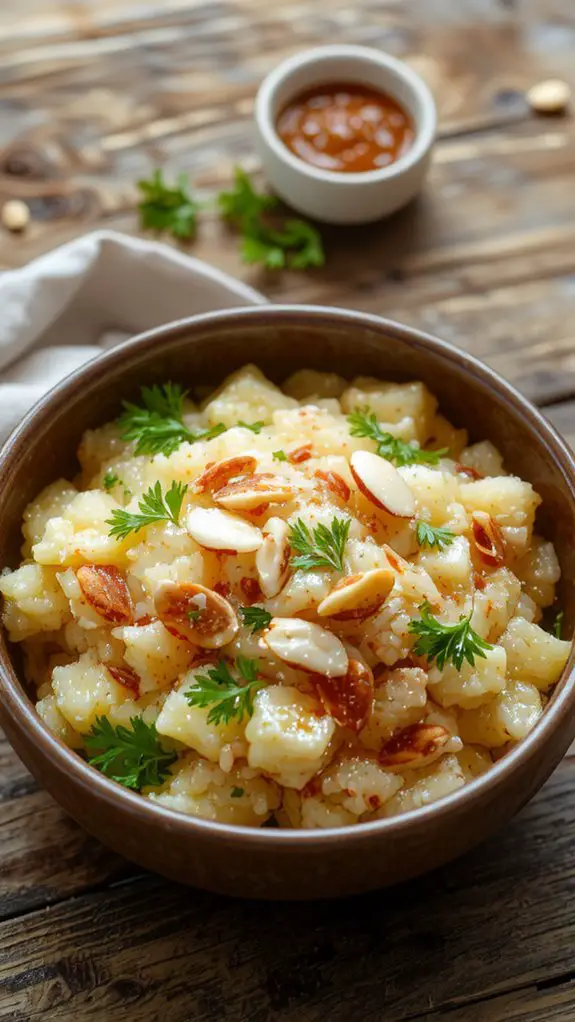
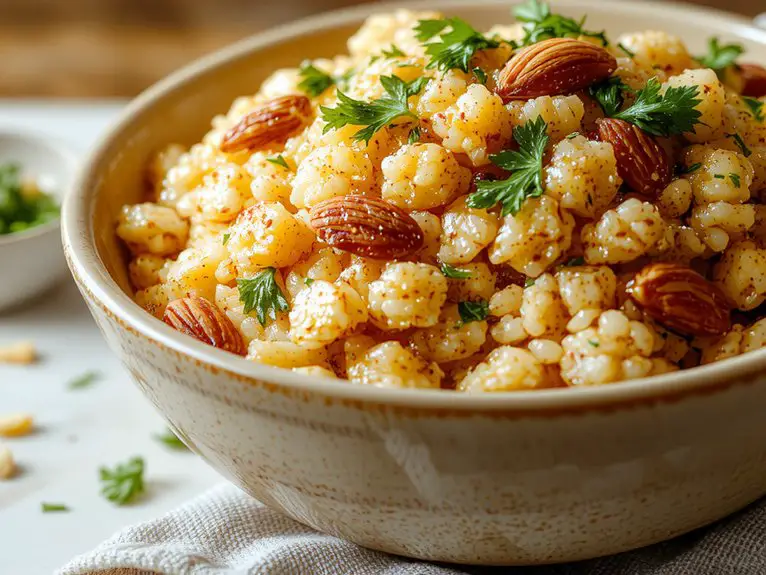
I’ve always found couscous to be a versatile staple, but making it truly exceptional at home requires a few key techniques. Toasting the grains beforehand enhances their nutty flavor, while using broth instead of water adds depth. The balance of liquid and fluffing method makes all the difference in texture. If you’re curious about revealing its full potential, there’s more to explore beyond just boiling water and letting it sit.
Recipe
There’s something magical about homemade couscous—light, fluffy, and infinitely adaptable, it’s the kind of dish that makes weeknight dinners feel special without any fuss.
Forget the boxed stuff; once you try making it from scratch, you’ll wonder why you ever settled for less. The secret? Toasting the grains just enough to bring out their nutty depth before steaming them to perfection.
Whether you pile it high with roasted veggies, fold in fresh herbs, or let it soak up a rich stew, this couscous is your blank canvas for flavor.
And the best part? It’s so easy, you’ll have it memorized after the first try. Trust me, your kitchen (and your taste buds) are about to thank you.
Ingredients
- Couscous – Opt for fine or medium-grain for the best texture. Avoid instant varieties if you want authentic fluffiness.
- Olive oil – A good drizzle adds richness and prevents clumping. Extra virgin is worth it here.
- Vegetable or chicken broth – Cooking couscous in broth instead of water boosts flavor tenfold.
- Salt – Don’t skimp—seasoning the broth properly is key.
- Butter (optional) – A small knob stirred in at the end adds a luxurious silkiness.
Pro Tip: Toast the couscous in olive oil before adding liquid for a nutty depth of flavor.
Substitutions:
- No broth? Use water + a bouillon cube.
- Vegan? Skip butter and add a splash more olive oil.
Must-Haves:
- Fresh herbs – Parsley or cilantro brighten everything up.
- Lemon zest – Just a pinch lifts the whole dish.
Little Wins:
- Toasted almonds or pine nuts for crunch.
- A handful of golden raisins for a sweet contrast.
How to Make the Best Authentic Couscous Preparation

– Season & Serve: Taste and adjust seasoning with salt, pepper, or herbs like parsley or cilantro.
Pro Tip: Add a squeeze of lemon juice for brightness. Serve warm as a side or base for stews and salads.
– Optional Enhancements: Customize with mix-ins like toasted nuts, dried fruits, or sautéed vegetables.
Flexibility: Adjust toppings based on your meal’s theme or preference.
– Storage: Store leftovers in an airtight container in the fridge for up to 3 days.
Reheat with a splash of water or broth to restore moisture.
Time-Saving Trick: Make a double batch for quick meals later in the week.
Nutrition
Couscous is a versatile and nutritious dish that can be easily prepared at home. Below is the nutritional breakdown per serving.
| Nutrient | Amount per Serving |
|---|---|
| Calories | 176 kcal |
| Carbohydrates | 36 g |
| Protein | 6 g |
| Fat | 0.5 g |
| Fiber | 2 g |
| Sodium | 5 mg |
Chef Tips
Cooking couscous well isn’t just about following the recipe—it’s about little tricks that make a big difference. I always toast the grains in a dry pan first for extra nuttiness.
Use a 1:1.5 ratio of couscous to water—no more, or it’ll get mushy. Let it steam off the heat, covered, for 5 minutes.
Fluff with a fork, never a spoon, to keep it light.