I’ve spent years perfecting my elderberry syrup recipe, balancing potency with flavor to create something that truly supports immunity. The secret lies in the quality of ingredients and a method that preserves their benefits. But there’s more to it than just tossing berries in a pot—timing and technique make all the difference. If you’re looking for a syrup that works as hard as you do, this might just change your approach to homemade remedies.
Recipe
I can confidently say this homemade elderberry syrup is the secret weapon your pantry has been missing. Packed with immune-boosting elderberries, zesty ginger, and a hint of cinnamon, it’s not just healthy—it’s downright delicious.
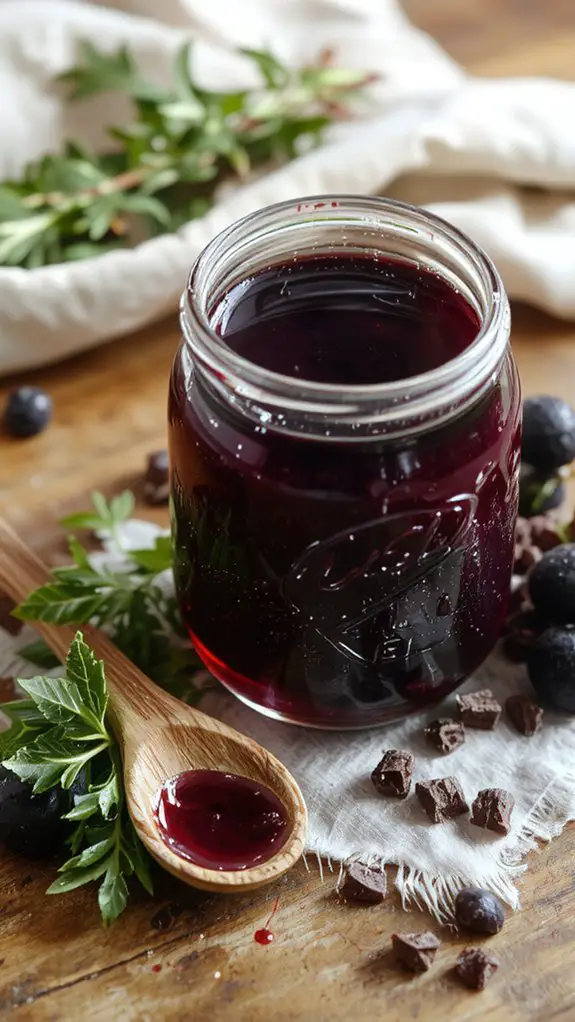
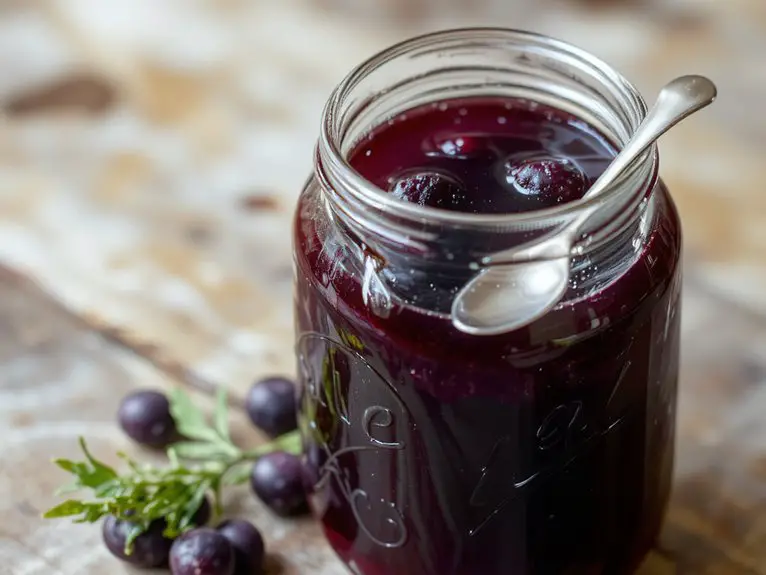
I’ve been making this recipe for years, tweaking it until it’s just right, and now I can’t imagine cold season without it. The syrup is rich, tangy, and slightly sweet, with a warm aroma that feels like a cozy hug in a jar.
Plus, it’s ridiculously easy to whip up—no fancy equipment or hard-to-find ingredients required. Whether you stir it into tea, drizzle it over yogurt, or take it straight by the spoonful, this syrup is a game-changer.
Trust me, once you try it, you’ll want to make double batches to keep on hand. Let’s get cooking!
Ingredients
Homemade elderberry syrup is a powerhouse of immune-boosting goodness, but the secret to a truly effective batch lies in selecting the right ingredients. Let’s break down what you’ll need—and why each one matters—to create a syrup that’s both potent and delicious. For substitutions, I’ve got you covered, but some ingredients are non-negotiable for maximizing flavor and health benefits.
- Dried Elderberries: The star of the show! Look for organic, high-quality dried elderberries for their antiviral and immune-supporting properties. Fresh berries can work in a pinch, but dried berries concentrate the flavor and nutrients.
- Water: Simple, but essential. Use filtered water to guarantee purity and enhance the overall quality of your syrup.
- Raw Honey: Adds natural sweetness and boosts the immune-boosting properties of the syrup. Opt for raw, unpasteurized honey for its enzymes and antioxidants—substitute with maple syrup for a vegan option.
NON-NEGOTIABLE: Freshly grated ginger root—its anti-inflammatory and warming properties elevate the syrup to the next level. A powdered substitute won’t bring the same kick.
- Cinnamon Stick: Adds warmth and depth of flavor while supporting blood sugar balance. Ground cinnamon can work, but the stick releases a subtler, more aromatic taste.
- Cloves: Just a pinch! Cloves add a hint of spice and are packed with antioxidants. Use sparingly, as they can overpower the syrup.
- Optional Boosters: Fresh lemon juice (for brightness and vitamin C) or a dash of turmeric (for anti-inflammatory benefits) can take your syrup to the next level.
Pro Tip: If you’re short on time, pre-mixed elderberry syrup blends are available, but nothing beats the freshness and potency of making it from scratch.
Final touch? Store your syrup in a dark glass bottle to preserve its potency and shelf life.
How to Make the Best DIY Elderberry Syrup Guide
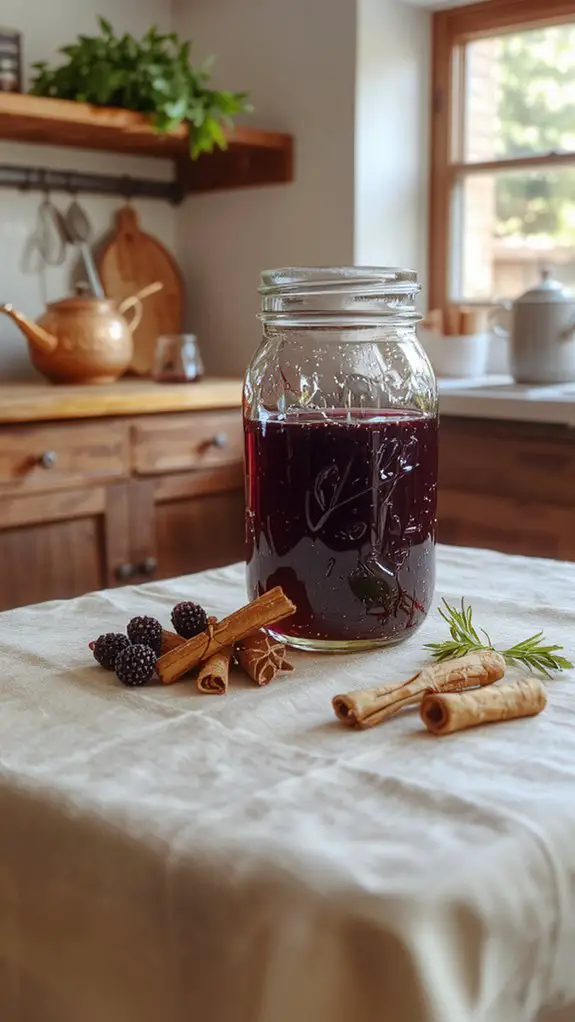
Dosage guidance – Adults can take 1 tablespoon daily for maintenance, or 1 teaspoon every 2–3 hours during illness. For kids, halve the dose.
*Always consult a healthcare provider before use, especially for pregnant/nursing individuals or those on medications.*
Nutrition
Elderberry syrup is packed with nutrients and antioxidants. Here’s a breakdown of its nutritional value per tablespoon (15ml).
| Nutrient | Amount |
|---|---|
| Calories | 10 |
| Carbohydrates | 2.5g |
| Sugars | 2g |
| Vitamin C | 5mg |
| Iron | 0.2mg |
Chef Tips
When making elderberry syrup, I always recommend using fresh, high-quality ingredients since they’ll give you the best flavor and health benefits.
I simmer the berries gently to avoid bitterness and strain them thoroughly to remove seeds.
To preserve potency, I add raw honey after cooling the syrup.
Store it in a clean glass jar in the fridge, and it’ll last for weeks.
Adjust sweetness or spice ratios to suit your taste.