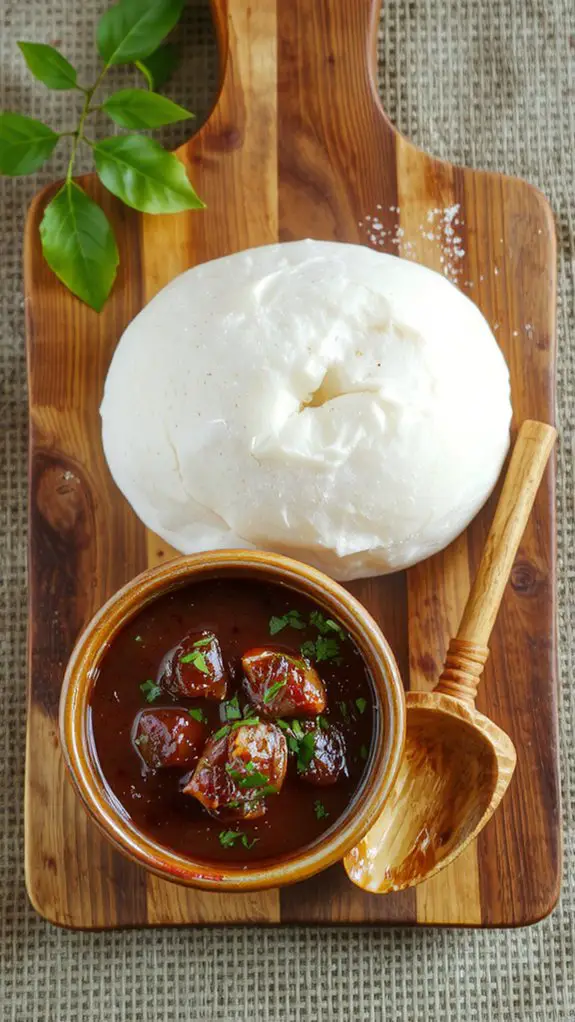
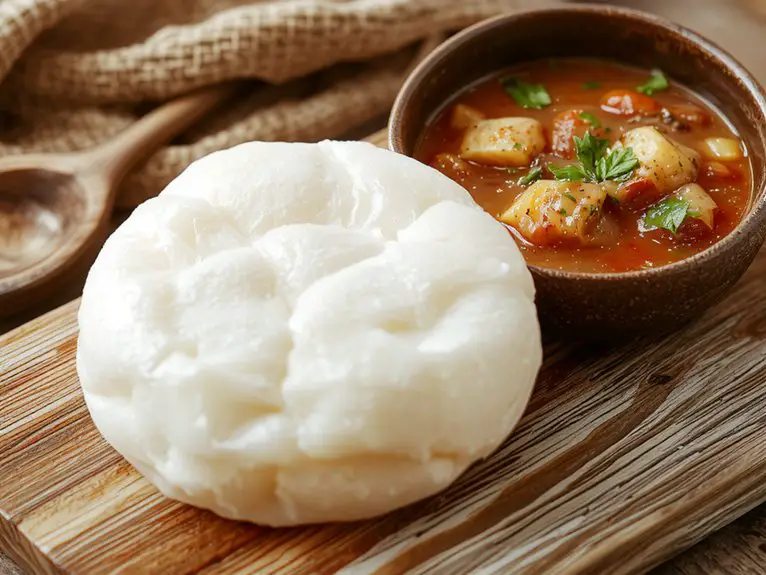
I’ve spent years perfecting my fufu recipe, and I’ve found the secret lies in the balance of cassava and plantains. The texture should be stretchy yet soft, with just the right resistance when you press it. Getting the consistency right takes practice, but the results are worth it. If you’ve ever wondered how to achieve that authentic West African taste at home, there’s a trick most recipes don’t tell you.
Recipe
Let me tell you something—homemade fufu is a game-changer. Forget the store-bought versions; this freshly pounded goodness is soft, stretchy, and utterly satisfying, with a texture that’s pure perfection.
Made from cassava (or yams or plantains, depending on your preference), it’s a staple that transforms any soup or stew into a hearty, soul-warming meal. Trust me, once you try making it at home, you’ll understand why it’s worth the effort.
It’s not just food; it’s comfort, tradition, and flavor all rolled into one. Plus, it’s easier than you think—just a few simple steps, and you’ll be diving into pillowy, melt-in-your-mouth fufu that pairs beautifully with bold, rich stews.
Ready to elevate your dinner? Let’s do this.
Ingredients
When making fufu, the choice of ingredients is vital to achieving the perfect texture and flavor. Traditionally made with starchy staples like cassava, plantains, or yams, fufu’s simplicity allows for flexibility based on what’s available. Here’s what you’ll need:
- Cassava (Yuca): The classic base for fufu, cassava provides a smooth, stretchy texture. Opt for fresh cassava for the best results, but frozen or grated cassava can work in a pinch.
- Plantains: For a slightly sweeter fufu, green plantains are ideal. They add a subtle tanginess and firm texture.
- Water: Essential for boiling and blending. Use clean, filtered water to avoid any off-flavors.
- Salt: A pinch of salt enhances the natural flavors of the starches.
Pro Tips:
- If using cassava, look for firm, unblemished roots.
- Green plantains should be hard and not overly ripe to avoid a mushy texture.
Substitutions:
- No cassava? Try yams or cocoyam for a similar result.
- Don’t have plantains? Opt for unripe bananas for a comparable sweetness.
Non-Negotiables:
– Fresh ingredients are key. Avoid pre-packaged fufu flour if you’re aiming for authenticity.
Little Wins:
- Add a splash of palm oil or butter for a richer flavor, though this is optional.
- Serve with a flavorful soup or stew to elevate the dish.
How to Make the Best Authentic Ghanaian Fufu Recipe
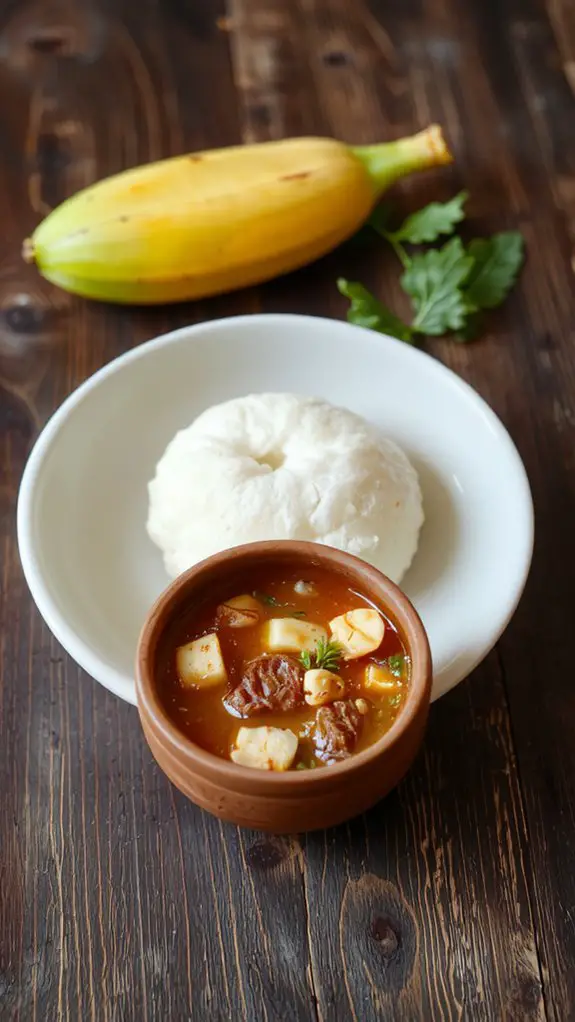
– Adjust consistency: If too thick, mix in a spoonful of reserved water; if too thin, return to low heat while stirring constantly to thicken.
*Flexibility: For a lighter fufu, blend in a small boiled yam.*
– Shape and serve: Roll into smooth balls or serve as-is with soups or stews.
*Pro tip: Cover with a damp cloth to keep warm and soft until serving.*
Nutrition
Fufu is a traditional African dish made from starchy ingredients like cassava, plantains, or yams. Here is the nutritional breakdown per serving (approximately 150g):
| Nutrient | Amount |
|---|---|
| Calories | 330 |
| Carbohydrates | 85g |
| Protein | 1g |
| Fat | 0g |
| Fiber | 2g |
| Sodium | 10mg |
Chef Tips
Understanding the nutritional value of fufu is helpful, but getting it just right in the kitchen takes a bit more know-how.
I always use fresh, starchy ingredients like cassava or plantains for smoother texture. Knead the dough thoroughly to eliminate lumps, and add hot water gradually for consistency.
Keep a bowl of cold water nearby to wet your hands—it prevents sticking. Serve warm for the best experience.