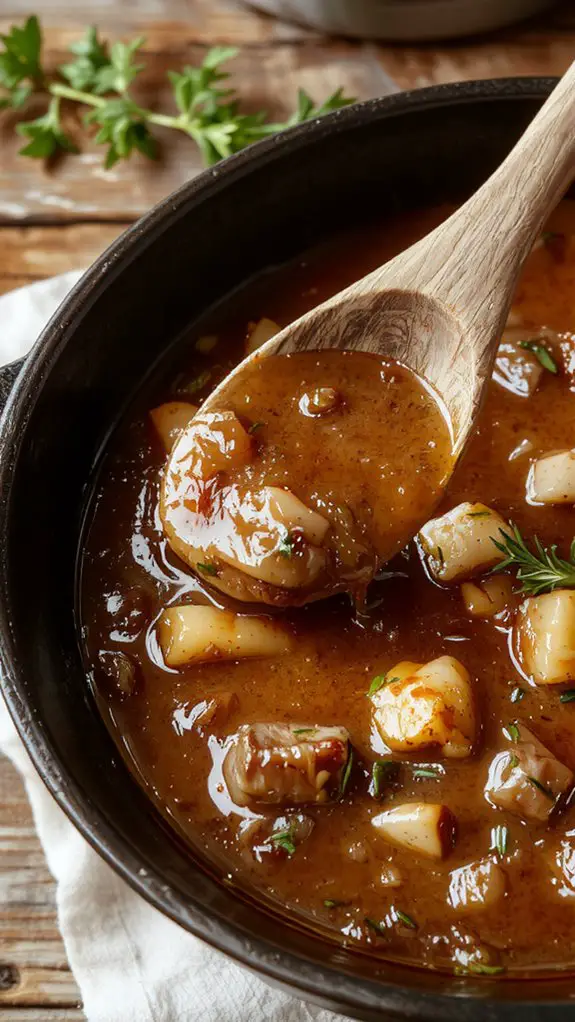
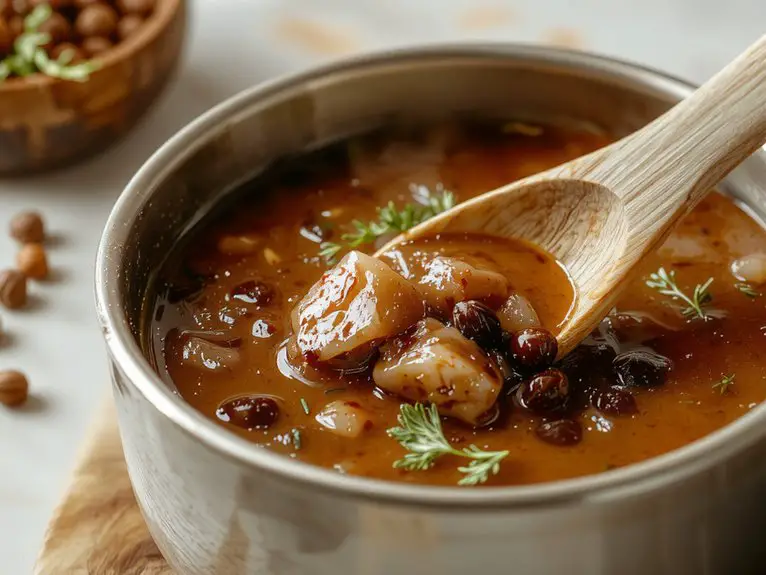
There’s nothing quite like homemade giblet gravy to elevate a meal, and I’ve perfected a recipe that balances rich flavors with just the right texture. By simmering giblets in turkey drippings and building a golden roux, you’ll get depth without heaviness—but the real secret lies in the finishing touches. If you want to know how a splash of wine and fresh herbs can transform this classic, let’s get started.
Recipe
There’s something downright magical about homemade giblet gravy—rich, savory, and packed with deep, comforting flavors that store-bought versions just can’t touch.
This recipe? It’s the real deal, the kind that turns a simple meal into a feast.
Imagine this: silky gravy with tender bits of giblets, infused with aromatic herbs and a hint of pepper for just the right kick.
Whether you’re drizzling it over mashed potatoes or smothering a golden roast turkey, this gravy is the secret weapon that’ll have everyone asking for seconds.
And the best part? It’s easier than you think—no fancy techniques, just good ingredients and a little love.
Trust me, once you taste it, there’s no going back.
Ingredients
Great giblet gravy starts with quality ingredients—each one builds layers of savory depth. Here’s what you’ll need, plus insider tricks to make it unforgettable:
- Giblets (neck, heart, gizzard, liver): The star of the show. Simmer them low and slow for maximum flavor. *Pro tip:* Skip the liver if you prefer a milder taste.
- Turkey or chicken drippings: Non-negotiable. This golden liquid is flavor gold—don’t waste a drop.
- Butter: Unsalted, so you control the seasoning. Adds richness you can’t fake.
- All-purpose flour: The thickening hero. For a gluten-free version, cornstarch works (use half the amount).
- Onion & celery: Sauté until soft for a sweet, aromatic base. No celery? A pinch of celery seed does the trick.
- Chicken or turkey stock: Homemade is ideal, but store-bought works in a pinch. *Little win:* Add a splash of white wine for extra depth.
- Salt, pepper, thyme, sage: Fresh herbs elevate it, but dried works if that’s all you’ve got.
- Hard-boiled egg (optional): A Southern classic for texture. Dice it fine so it blends seamlessly.
*Must-have:* Drippings. Without them, it’s just brown sauce.
*Flexible swap:* No giblets? Use extra stock and a dash of Worcestershire for umami.
How to Make the Best Giblet Gravy Recipe Name
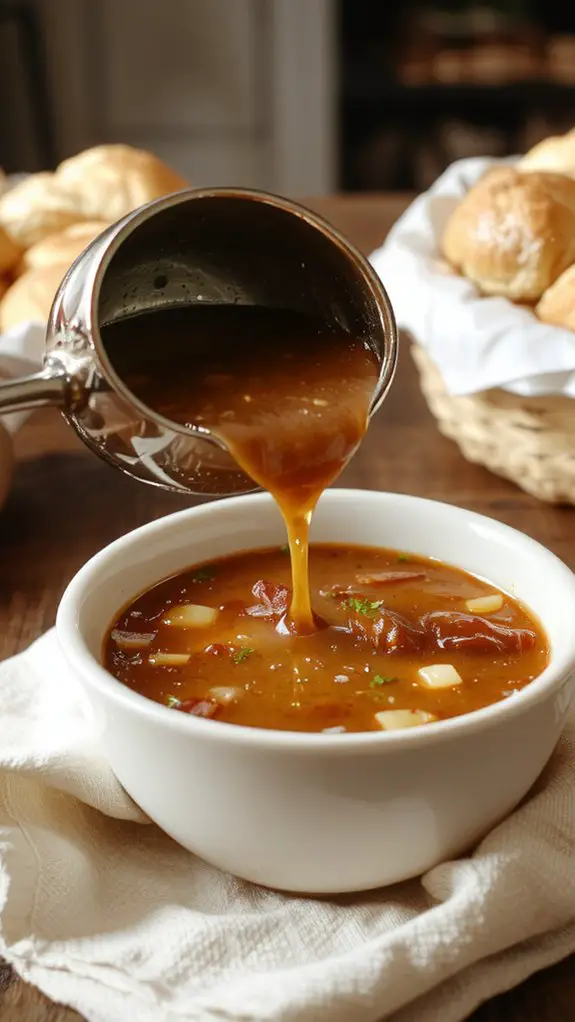
- Stir in the giblets – Fold the chopped giblets into the gravy and simmer for 5–10 minutes until thickened. *Visual cue:* It should coat the back of a spoon.
- Season to taste – Finish with salt, pepper, and a splash of Worcestershire sauce or sherry for depth.
Adjust consistency with more broth if needed. *Flexibility:* For extra richness, stir in a spoonful of pan drippings from roasted poultry.
– Serve warm – Keep the gravy on low heat until ready to use.
Stir occasionally to prevent a skin from forming on top.
Nutrition
This homemade giblet gravy is rich in flavor and provides essential nutrients. Below is the nutritional breakdown per serving.
| Nutrient | Amount per Serving |
|---|---|
| Calories | 120 kcal |
| Fat | 8 g |
| Saturated Fat | 3 g |
| Cholesterol | 60 mg |
| Sodium | 350 mg |
| Carbohydrates | 6 g |
| Protein | 5 g |
Chef Tips
When making giblet gravy, I always start by simmering the giblets slowly to extract maximum flavor without toughening them.
Don’t rush the roux—cook it until it’s golden for depth. Strain the broth for smoothness, and deglaze the pan with a splash of wine if you want extra richness.
Season at the end so you can adjust perfectly. Fresh herbs beat dried for brightness.