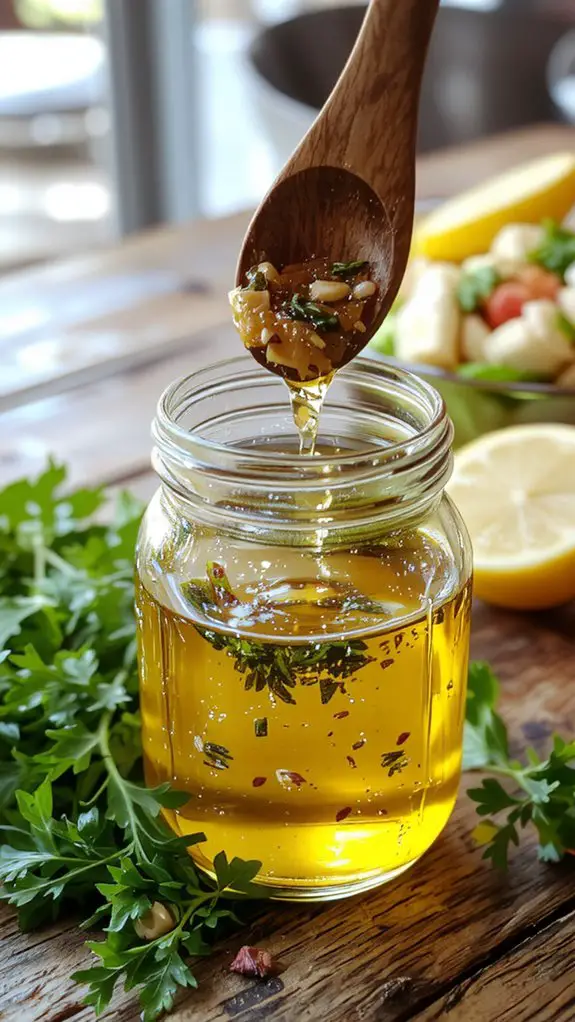

I’ve tried countless Greek salad dressings, but none compare to the one I make at home. The secret lies in balancing the bold flavors of extra virgin olive oil, red wine vinegar, and fresh garlic. It’s simple, yet the depth of taste transforms any salad. If you’re looking for a dressing that’s both authentic and versatile, this recipe might just become your go-to. The key is in the details—let’s get started.
Recipe
This Greek salad dressing is the real deal—I promise it will blow any store-bought version out of the water. Packed with bright, fresh flavors, it’s the kind of dressing that will make you want to eat salad every day.
The secret? High-quality extra virgin olive oil, tangy red wine vinegar, and a punch of garlic and oregano that brings authentic Mediterranean vibes to your table. I’ve been making this for years, and it’s always the star of summer picnics and family dinners.
It’s creamy, zesty, and just the right amount of herbaceous, with a texture that clings perfectly to every bite of crisp veggies. Plus, it’s so easy to whip up—you’ll wonder why you ever bothered with bottled dressings.
Trust me, once you try this, you’ll never go back. Let’s get started!
Ingredients
Crafting the perfect Greek salad dressing starts with quality ingredients. The key is balancing tangy, savory, and herbaceous flavors for that authentic Mediterranean taste. Use the best olive oil you can find—it’s the backbone of this dressing and elevates every bite.
- Extra virgin olive oil (non-negotiable): The star of the show. Opt for cold-pressed, high-quality oil for a rich, smooth flavor.
- Red wine vinegar: Adds a sharp tang. Substitute with white wine vinegar if needed, but avoid balsamic—it’s too sweet.
- Fresh garlic: One clove, minced finely. Powdered garlic just doesn’t compare here.
- Dried oregano: A classic Greek herb. Use fresh oregano sparingly, as it’s more potent.
- Dijon mustard: Helps emulsify the dressing and adds depth. Yellow mustard works in a pinch but lacks the complexity.
- Fresh lemon juice: Brightens the dressing. Bottled lemon juice can be used, but fresh is always better.
- Sea salt and black pepper: Essential for seasoning. Adjust to taste.
Pro Tip: If you’re feeling adventurous, add a pinch of sugar or honey to balance the acidity.
For extra flair, toss in a teaspoon of chopped fresh dill or parsley. This dressing is flexible, so tweak it to suit your palate!
How to Make the Best Authentic Greek Dressing Recipe

• Store leftovers properly.
Keep in an airtight container in the fridge for up to 5 days.
The olive oil may solidify when cold—just let it sit at room temperature for 10 minutes and shake well before using.
Pro Tip:
For a smoother texture, grate the garlic on a microplane instead of mincing it.
Avoid bottled lemon juice or vinegar substitutes—fresh acidity is non-negotiable for authentic flavor!
Nutrition
This Greek salad dressing is not only flavorful but also packed with essential nutrients. Here’s the nutritional breakdown per serving:
| Nutrient | Amount per Serving |
|---|---|
| Calories | 120 kcal |
| Total Fat | 12 g |
| Saturated Fat | 2 g |
| Cholesterol | 0 mg |
| Sodium | 150 mg |
| Total Carbs | 3 g |
| Dietary Fiber | 0 g |
| Sugars | 1 g |
| Protein | 0 g |
| Vitamin D | 0 mcg |
| Calcium | 10 mg |
| Iron | 0.3 mg |
| Potassium | 20 mg |
Chef Tips
I’ve found that a good Greek salad dressing starts with high-quality olive oil—it’s the backbone of the flavor. Freshly squeezed lemon juice brightens the mix, while dried oregano adds earthy depth.
Always whisk vigorously to emulsify the oil and vinegar for a smooth texture. Taste as you go and adjust seasoning.
Let it rest 30 minutes before serving to meld flavors. Store leftovers in a sealed jar for up to a week.