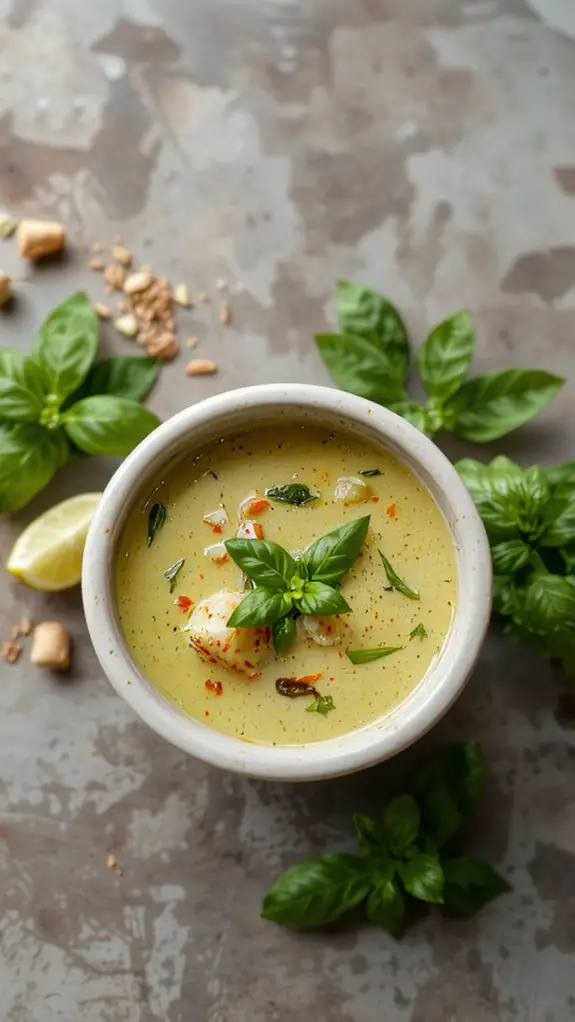
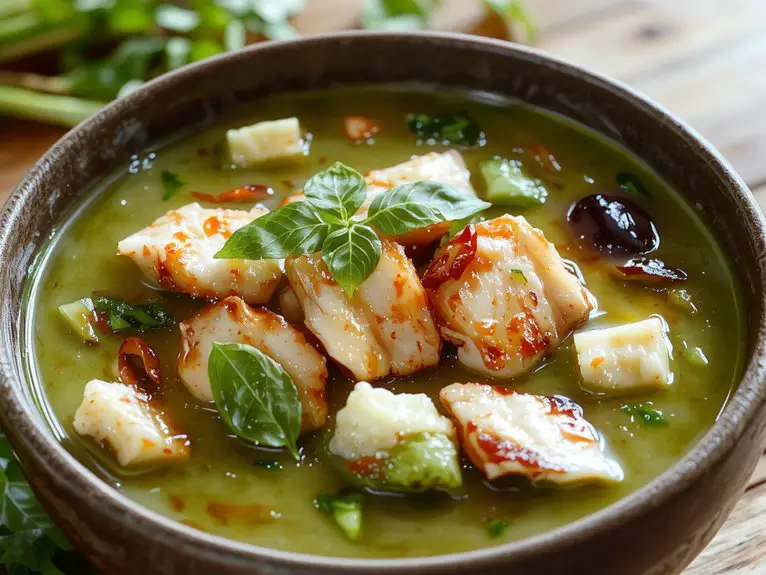
I’ve spent years refining my green curry recipe, and I’m convinced the secret lies in the paste. Fresh green chilies, lemongrass, and galangal create a base that’s vibrant but balanced. The trick is toasting the spices just enough to deepen their flavor without bitterness. Once you’ve nailed the paste, the rest falls into place—but there’s a pivotal step most home cooks miss when building the curry’s layers.
Recipe
Let me tell you right now: this homemade green curry is a game-changer. Forget store-bought pastes—this version is vibrant, fragrant, and packed with layers of flavor that’ll make you feel like you’re dining in Thailand.
The secret? Fresh green chilies, aromatic lemongrass, and a splash of coconut milk create a sauce so rich and creamy, you’ll want to lick the bowl. I’ve been making this curry for years, tweaking it until it’s just right, and I promise, once you try it, there’s no going back.
Imagine tender bites of chicken or tofu soaking up that spicy, herby goodness, paired with a hint of sweetness from the coconut milk—it’s comfort food with a kick. Trust me, it’s easier than you think, and the results are restaurant-worthy.
Your kitchen will smell incredible, and your taste buds will thank you. Let’s get cooking!
Ingredients
The key to an unforgettable green curry lies in balancing fresh, aromatic ingredients with rich, creamy coconut milk. Don’t skimp on the herbs and spices—they’re the soul of this dish. Here’s what you’ll need, with insider tricks to make it shine:
For the Curry Paste (Fresh is Best!)
- 3-5 green Thai chilies (adjust for heat; remove seeds for milder flavor)
- 1 stalk lemongrass (use only the tender lower third—slice thinly for easier blending)
- 1-inch galangal (ginger works in a pinch, but galangal’s citrusy punch is irreplaceable)
- 4 cloves garlic (smash them first to release their oils)
- 1 shallot (red onion works, but shallots add sweetness)
- 1 tsp coriander seeds (toasted and ground—pre-packaged powder lacks depth)
- 1 tsp cumin seeds (toast with coriander for a smoky base)
- 1 tbsp shrimp paste (skip if vegetarian, but it’s the umami secret weapon)
- Handful of cilantro roots (stems work too—they’re more potent than leaves here)
For the Curry (Pantry Staples + Freshness)
- 1 can (14 oz) coconut milk (full-fat for creaminess; shake well before opening)
- 1 lb protein (chicken thighs stay juicy, but tofu or shrimp work great)
- 1 cup Thai eggplant (or sub zucchini for crunch)
- 1 cup bamboo shoots (canned is fine—rinse well to remove tinny taste)
- 5-6 kaffir lime leaves (tear them to release fragrance; dried won’t cut it)
- 1 tbsp palm sugar (brown sugar works, but palm sugar adds caramel notes)
- 2 tbsp fish sauce (soy sauce for vegetarians, but fish sauce is non-negotiable for authenticity)
- Handful Thai basil (regular basil lacks the peppery kick—add it last to preserve flavor)
Pro Tip: Blend the paste until ultra-smooth—gritty curry ruins the texture.
Freeze extra paste in ice cube trays for future quick meals!
How to Make the Best Authentic Thai Green Curry
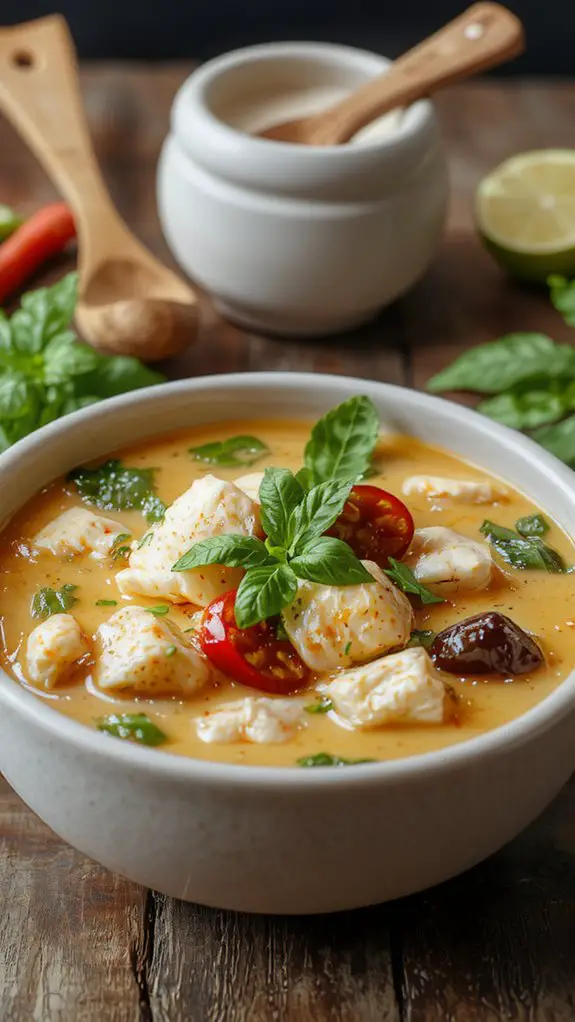
- Prep the Ingredients: Make sure all your vegetables are chopped, and your protein (if using) is ready to cook. Having everything prepped and within reach secures a smooth cooking process.
- Make the Green Curry Paste: Blend fresh green chilies, lemongrass, garlic, shallots, kaffir lime leaves, galangal, and cilantro stems into a smooth paste. Pro tip: Toast the spices lightly before grinding to deepen the flavor.
- Cook the Curry Paste: Heat a bit of oil in a pan and fry the green curry paste over medium heat for 2-3 minutes, stirring constantly. This step is vital—it releases the aromatic oils and intensifies the flavor. Be careful not to burn it!
- Add Coconut Milk: Gradually stir in the coconut milk, starting with the thicker cream from the top of the can. Let it simmer gently to blend the flavors. Watch the heat—boiling too hard can cause the coconut milk to separate.
- Incorporate the Protein: Add your choice of protein (chicken, shrimp, tofu, etc.) and cook until nearly done. Stir occasionally to guarantee even cooking. Pro tip: For tofu, pat it dry and lightly fry it first for a firmer texture.
- Add Vegetables: Toss in your vegetables, starting with those that take longer to cook (like carrots or potatoes) and finishing with more delicate ones (like zucchini or spinach). This prevents overcooking and keeps the veggies vibrant.
- Season and Balance Flavors: Add fish sauce, palm sugar, and a squeeze of lime juice to balance the sweetness, saltiness, and sourness. Taste and adjust as needed—this is where you make the curry uniquely yours.
- Simmer Gently: Let the curry simmer for 5-10 minutes to meld the flavors. Avoid boiling vigorously, as this can affect the texture of the coconut milk.
- Garnish and Serve: Finish with fresh Thai basil leaves, thinly sliced kaffir lime leaves, and a sprinkle of red chili for color and freshness.
Nutrition
Green curry is a flavorful dish packed with nutrients from its ingredients. Here’s a breakdown of its nutritional content per serving.
| Nutrient | Amount |
|---|---|
| Calories | 300 kcal |
| Protein | 15 g |
| Carbohydrates | 20 g |
| Fat | 18 g |
| Fiber | 5 g |
| Sugar | 8 g |
| Sodium | 800 mg |
Chef Tips
When making green curry, I always recommend balancing the flavors carefully—sweetness from coconut milk, heat from chilies, and tanginess from lime.
Use fresh herbs like basil and cilantro for brightness, and toast the curry paste lightly to deepen its aroma.
Simmer the veggies just until tender to retain their crunch.
Taste as you go, adjusting seasoning to suit your palate. It’s all about harmony.