I’ve always struggled to find the perfect hamburger bun—store-bought ones often feel too dry or flavorless. After countless trials, I finally crafted a recipe that yields soft, pillowy buns with just the right amount of sweetness. The secret lies in a simple combination of ingredients and precise techniques. If you’ve ever wondered how to elevate your burgers with a homemade touch, this might just be the method you’ve been searching for.
Recipe
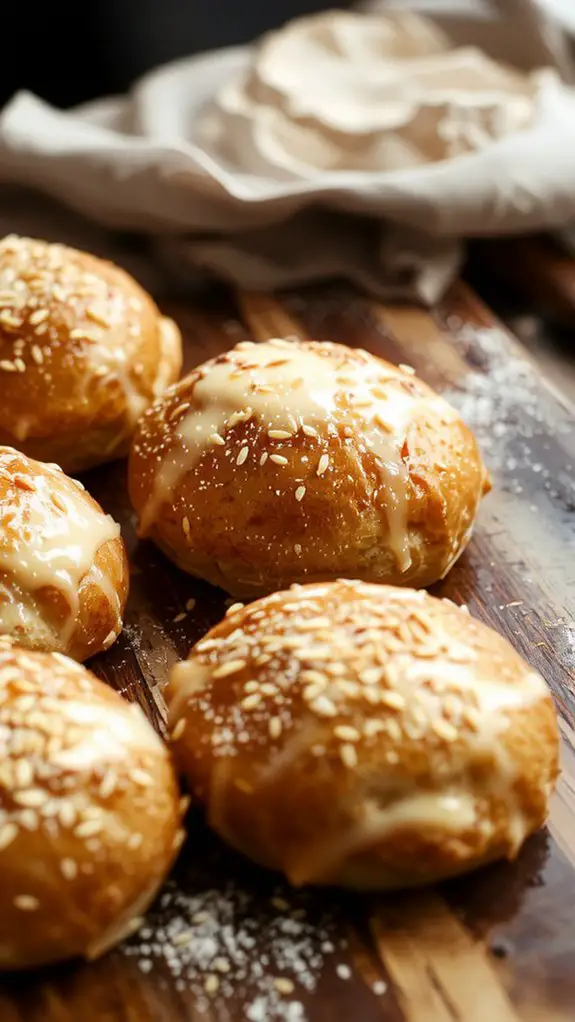
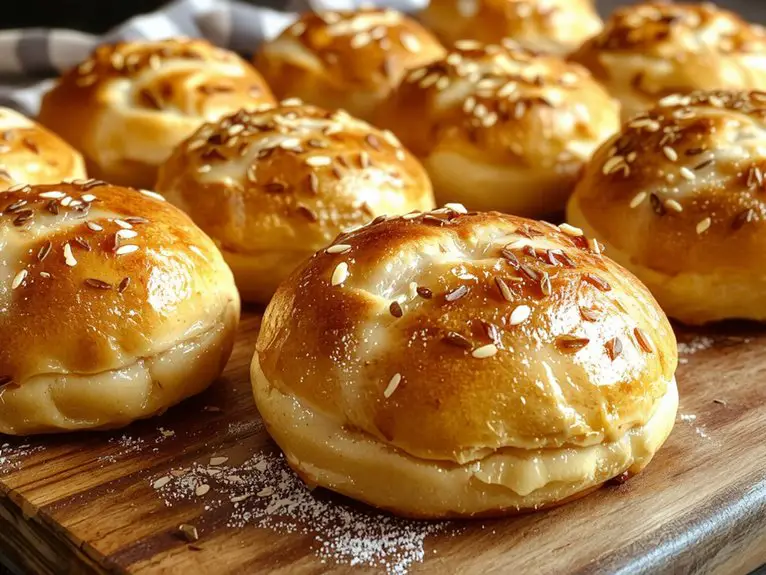
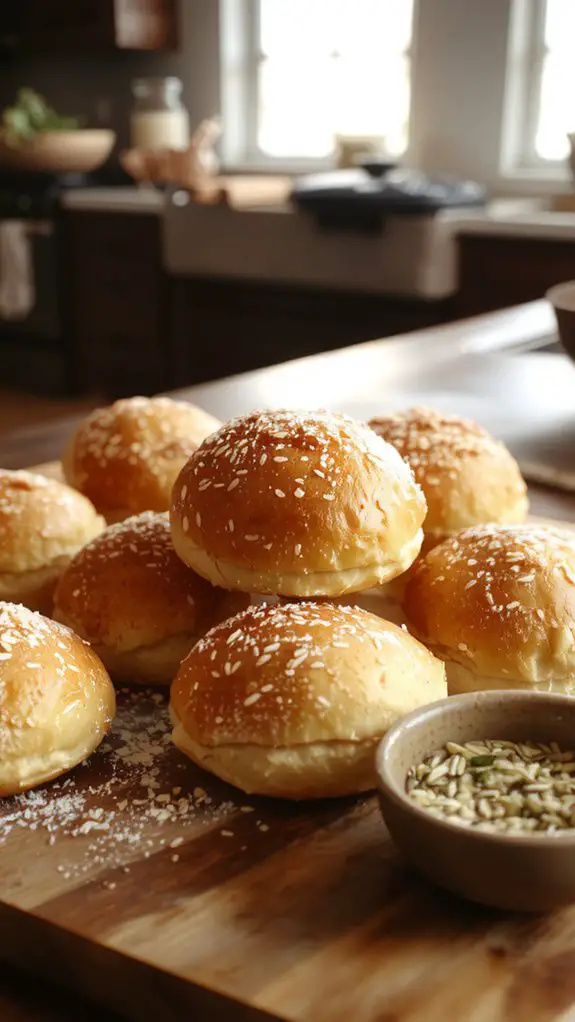
Forget store-bought buns—once you try this homemade hamburger bun recipe, there’s no going back. These buns are soft, pillowy, and just sturdy enough to hold up to even the juiciest burgers, thanks to a secret ingredient: a touch of honey that adds a hint of sweetness and keeps them irresistibly tender.
I’ve been making these for years, and they’re always the star of any BBQ or family gathering. There’s something magical about the smell of freshly baked bread filling your kitchen, and the golden crust is just begging to be smeared with butter or stacked with your favorite toppings.
Trust me, these aren’t just buns—they’re a game-changer. You’ll never settle for less than homemade again.
Ingredients
When it comes to homemade hamburger buns, the right ingredients make all the difference. From guaranteeing a soft, pillowy texture to achieving that perfect golden crust, every component plays a role. Here’s what you’ll need:
- Bread Flour: Opt for bread flour over all-purpose—it has a higher protein content, giving the buns more structure and chew.
- Whole Milk: Milk adds richness and tenderness, but if you’re out, water or a dairy-free alternative like almond milk can work too.
- Unsalted Butter: Butter brings flavor and softness. Melted butter is key—it distributes evenly in the dough. Swapping margarine? Stick to a high-fat option for the best results.
- Sugar: Just a tablespoon enhances browning and balances the yeast’s tang. Honey or maple syrup are great natural alternatives.
- Active Dry Yeast: Fresh yeast secures a good rise. If you only have instant yeast, skip the proofing step—it works just as well.
- Eggs: Eggs enrich the dough and help bind it together. For a vegan swap, try a flax egg, but expect a slightly denser texture.
- Salt: Don’t skip it—salt enhances flavor and strengthens the gluten structure.
- Sesame Seeds (optional): For that classic bakery look, sprinkle sesame seeds on top before baking.
Pro Tip: Let your ingredients come to room temperature before mixing—cold milk or eggs can slow down the yeast’s activity.
And if you want extra shine, brush the buns with an egg wash (one beaten egg + a splash of water) before baking.
How to Make the Best Soft Milk Bread Bun
- Mix the dough: Combine warm milk, yeast, sugar, and let sit for 5 minutes until foamy. This activates the yeast for a fluffy texture.
- *Pro tip*: Use a thermometer—milk should be 110°F (43°C). Too hot kills yeast; too cold won’t activate it.
- Add wet ingredients: Beat in melted butter and egg until smooth. Room-temperature ingredients blend easier.
- *Watch out*: Cold eggs can re-solidify butter, creating lumps.
- Incorporate dry ingredients: Gradually mix in flour and salt until a shaggy dough forms.
- *Why*: Adding flour slowly prevents overmixing, which makes buns dense.
- Knead the dough: Turn onto a floured surface and knead for 8–10 minutes until smooth and elastic.
- *Visual cue*: Dough should spring back when poked. If sticky, add 1 tbsp flour at a time.
- First rise: Place dough in a greased bowl, cover, and let rise for 1–2 hours until doubled.
- *Flexibility*: Short on time? Let it rise in a warm oven (turned off) for 45 minutes.
- Shape the buns: Divide dough into 8 equal pieces, roll into balls, and flatten slightly.
- *Pro tip*: Use a kitchen scale for even-sized buns.
- Second rise: Arrange on a baking sheet, cover, and let rise 30–45 minutes until puffy.
- *Watch out*: Overproofing makes buns collapse. They’re ready when indents slowly fill back.
- Bake: Brush with egg wash, sprinkle sesame seeds (optional), and bake at 375°F (190°C) for 15–18 minutes until golden.
- *Visual cue*: Internal temp should read 190°F (88°C).
- Cool: Transfer to a wire rack immediately to prevent soggy bottoms.
- *Pro tip*: For softer crusts, brush with melted butter while warm.
Nutrition
This homemade hamburger bun recipe offers a delicious and nutritious option for your meals. Here’s a breakdown of the nutritional content per serving.
| Nutrition | Amount per Serving |
|---|---|
| Calories | 160 |
| Total Fat | 4g |
| Saturated Fat | 1g |
| Cholesterol | 10mg |
| Sodium | 200mg |
| Total Carbs | 26g |
| Dietary Fiber | 1g |
| Sugars | 3g |
| Protein | 5g |
Chef Tips
Getting perfect homemade hamburger buns is all about technique—here’s how I make sure mine turn out soft, fluffy, and golden every time.
I proof the yeast properly, knead the dough until smooth, and let it rise in a warm spot.
I brush the tops with egg wash before baking for that golden shine.
Finally, I cover them with a towel after baking to keep them soft.