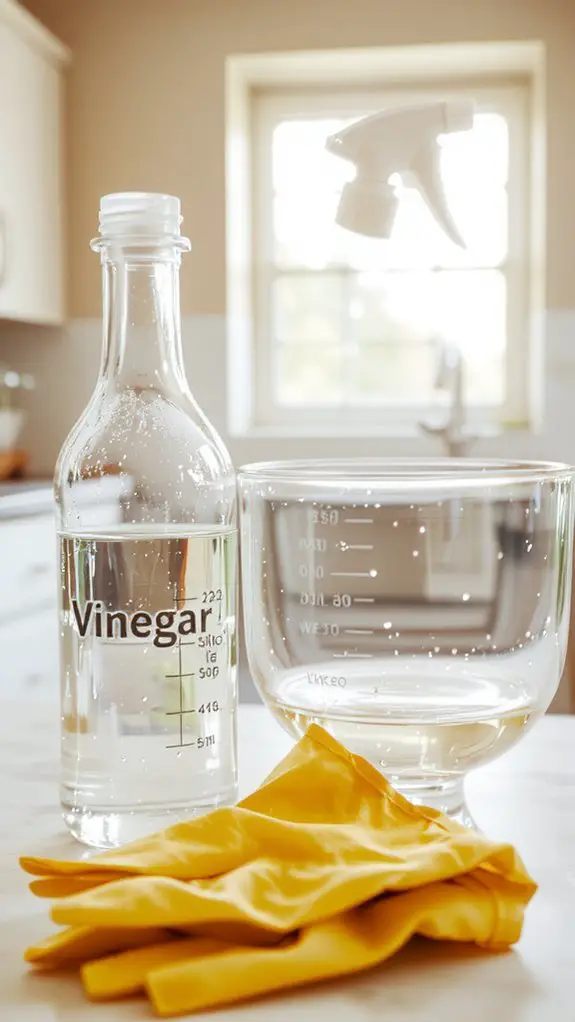
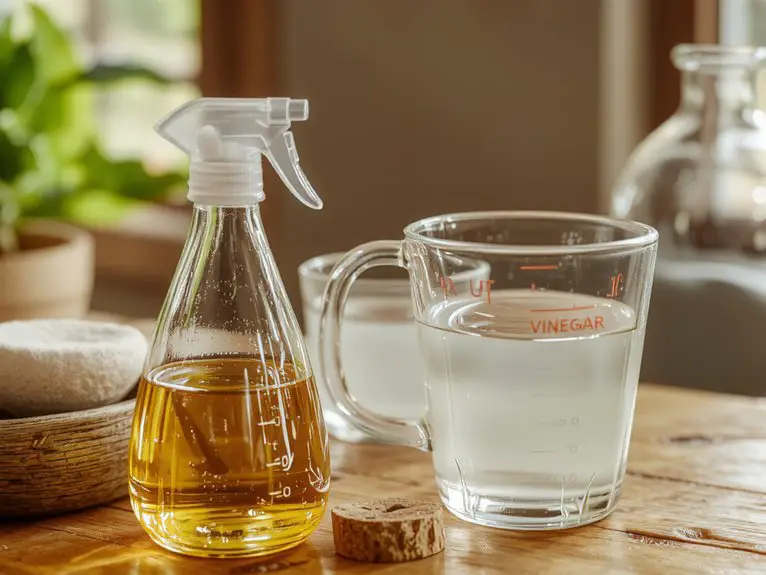
I’ve been searching for effective ways to tackle weeds without harsh chemicals, and I finally landed on a simple homemade solution. Its ingredients are likely already in your pantry, yet it delivers surprising results. The key lies in how you mix and apply it—small changes can make a big difference. If you’re curious about how this method stacks up against store-bought options, there’s more to uncover.
Recipe
This homemade weed killer is a game-changer—trust me, I’ve battled weeds in my garden for years, and this recipe is the secret weapon I swear by. It’s simple, effective, and made with just a few ingredients you probably already have at home.
The magic combination of vinegar, salt, and a touch of dish soap not only zaps weeds on contact but prevents them from coming back. I love that it’s eco-friendly and doesn’t require harsh chemicals, so you can use it guilt-free in your garden or driveway.
One spray and you’ll see those pesky weeds wither away, leaving your space looking tidy and vibrant. You’ve got this—it’s easier than you think!
Ingredients
When it comes to making a Homemade Weed Killer, the right ingredients are key to ensuring it’s effective and safe for your garden. This natural alternative avoids harmful chemicals and relies on common household items that pack a punch against weeds. Here’s what you’ll need:
- White Vinegar – The star of the show, it’s acetic acid content breaks down weed cell membranes, causing them to wither. Opt for at least 5% acidity for best results.
- Dish Soap – A few drops of mild dish soap help the solution stick to weeds, ensuring it penetrates effectively. Any brand will work, but avoid harsh formulas.
- Salt (optional) – Epsom or table salt can boost the weed-killing power, but use sparingly as it can linger in the soil and affect nearby plants.
- Water – Helps dilute the mixture if needed, especially for sensitive areas where you want to minimize impact.
- Essential Oils (optional) – A few drops of citrus or tea tree oil can enhance the solution and add a pleasant scent while deterring pests.
Pro Tip: If you’re out of vinegar, lemon juice can be a decent substitute, though it’s less potent.
Also, while salt is optional, it’s a game-changer for tougher weeds—just avoid using it near plants you want to keep.
How to Make the Best Vinegar-Based Weed Killer
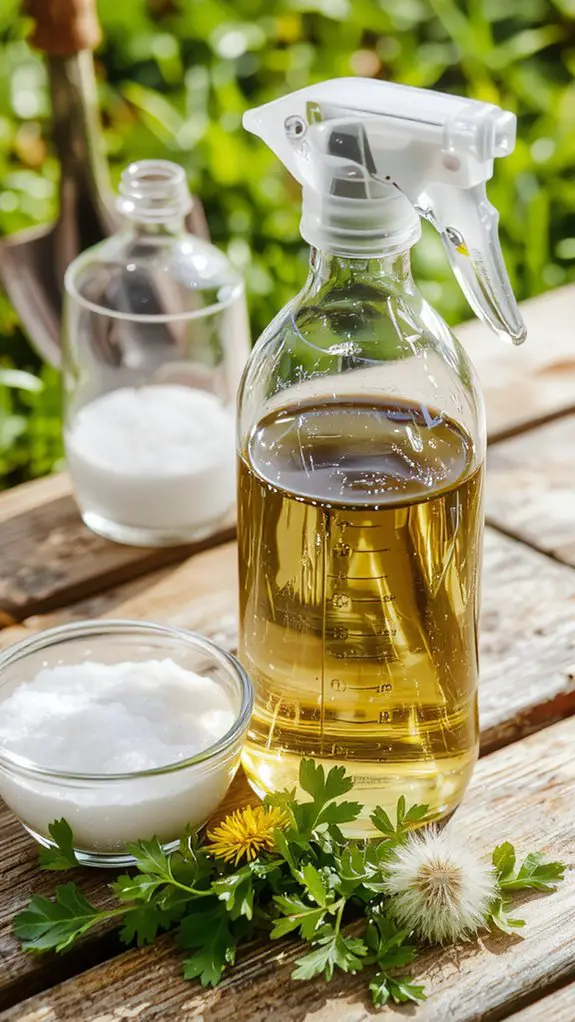
- Gather Ingredients and Tools: Confirm you have white vinegar (5% acetic acid), dish soap, a spray bottle, and protective gloves ready. The vinegar’s acidity is key to killing weeds, while dish soap helps the solution stick to the leaves.
- Mix the Solution: Combine 1 gallon of white vinegar with 1 cup of dish soap in a large container. Stir gently to avoid creating too many bubbles, which can make the mixture harder to pour into the spray bottle.
- Transfer to Spray Bottle: Carefully pour the mixture into a clean spray bottle using a funnel to avoid spills. A spray bottle guarantees even application and targets weeds directly without harming nearby plants.
- Apply on a Sunny Day: Spray the solution generously on the leaves of the weeds, confirming full coverage. For best results, apply on a sunny day; the sun will amplify the vinegar’s effectiveness by drying out the weeds faster.
- Reapply as Needed: Some stubborn weeds may require a second application after a few days. Check the treated area and re-spray if you notice any regrowth.
- Store Properly: If you have leftover solution, store it in a labeled, airtight container away from children and pets. Homemade weed killers don’t have preservatives, so use them within a week for maximum potency.
- Protect Desired Plants: Be cautious when spraying near your garden or lawn. The vinegar-based solution can harm grass and other plants, so aim carefully or use a barrier to shield them.
- Wear Protective Gear: Always wear gloves and eye protection when handling and applying the solution. Vinegar is acidic and can irritate skin and eyes upon contact.
Pro Tip: For tougher weeds, use horticultural vinegar (20-30% acetic acid) but handle it with extra care as it’s stronger and more corrosive.
Watch-Out Warning: Avoid spraying on windy days to prevent the solution from drifting onto plants you want to keep. Also, test a small area first to verify the vinegar mixture doesn’t damage surfaces like concrete or brick.
Nutrition
While homemade weed killer recipes are primarily designed for garden maintenance, some ingredients may have nutritional properties when used in different contexts. Here’s a brief overview of the nutritional aspects of common ingredients:
| Ingredient | Calories (per tbsp) | Nutrients |
|---|---|---|
| White Vinegar | 3 | Acetic acid, trace minerals |
| Salt | 0 | Sodium, chloride |
| Dish Soap | 0 | Surfactants (not edible) |
Chef Tips
I often recommend using homemade weed killer ingredients cautiously in culinary contexts. Vinegar’s acidity can overpower dishes, so dilute it if substituting for milder vinegars.
Salt ruins soil fertility—never confuse it with cooking salt. Boiling water kills weeds but also beneficial plants; handle it like hot oil.
Always label containers clearly to avoid mix-ups. Safety first—keep these solutions far from food prep areas.