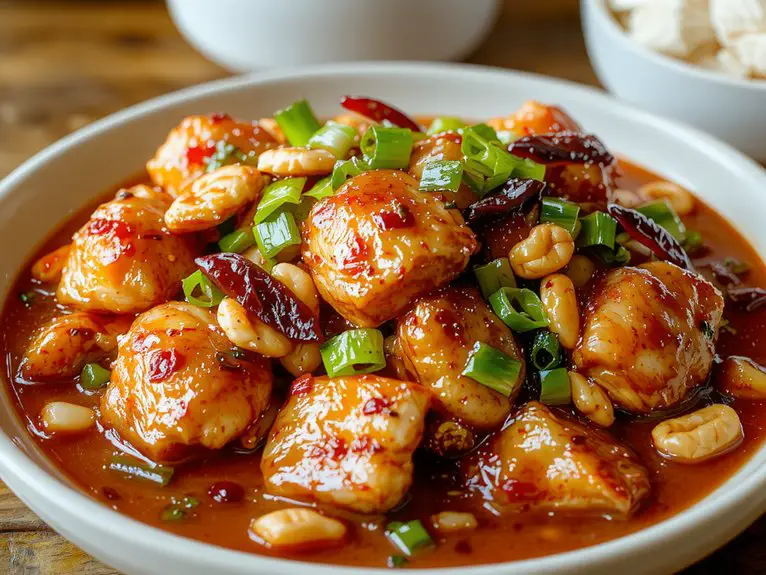
I’ve spent years perfecting my Kung Pao chicken recipe, balancing heat, sweetness, and that signature Sichuan numbing spice. The secret lies in toasting the peppercorns just right and using a homemade sauce that clings to every bite. But what really sets it apart? The crunch of peanuts against tender chicken and crisp veggies. If you’re looking for a dish that’s bold yet balanced, this might just be the one.
Recipe
If you’re craving a homemade takeout dish that’s better than anything you’d order in, this Kung Pao Chicken is your answer. Bursting with bold flavors, it’s a perfect balance of sweet, spicy, and savory, with a smoky depth from Sichuan peppercorns and a satisfying crunch from peanuts.
What makes it special? It’s all in the sauce—rich, tangy, and just the right amount of heat—and the quick sear on the chicken that keeps it juicy and tender. I’ve been making this version for years, and it’s become a go-to for busy weeknights and easy entertaining.
Trust me, once you taste the vibrant mix of garlic, ginger, and chili, you’ll skip the delivery apps for good. Plus, it’s so simple to whip up—you’ll feel like a wok wizard in no time. Ready to make your kitchen smell incredible? Let’s get cooking.
Ingredients
For this homemade Kung Pao Chicken recipe, the right ingredients make all the difference, ensuring a perfect balance of sweet, savory, and spicy flavors. Here’s what you’ll need, along with some insider tips to elevate your dish:
Protein & Vegetables
- Boneless, skinless chicken thighs – More flavorful and tender than chicken breast. If you prefer, chicken breast can be used, but thighs are highly recommended.
- Bell peppers (red and green) – Adds color and crunch. Feel free to swap with zucchini or snap peas if preferred.
- Zucchini (optional) – A great addition for extra texture and freshness.
Sauce Essentials
- Soy sauce – Use low-sodium for better control over saltiness. Double-fermented soy sauce adds depth.
- Rice vinegar – Essential for tanginess. White wine vinegar works in a pinch.
- Hoisin sauce – Adds sweetness and richness. Substitute with oyster sauce if unavailable.
- Sesame oil – A must for nutty aroma. Use toasted sesame oil for maximum flavor.
- Cornstarch – Thickens the sauce perfectly. Arrowroot powder is a good alternative.
Aromatics & Heat
- Fresh garlic and ginger – Non-negotiables for authentic flavor. Pre-minced versions lack the punch.
- Dried red chilies – Key for spice. Adjust the number to your heat tolerance, or use chili flakes if dried chilies are unavailable.
- Szechuan peppercorns (optional) – Adds a unique numbing heat. Skip if you can’t find them, but they’re worth seeking out.
Garnishes & Final Touches
- Roasted peanuts – Traditional and crunchy. Cashews are a great alternative.
- Green onions – Adds freshness and color. Chives can work in a pinch.
Little Wins
- A splash of Shaoxing wine (or dry sherry) for depth in the marinade.
- Extra chilies or a drizzle of chili oil for heat lovers.
These ingredients come together to create a dish that’s restaurant-worthy, with plenty of flexibility for customization.
How to Make the Best Authentic Kung Pao Chicken

- Marinate the chicken: Cut chicken into bite-sized pieces and mix with soy sauce, cornstarch, and a splash of rice wine. Let sit for 15 minutes—this tenderizes the meat and helps it absorb flavors.
- Toast the peanuts: Heat a dry pan over medium-low heat and toast the peanuts until golden and fragrant, about 3-4 minutes. Set aside. This step enhances their crunch and nutty flavor.
- Stir-fry the aromatics: Heat oil in a wok or skillet over high heat. Add minced garlic, ginger, and dried chilies, stirring for 10 seconds until fragrant. Be careful not to burn them—quick cooking preserves their punch.
- Cook the chicken: Add the marinated chicken to the wok and stir-fry until no longer pink, about 3-4 minutes. High heat guarantees a quick sear for juicy, tender bites.
- Add the sauce: Pour in a mix of soy sauce, vinegar, sugar, and a touch of water. Stir well to coat the chicken. The sugar balances the heat, while vinegar adds tang.
- Thicken the sauce: Sprinkle in cornstarch slurry (cornstarch + water) and stir until the sauce thickens, about 1-2 minutes. This creates a glossy, clingy coating.
- Finish with peanuts and scallions: Toss in the toasted peanuts and sliced scallions, stirring just to combine. The peanuts stay crisp, and scallions add freshness.
- Serve immediately: Best enjoyed hot over steamed rice. Leftovers can be refrigerated, but the peanuts may soften—reheat gently.
Pro Tips:
- For extra heat, leave the chili seeds in.
- Swap peanuts for cashews if preferred.
- Use a well-seasoned wok for peak stir-fry flavor.
Watch Out:
- Overcooking the chicken makes it tough.
- Adding cornstarch slurry too early can make the sauce gloopy.
- Skipping the toasting step dulls the peanut flavor.
Nutrition
Kung Pao Chicken is a flavorful dish that combines tender chicken with vegetables and a spicy sauce. Here’s the nutritional breakdown per serving:
| Nutrient | Amount per Serving |
|---|---|
| Calories | 320 kcal |
| Protein | 25 g |
| Fat | 12 g |
| Carbohydrates | 28 g |
| Fiber | 3 g |
| Sugar | 10 g |
| Sodium | 800 mg |
Chef Tips
Cooking perfect Kung Pao Chicken requires a few key techniques I always follow. I marinate the chicken briefly for extra tenderness and stir-fry it quickly over high heat.
I toast the Sichuan peppercorns and dried chilies briefly to release their aroma. Balancing sweet, sour, and spicy flavors is essential, so I adjust the sauce to taste.
Finally, I add peanuts last to keep them crunchy.