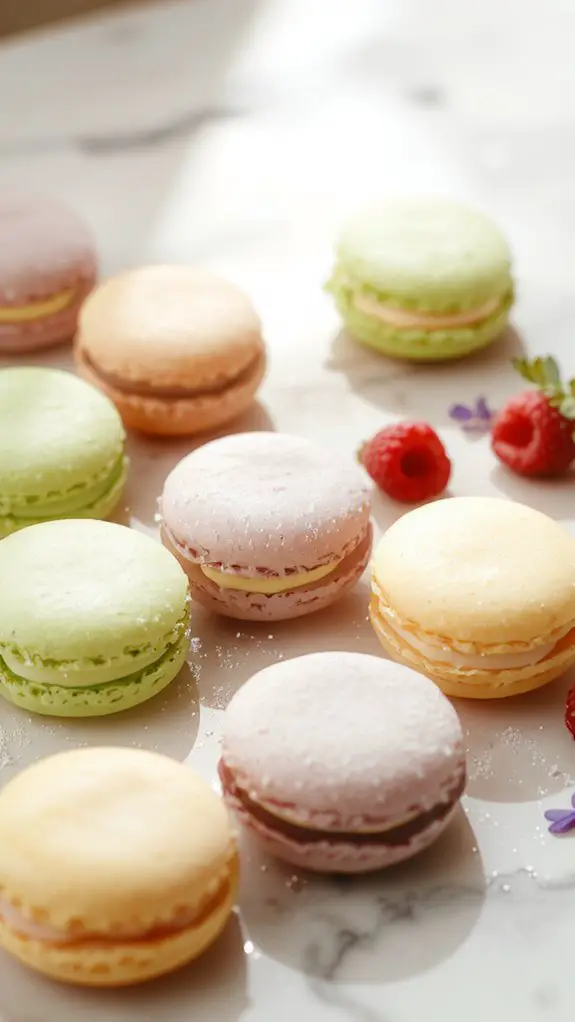
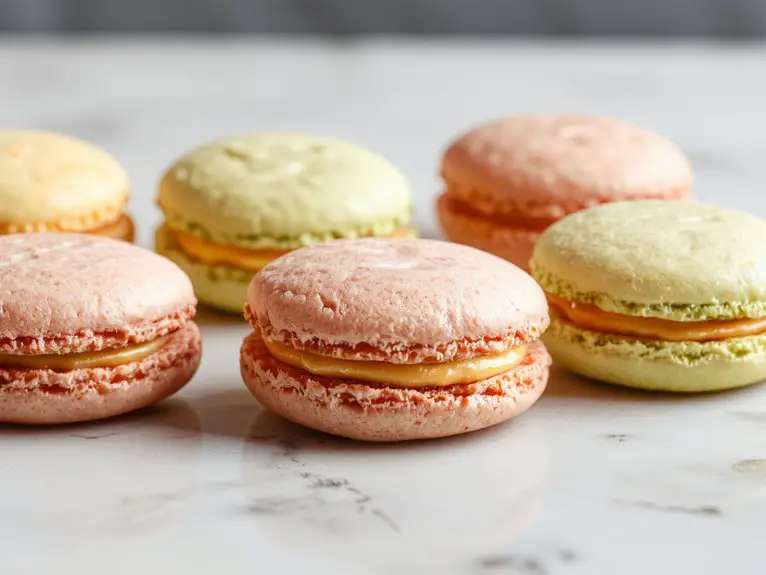
I’ve always thought homemade macaroons were a challenge, but once I found the right balance of ingredients and technique, they turned into a rewarding treat. The key lies in the details—precision in measuring, careful folding, and patience during baking. While mistakes can happen, mastering this recipe feels achievable with practice. If you’re curious about what makes these macaroons truly stand out, there’s more to uncover.
Recipe
There’s something magical about homemade macaroons—crispy on the outside, chewy in the middle, and packed with coconutty goodness. These little bites are deceptively simple to make but taste like they came straight from a bakery.
The secret? Toasting the coconut just enough to bring out its nutty sweetness, then mixing it with just the right amount of honey and vanilla for that perfect balance. One bite, and you’ll be hooked—trust me, I’ve made these more times than I can count, and they disappear every single time.
Whether you’re a baking newbie or a seasoned pro, this recipe is foolproof and guaranteed to impress. Get ready for a treat that’s golden, fragrant, and downright irresistible.
Ingredients
Getting the ingredients just right is the secret to perfect macaroons—too much moisture or the wrong almond flour can turn these delicate cookies into a crumbly mess. Here’s what you’ll need, with pro tips to nail the texture and flavor every time.
For the Macaroon Shells:
- Almond flour (superfine): The finer the grind, the smoother the shells. Don’t skip sifting—lumps are the enemy.
- Powdered sugar: Adds structure without graininess. Swap for icing sugar in a pinch.
- Egg whites (aged): Let them sit at room temp for 24 hours—this stabilizes the meringue. Fresh whites won’t hold as well.
- Granulated sugar: Essential for stiff peaks. Caster sugar works too.
- Cream of tartar: Just a pinch helps the meringue stay firm. No tartar? A drop of white vinegar does the trick.
For the Filling (Vanilla Buttercream Example):
- Unsalted butter (room temp): Softened butter creams smoothly. Salted butter? Omit extra salt.
- Powdered sugar: Sift it to avoid grittiness.
- Heavy cream or milk: A splash makes it silky.
- Vanilla extract (pure): Imitation vanilla tastes artificial—splurge on the real stuff.
Pro Extras:
- Gel food coloring: Liquid dyes add unwanted moisture. Gel or powder keeps the shells crisp.
- Flavor extracts (optional): Almond or citrus zest amps up the shells. Add sparingly—too much oil breaks the batter.
Non-Negotiables:
- A kitchen scale: Macarons are precision work. Volume measurements won’t cut it.
- Parchment/Silicone mats: Grease-free baking is key. Avoid wax paper—it sticks.
Little Wins:
- Edible glitter or dust: For showstopping shine.
- Freeze-dried fruit powder: Fold into the filling for a tangy twist.
How to Make the Best Classic French Macaroons Recipe
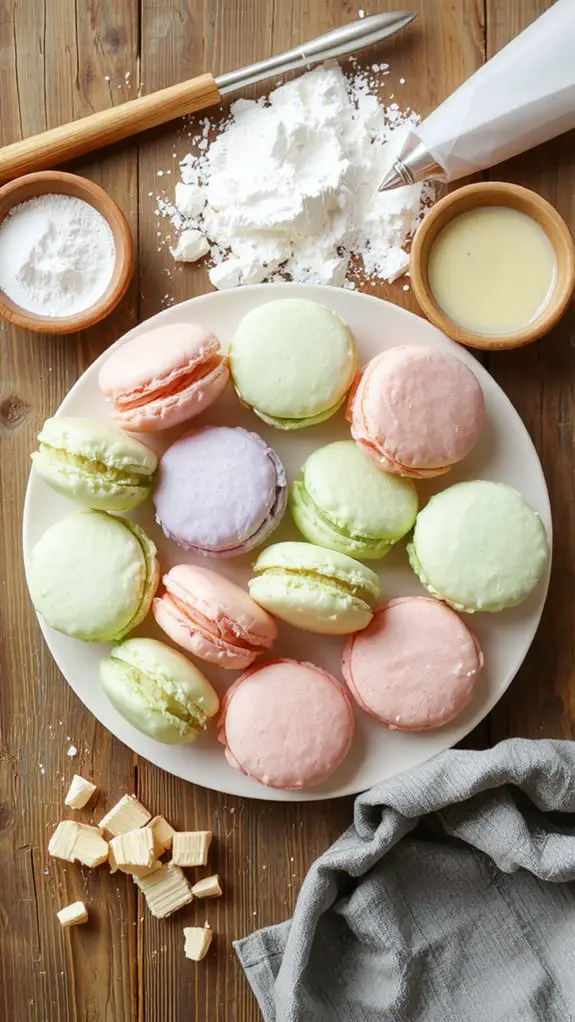
Cool completely before filling – Patience is key! Rushing this step can cause shells to break.
Pro tip: Match sizes when pairing shells for a polished finish.
Nutrition
Macaroons are a delicious treat, but it’s good to be mindful of their nutritional content. Here’s a breakdown per serving:
| Nutrient | Amount per Serving |
|---|---|
| Calories | 120 kcal |
| Total Fat | 7g |
| Saturated Fat | 5g |
| Cholesterol | 20mg |
| Sodium | 30mg |
| Total Carbs | 14g |
| Dietary Fiber | 1g |
| Sugars | 12g |
| Protein | 2g |
Chef Tips
While macaroons can be indulgent, making them at home lets me control the ingredients and perfect the technique. I always use room-temperature egg whites for the meringue—it’s key for stability.
Sieve the almond flour twice to avoid lumps. Pipe uniform circles for even baking. Let them rest before cooking to form a smooth shell.
Store them in an airtight container to keep them fresh and chewy.