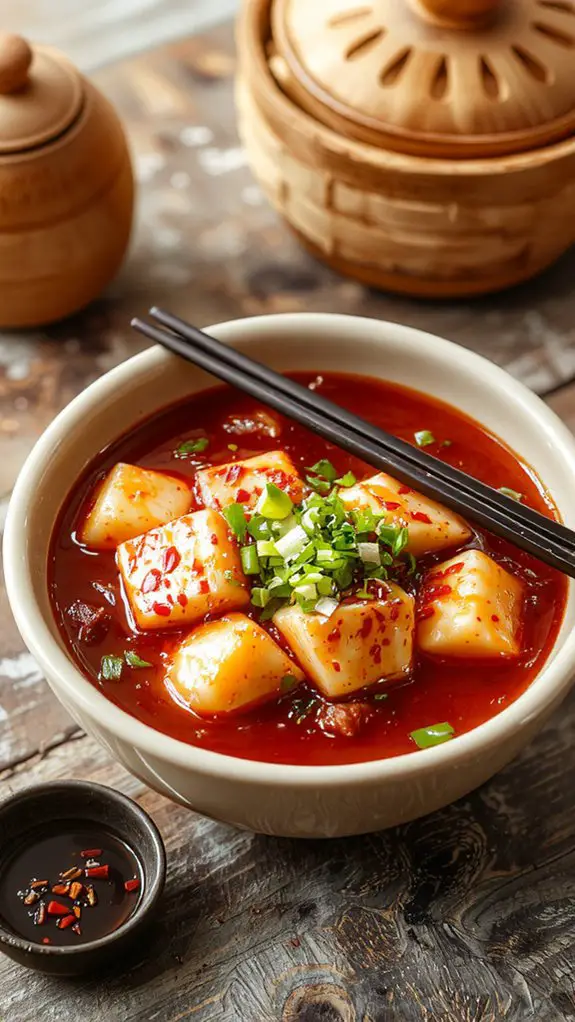
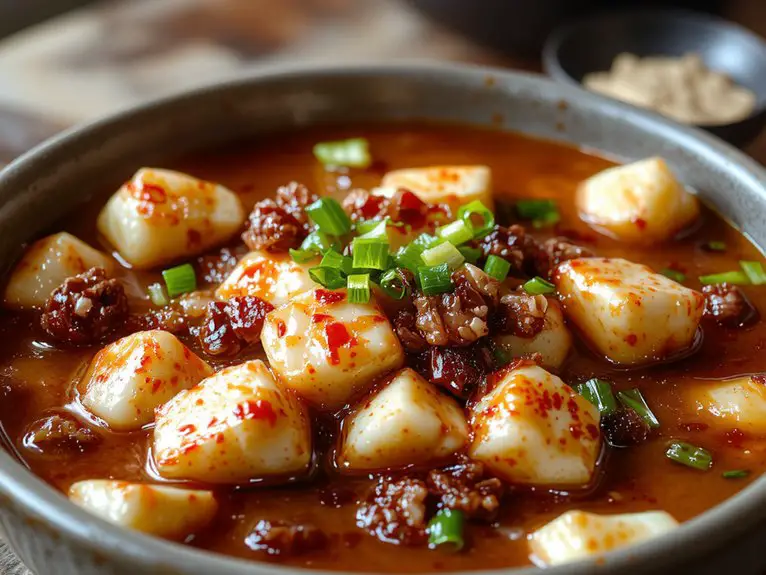
I’ve tried countless versions of mapo tofu, but nailing the balance of spicy, savory, and silky always comes down to a few key steps. Blanching the tofu keeps it intact, while browning the pork with garlic, ginger, and doubanjiang builds a deep, aromatic base. The sauce, thickened just enough, clings to the tofu perfectly. There’s a finishing touch that elevates it—something you’ll discover if you stick around.
Recipe
“This Mapo Tofu recipe is an absolute game-changer—bold, spicy, and packed with layers of flavor that will blow your taste buds away. It’s my go-to dish when I’m craving something cozy yet exciting, and trust me, it beats any takeout version hands down.
The secret? A killer combination of silken tofu, fragrant Sichuan peppercorns, and that umami-rich Sichuan chili bean paste that brings the heat and depth.
The tofu melts in your mouth, while the sauce clings perfectly, offering a spicy, numbing, savory punch that’s downright addictive. It’s easier to make than you’d think, and once you try it, you’ll want to keep this recipe on repeat.
Let’s get cooking—your kitchen is about to smell incredible.”
Ingredients
The key to authentic Mapo Tofu lies in its balance of flavors and textures, and choosing the right ingredients is essential. While some components are flexible, others are non-negotiable for that signature spicy, numbing, and savory profile. Here’s what you’ll need to create this iconic Sichuan dish:
- Soft or silken tofu: This is a must for the melt-in-your-mouth texture. Firm tofu can work, but it won’t deliver the same creaminess.
- Ground pork: Adds richness and depth. For a vegetarian version, use finely chopped mushrooms or crumbled tempeh.
- Doubanjiang (fermented chili bean paste): The heart of the dish—don’t skip it! Spicy or mild varieties both work, but opt for Sichuan-style for authenticity.
- Sichuan peppercorns: Essential for that signature numbing sensation. Toast them briefly to enhance their aroma, then grind into powder.
- Garlic and ginger: Fresh is best! Mince finely to infuse the sauce with aromatic complexity.
- Chicken or vegetable stock: Adds depth to the sauce. Use low-sodium to control the saltiness.
- Cornstarch slurry: Thickens the sauce for that glossy, cling-to-your-tofu consistency. Arrowroot powder is a good alternative.
- Soy sauce and Shaoxing wine: For umami and depth. Substitute dry sherry if Shaoxing wine isn’t available.
- Chili oil: Elevates the heat and richness. Homemade or store-bought both work, but adjust the spice level to your preference.
- Scallions: For garnish and a fresh pop of flavor. Green onions or chives can also be used.
Pro tip: If you’re new to Sichuan peppercorns, start with a smaller amount and adjust to taste—it’s easy to overdo the numbing effect. And while pre-ground chili oil is convenient, making your own with whole dried chilies adds a layer of depth that’s worth the effort.
How to Make the Best Authentic Mapo Tofu
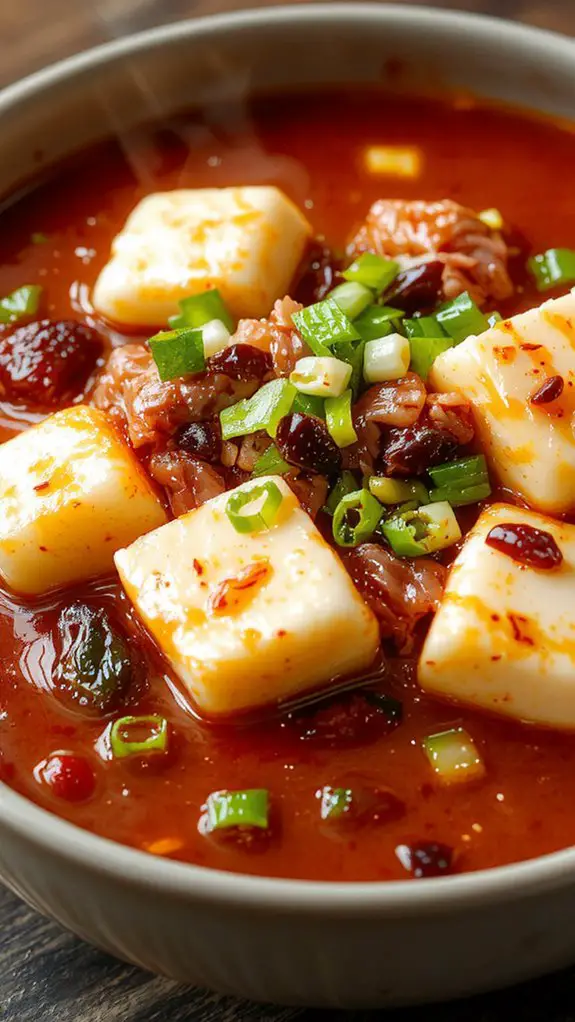
- Prep the tofu: Drain and cut firm tofu into 1-inch cubes. Gently blanch in salted boiling water for 2 minutes to firm it up—this prevents crumbling during cooking. Drain and set aside.
- Cook the aromatics: Heat oil in a wok or skillet over medium heat. Add minced garlic, ginger, and fermented black beans, stirring until fragrant (about 30 seconds). This builds the flavor base—don’t rush it!
- Brown the pork: Increase heat to high and add ground pork, breaking it up with a spatula. Cook until no pink remains but not fully crispy—you want some texture. Drain excess fat if needed.
- Build the sauce: Stir in doubanjiang (chili bean paste) and cook for 1 minute to deepen its color.
Add chicken broth, soy sauce, and sugar, scraping the bottom to deglaze. Simmer for 2 minutes to meld flavors.
– Thicken and add tofu: Slowly drizzle in cornstarch slurry (1 tbsp cornstarch + 2 tbsp water) while stirring. Once the sauce thickens (about 30 seconds), gently fold in tofu cubes.
Avoid stirring vigorously—tilt the pan to coat the tofu without breaking it.
– Finish with heat and aroma: Remove from heat and sprinkle ground Sichuan pepper and chopped scallions. The residual heat will bloom the pepper’s numbing spice.
For extra richness, stir in 1 tsp sesame oil just before serving.
Pro Tips:
- Doubanjiang hack: Fry the paste in oil first to mellow its saltiness and intensify umami.
- Tofu safety net: Blanching isn’t mandatory, but it’s insurance against mushiness.
- Spice control: Reduce doubanjiang by half for mild heat, or add chili oil for extra kick.
Watch Out:
- Over-thickening? Add a splash of broth to loosen the sauce.
- Skipping Sichuan pepper? The dish will lack its signature mala(numbing-spicy) punch.
Nutrition
Mapo Tofu is a flavorful dish that combines spices, tofu, and ground meat. Here’s a breakdown of its nutritional content per serving (approximately 1 cup):
| Nutrient | Amount |
|---|---|
| Calories | 250 kcal |
| Protein | 15 g |
| Fat | 12 g |
| Carbohydrates | 15 g |
| Fiber | 3 g |
| Sugar | 4 g |
| Sodium | 800 mg |
Chef Tips
Mastering Mapo Tofu requires a balance of technique and intuition. I always use silken tofu for a delicate texture and bloom the doubanjiang in oil first to deepen its flavor.
Don’t skip the Sichuan peppercorns—they’re essential for that signature numbing sensation.
Adjust chili oil to your heat tolerance, and finish with cornstarch slurry for the perfect glossy sauce.
Taste as you go to achieve harmony between spice, salt, and umami.