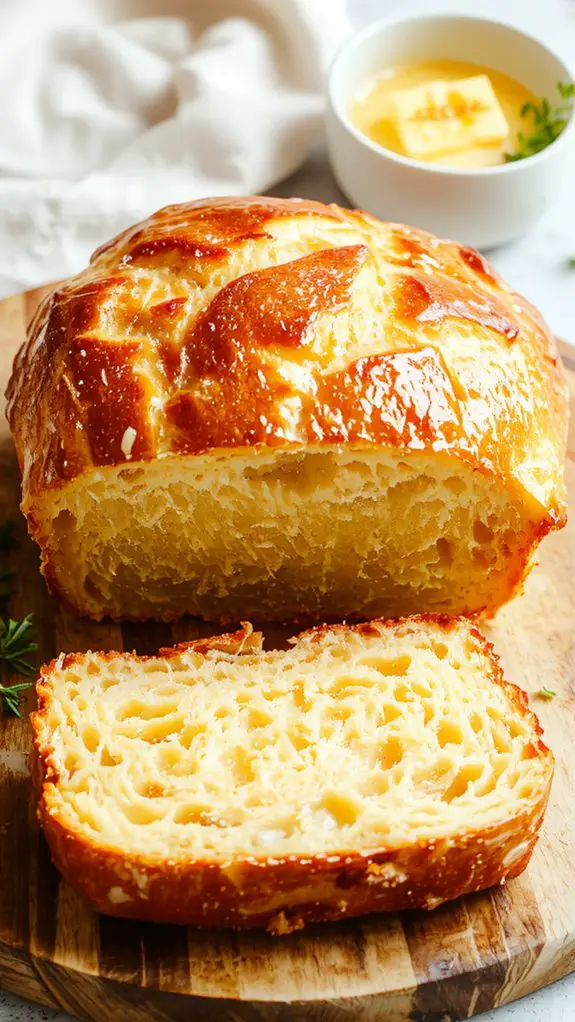
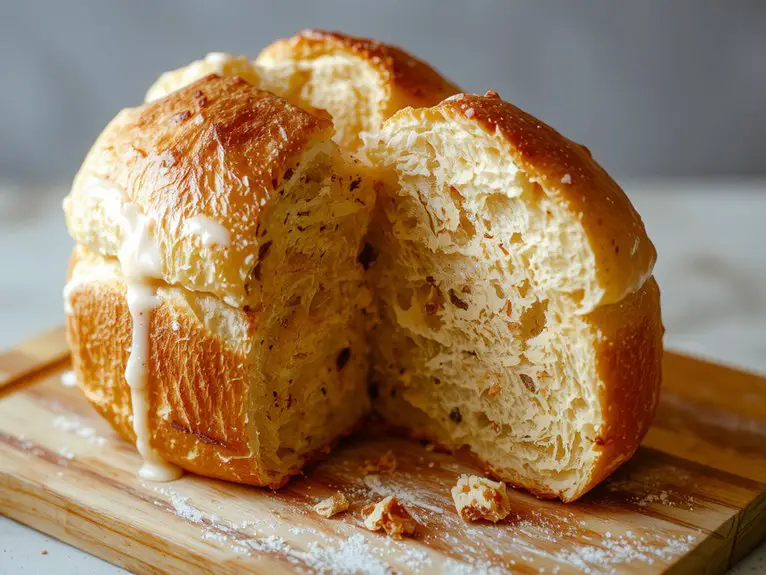
I’ve spent years perfecting my milk bread recipe, and I’m convinced this version is the softest, most flavorful one yet. The secret lies in a simple technique that transforms basic ingredients into something extraordinary. If you’ve ever wondered how bakeries achieve that pillowy texture, the answer might surprise you. There’s a trick to keeping it fresh for days, and once you try it, you’ll never go back to store-bought.
Recipe
Let me tell you, this Milk Bread is a total game-changer—once you bake it, you’ll never go back to store-bought. What makes it special? The tangzhong method, a magical technique that gives this bread an impossibly soft, pillowy texture that stays fresh for days.
It’s enriched with milk and butter, creating a slightly sweet, rich flavor that’s perfect for sandwiches, toast, or just tearing off chunks straight from the loaf. The scent of fresh-baked bread wafting through your kitchen? Pure bliss.
And here’s the best part: it’s easier than you think to make! Whether you’re a baking newbie or a bread pro, this recipe is foolproof and absolutely worth the effort. Trust me, one bite of this fluffy, golden loaf, and you’ll be hooked.
Ingredients
Homemade milk bread is a soft, fluffy delight that feels like a warm hug in every bite. The secret lies in the simple yet precise combination of ingredients. Let’s break it down so you can nail this recipe like a pro.
- Bread flour: The high protein content is essential for that signature chewy, airy texture. All-purpose flour can work in a pinch, but bread flour is the MVP here.
- Whole milk: Using whole milk adds richness and moisture. For a lighter version, low-fat milk works, but whole milk gives the best flavor and softness.
- Sugar: Just a touch to balance the flavor and help the yeast do its job. Don’t skip it—it’s key to activating the yeast and adding a subtle sweetness.
- Unsalted butter: Adds richness and keeps the crumb tender. If you only have salted butter, reduce the added salt slightly.
- Egg: One egg enriches the dough, giving it a golden color and soft texture. Substitutes like applesauce or yogurt can work, but an egg delivers the best results.
- Active dry yeast: This is your leavening agent. Make sure it’s fresh—test it in warm milk before mixing to guarantee it’s active. Instant yeast works too; just skip the proofing step.
- Salt: Balances the sweetness and enhances the overall flavor. Don’t omit it!
- Optional egg wash: A beaten egg brushed on top before baking gives that shiny, golden crust. Milk or cream works too, but egg wash is the pro move.
Pro tip: Room-temperature ingredients blend better, so take your milk, egg, and butter out of the fridge 30 minutes before starting. This guarantees a smooth, cohesive dough every time.
How to Make the Best Fluffy Milk Bread Secrets

- Prepare your ingredients: Confirm all ingredients are at room temperature. This helps them combine more smoothly, leading to a uniform dough. If your milk and eggs are cold, warm the milk slightly and place the eggs in warm water for a few minutes.
- Mix the dry ingredients: In a large bowl, whisk together the flour, sugar, salt, and yeast. This guarantees even distribution and prevents lumps. Using bread flour will give your milk bread its signature chewiness, but all-purpose flour works in a pinch.
- Combine wet ingredients: In a separate bowl, mix the warm milk, softened butter, and eggs. The butter should be soft but not melted—this helps incorporate it evenly into the dough.
- Create the dough: Gradually add the wet mixture to the dry ingredients, stirring with a wooden spoon or spatula. Once combined, knead the dough on a lightly floured surface for about 10 minutes until it becomes smooth and elastic. If using a stand mixer, attach the dough hook and knead on medium speed for 5-7 minutes. The dough should pull away from the sides of the bowl but still feel slightly tacky to the touch.
- First rise: Place the dough in a lightly greased bowl, cover with a damp kitchen towel or plastic wrap, and let it rise in a warm, draft-free spot for 1-1.5 hours. It should double in size.
To speed up the process, place the bowl in a slightly warmed oven (turned off) or near a sunny window.
- Shape the dough: Punch down the risen dough to release any air bubbles. Divide it into equal portions, depending on the size of your loaf pan or desired shape. Roll each portion into a smooth ball or log, confirming there are no creases for a uniform rise.
- Second rise: Arrange the shaped dough in a greased loaf pan or on a baking sheet. Cover and let it rise again for 30-45 minutes. The dough should puff up noticeably but not overproof—overproofing can cause it to collapse during baking.
- Brush with egg wash: Before baking, gently brush the tops of the dough with a mixture of beaten egg and a splash of milk or water. This gives the bread a beautiful golden-brown finish and a slight sheen.
- Bake to perfection: Preheat your oven to 350°F (175°C). Bake the bread for 25-30 minutes, or until the top is golden brown and the internal temperature reaches 190°F (88°C). If the top browns too quickly, tent it with aluminum foil to prevent burning.
- Cool and slice: Remove the bread from the oven and let it cool in the pan for 10 minutes before transferring it to a wire rack. Cooling completely verifies the crumb sets properly, making it easier to slice without squishing the bread.
- Store for freshness: Keep your milk bread in an airtight container or wrapped in plastic wrap at room temperature for up to 3 days. For longer storage, freeze individual slices and toast as needed.
- Pro Tip: For an extra soft crust, cover the baked bread with a clean kitchen towel while it cools. This traps steam, keeping the crust tender rather than crispy.
- Watch Out: Avoid over-kneading the dough, as this can make the bread dense. Knead just until the dough is smooth and elastic, and resist the urge to add too much flour—stickiness is normal and will resolve during kneading.
- Flexibility: For smaller rolls, divide the dough into 12-16 portions and bake for 15-20 minutes. Adjust bake times based on your oven and the size of your bread—every oven is different, so keep an eye on it.
Nutrition
Homemade milk bread provides essential nutrients from its simple ingredients. Here’s a breakdown of the nutritional content per serving.
| Nutrient | Amount |
|---|---|
| Calories | 150 |
| Total Fat | 3g |
| Saturated Fat | 1.5g |
| Cholesterol | 10mg |
| Sodium | 200mg |
| Total Carbs | 25g |
| Dietary Fiber | 1g |
| Sugars | 3g |
| Protein | 5g |
Chef Tips
Getting the texture right with milk bread can be tricky, but I’ve learned a few tricks to make it easier. Knead until the dough passes the windowpane test—stretching without tearing.
Use warm milk (110°F) to activate yeast properly. Let it rise in a draft-free spot until doubled.
Brush with milk before baking for a golden crust. Slice cooled bread with a serrated knife to avoid squishing. Perfect every time!