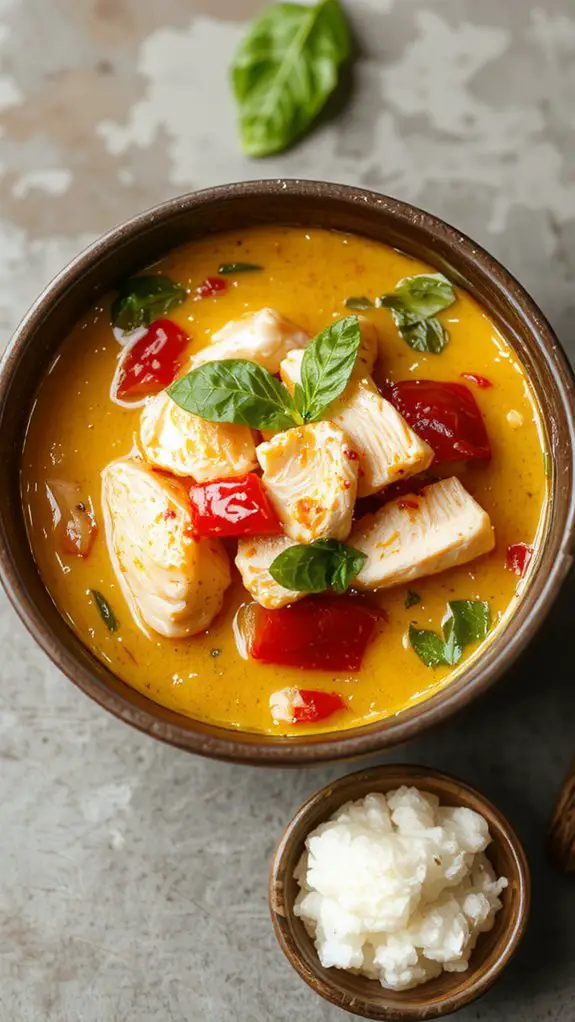
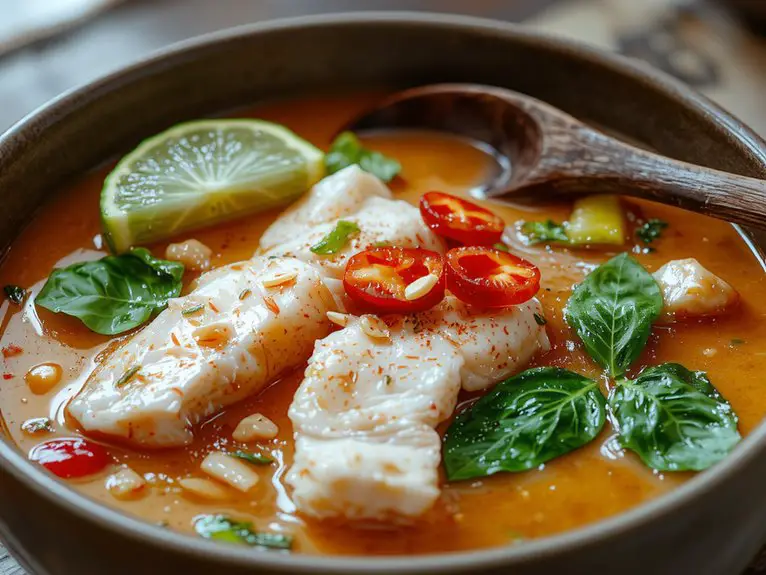
I’ve always believed that making Panang curry at home lets you control the balance of flavors, creating something truly special. Toasting the curry paste releases its depth, while coconut milk adds richness that ties everything together. The key lies in the details—like kaffir lime leaves and Thai basil—that elevate it beyond the ordinary. If you’re curious how to achieve that perfect harmony, there’s more to uncover in this process.
Recipe
This Panang curry recipe is hands-down the richest, most flavorful version you’ll ever make at home—and yes, it’s worth every minute of effort. What sets it apart? The perfect balance of creamy coconut milk, fragrant fresh herbs, and that slow-simmered depth of flavor you’d expect from your favorite Thai restaurant.
I’ve tweaked this recipe over the years, and it’s become a go-to for cozy dinners and impressing friends alike. The secret? Toasting your own curry paste and letting those spices bloom in hot coconut cream until your kitchen smells like heaven.
The result? A velvety, slightly sweet curry with just the right kick of heat, tender bites of protein, and a finish that’ll have you reaching for seconds. Trust me, once you try homemade Panang curry, there’s no going back to store-bought. It’s easier than you think, and the payoff is absolutely worth it. Let’s get cooking!
Ingredients
To create an authentic Panang curry, the ingredients are pivotal—each one plays a role in building the dish’s rich, creamy, and slightly sweet flavor profile. While some elements can be swapped, others are non-negotiable for that signature taste. Here’s what you’ll need:
– Panang curry paste (store-bought or homemade): The soul of the dish. Look for brands with minimal additives for the best flavor. Homemade paste elevates it even further with fresh aromatics.
*Substitution*: Red curry paste can work in a pinch, but it’ll lean spicier and less sweet.
- Coconut milk (full-fat): Essential for the creamy base. Don’t skimp—light versions won’t give you the same richness.
- Protein: Use chicken thighs (juicy and flavorful), beef, or tofu for a vegetarian option. Avoid overly lean cuts for the best texture.
- Kaffir lime leaves: Adds a citrusy, floral aroma. Fresh is best, but dried works if you rehydrate them slightly.
*Substitution*: Lime zest can mimic the flavor, but it’s not quite the same.
– Fish sauce: Provides depth and umami. Adjust to taste—start with less and add more as needed.
*Substitution*: Soy sauce or tamari for a vegetarian version, though the flavor will differ.
- Palm sugar: Balances the heat with a subtle sweetness. Brown sugar or honey can substitute, but palm sugar is worth seeking out for authenticity.
- Vegetables: Red bell peppers and Thai basil add freshness and color. Zucchini or green beans work too—just avoid watery veggies like cucumber.
- Peanuts: Crushed or peanut butter are used for texture and nuttiness. Smooth peanut butter integrates seamlessly, while crushed peanuts add a bit of bite.
For the finishing touch, garnish with extra Thai basil leaves and a sprinkle of crushed peanuts. These small additions make the dish look restaurant-level stunning.
How to Make the Best Authentic Panang Curry Recipe
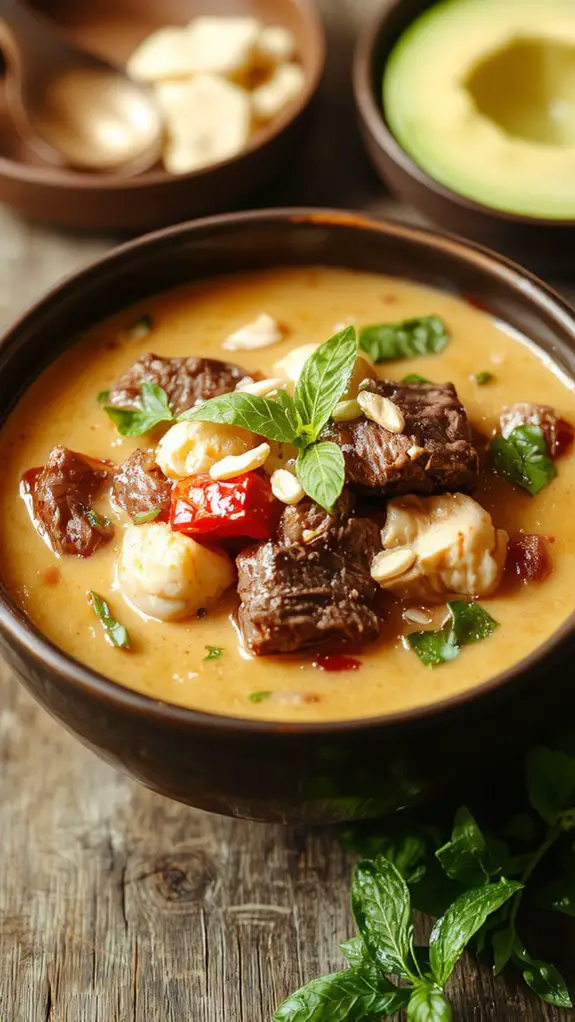
6. Finish with Fresh Herbs – Stir in Thai basil and kaffir lime leaves just before serving. The heat will wilt them slightly while keeping their bright flavor intact.
7. Rest Before Serving – Let the curry sit for 5 minutes off the heat. This allows the flavors to meld together for a richer taste.
Pro Tips:
- For extra creaminess, use full-fat coconut milk.
- If the curry thickens too much, thin it with a splash of water or broth.
- Swap chicken for tofu or shrimp—adjust cooking time accordingly.
Watch Out:
- Don’t boil the curry vigorously; a gentle simmer keeps the coconut milk from separating.
- Overcooking the herbs dulls their flavor—add them last.
Nutrition
This Panang Curry recipe provides a rich and flavorful dish with a balanced nutritional profile. Below is the detailed nutritional information per serving.
| Nutrient | Amount per Serving |
|---|---|
| Calories | 350 kcal |
| Total Fat | 20 g |
| Saturated Fat | 12 g |
| Cholesterol | 45 mg |
| Sodium | 600 mg |
| Total Carbs | 25 g |
| Dietary Fiber | 3 g |
| Sugars | 5 g |
| Protein | 15 g |
| Vitamin D | 0.1 mcg |
| Calcium | 80 mg |
| Iron | 2 mg |
| Potassium | 400 mg |
Chef Tips
While preparing Panang Curry, I always start by toasting the curry paste in oil to deepen its flavors before adding the coconut milk.
For a richer taste, I use full-fat coconut milk and simmer it slowly. Freshly ground peanuts enhance the texture and authenticity.
Adjust the spice level by reducing or increasing the curry paste. Garnish with kaffir lime leaves and Thai basil for a fragrant finish.