I’ve always found making pastrami at home to be both a challenge and a reward. The process takes patience, but the payoff is worth it—juicy, smoky, and packed with flavor. From curing the brisket to nailing the spice rub, each step requires attention to detail. What’s your take on the balance between smoky and peppery? There’s more to uncover about achieving that perfect texture and taste.
Recipe
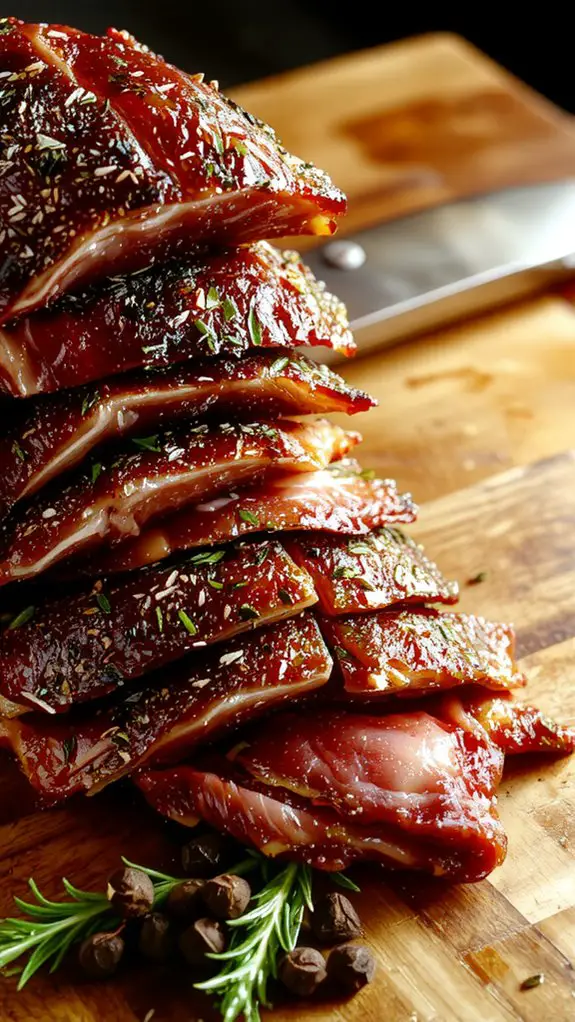
Few things in the kitchen are as rewarding as slicing into a perfectly cured, smoked, and steamed homemade pastrami. Forget store-bought—this recipe is a game-changer, and I’m not just saying that lightly. The secret? A killer blend of spices, a little patience, and a smoking process that transforms humble brisket into a flavor-packed masterpiece.
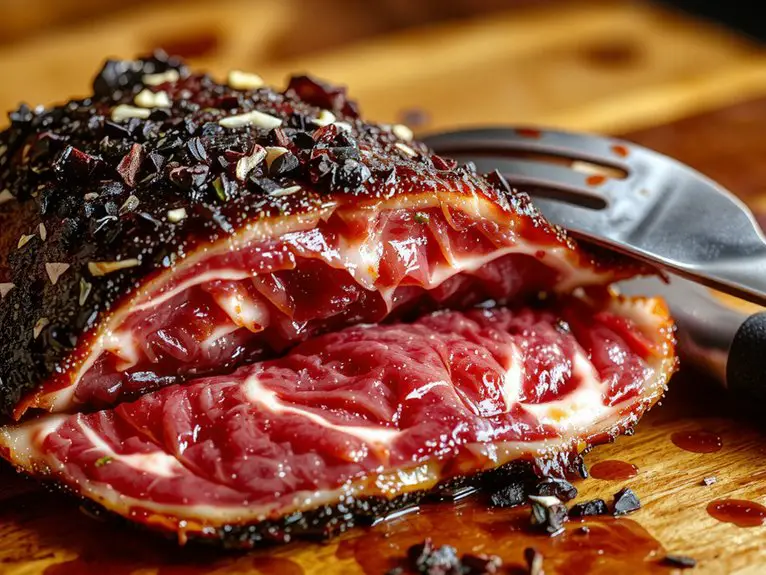
Think tender, smoky meat with a peppery crust that crackles with every bite. Trust me, once you’ve made pastrami from scratch, there’s no going back.
Plus, it’s easier than you might think—no deli counter required. Let’s jump right in and make your kitchen smell like a New York deli in the best way possible.
Ingredients
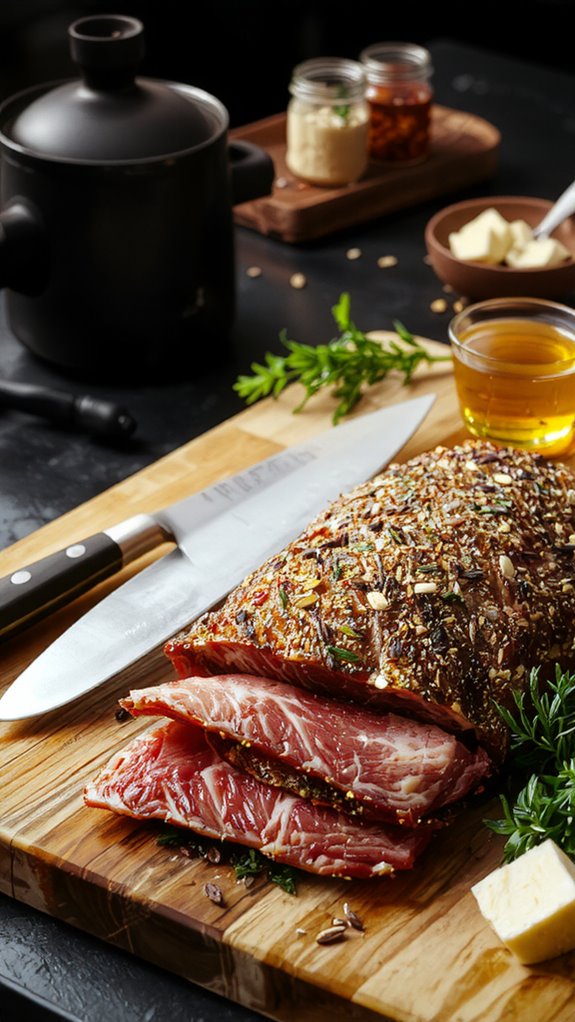
Making homemade pastrami starts with selecting the right ingredients—each one plays a pivotal role in achieving that signature smoky, tender, and flavorful meat. Here’s what you’ll need, along with some chef-approved tips and swaps to nail it:
Brining Ingredients:
- *Corned beef brisket* (5-7 lbs) – This is the base; look for a well-marbled cut for maximum juiciness. If you’re ambitious, start with a raw brisket and cure it yourself for ultimate control.
- *Water* (8 cups) – Use filtered water for the brine to avoid any off flavors.
- *Kosher salt* (1 cup) – Essential for curing; don’t sub with table salt as it’s too fine and can oversalt the meat.
- *Brown sugar* (½ cup) – Adds sweetness to balance the saltiness. Dark brown sugar works too for a deeper flavor.
- *Pickling spice* (3 tbsp) – The secret weapon! A blend of mustard seeds, coriander, bay leaves, and more. Easily homemade or store-bought.
- *Garlic cloves* (6, smashed) – Fresh is best for aromatic depth.
Rub Ingredients:
- *Coarse black pepper* (¼ cup) – A must-have for pastrami’s iconic crust. Freshly cracked is ideal.
- *Coriander seeds* (2 tbsp, ground) – Adds earthy citrus notes; toast them before grinding for maximum flavor.
- *Paprika* (1 tbsp) – Smoked paprika elevates the smokiness even before cooking.
- *Mustard powder* (1 tbsp) – Balances the rub with a tangy, slightly spicy kick.
Smoking/Cooking Ingredients:
- *Wood chips* (hickory or oak) – These impart the classic smoky flavor. Soak them for 30 minutes before use.
- *Beef broth* (2 cups) – Keeps the meat moist during smoking; sub with water if needed, but broth adds extra richness.
- *Onion* (1, quartered) – Adds a subtle sweetness to the cooking liquid.
Pro Tips:
- Brine for at least 5 days—patience is key for that deep, cured flavor.
- Toast your spices before grinding into a rub; it’s a game-changer for aroma and taste.
- Don’t skip the smoking step—it’s what makes it pastrami, not just corned beef.
Optional Extras:
- *Horseradish sauce* – Perfect for serving; mix grated fresh horseradish with sour cream and a splash of lemon juice.
- *Rye bread* – For turning your pastrami into a killer sandwich.
With these ingredients and insider tips, your homemade pastrami will rival any deli favorite.
How to Make the Best Pastrami Cooking Instructions
- Prepare the Brine: Dissolve salt, sugar, and curing salt in water. Stir until fully dissolved. This brine guarantees deep flavor and tender meat.
- *Pro Tip*: Use warm water to dissolve ingredients faster, then cool before adding meat.
- *Watch-Out*: Don’t skip curing salt—it’s essential for food safety and that classic pastrami color.
- Brine the Beef: Submerge the brisket in the brine, making certain it’s fully covered. Refrigerate for 5–7 days, flipping daily for even curing.
- *Pro Tip*: Weigh the meat down with a plate to keep it submerged.
— *Watch-Out*: Use a non-reactive container (glass or plastic) to avoid metallic flavors.
3. Rinse and Soak: Remove the brisket from the brine and rinse thoroughly under cold water. Soak in fresh water for 1–2 hours to reduce saltiness.
– *Why*: This step prevents the pastrami from being overly salty.
4. Apply the Rub: Pat the brisket dry, then coat evenly with a mix of cracked black pepper, coriander, mustard seeds, and paprika. Press the spices into the meat.
– *Pro Tip*: Let the rubbed brisket sit uncovered in the fridge for 1–2 hours to help the spices adhere.
5. Smoke the Pastrami: Preheat smoker to 225°F (107°C). Smoke the brisket fat-side up until it reaches an internal temperature of 165°F (74°C), about 6–8 hours.
- *Visual Cue*: The crust should be dark and firm, with a deep mahogany color.
- *Flexibility*: No smoker? Use a grill with indirect heat and wood chips for smoke.
6. Steam to Finish: Wrap the smoked brisket in foil with a splash of water or broth. Steam in the oven at 300°F (150°C) for 2–3 hours until tender (internal temp of 203°F/95°C).
– *Why*: Steaming breaks down connective tissue for that melt-in-your-mouth texture.
7. Rest and Slice: Let the pastrami rest for 30 minutes before slicing against the grain into thin strips.
– *Watch-Out*: Slicing too thick can make it chewy—aim for ¼-inch slices.
8. Serve or Store: Enjoy hot or cold. For storage, wrap tightly and refrigerate for up to a week or freeze for longer.
– *Pro Tip*: Reheat steamed pastrami in broth to keep it juicy.
Nutrition
Pastrami is a flavorful and protein-rich deli meat. Below is the nutritional breakdown per serving:
| Nutrient | Amount per Serving |
|---|---|
| Calories | 210 kcal |
| Protein | 20 g |
| Fat | 12 g |
| Carbohydrates | 2 g |
| Sodium | 800 mg |
Chef Tips
Though pastrami might seem intimidating to make at home, it’s easier than you’d think with a few key tricks.
First, don’t rush the curing—give it time.
Second, steam after smoking for tender slices.
Third, slice against the grain for maximum tenderness.
Keep spices balanced; too much coriander overwhelms.
Finally, rest the meat before slicing to lock in juices.
Follow these, and you’ll nail it every time.