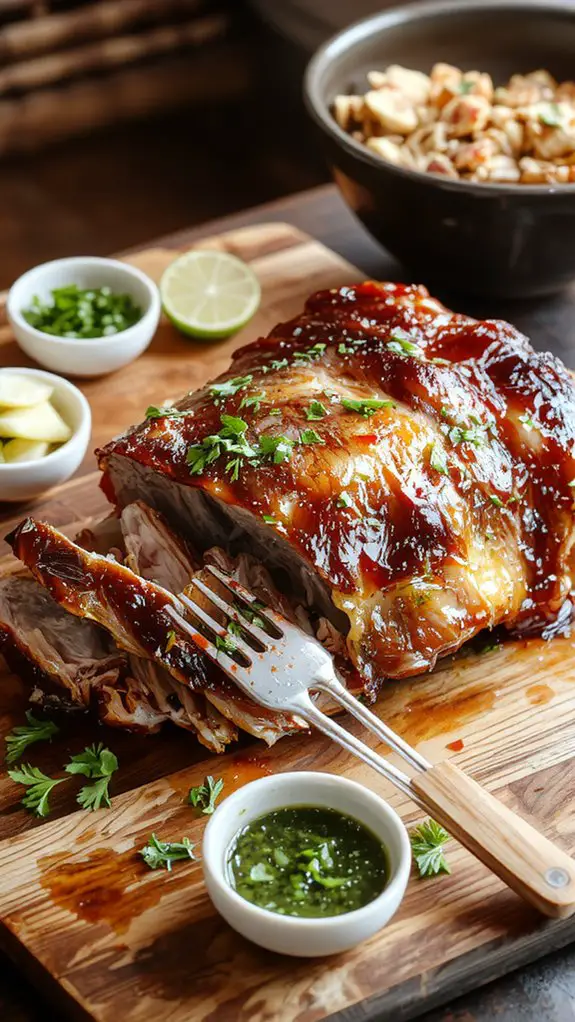
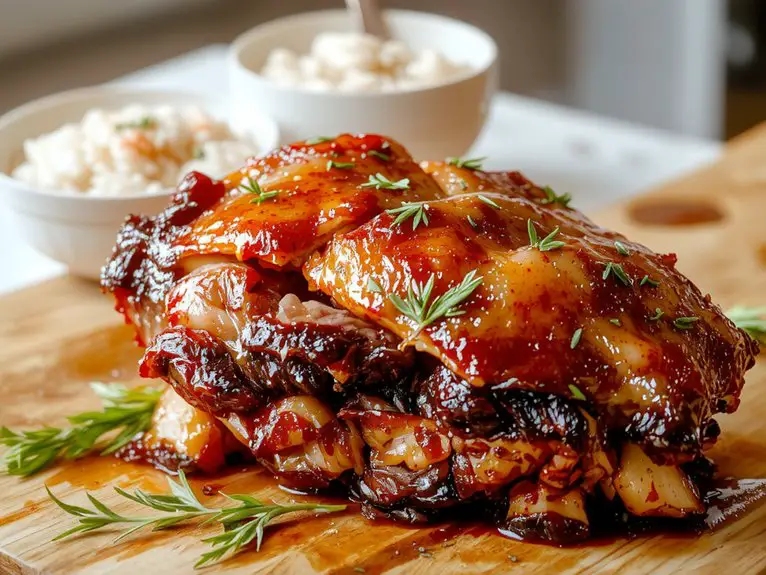
I’ve been making pernil for years, and I’ve found that the secret lies in balancing bold flavors with patience. The way the garlic and citrus meld into the pork shoulder during slow roasting creates something truly special. But it’s the crispy skin that keeps me coming back—every bite is a mix of tender meat and crackling perfection. Let me show you how I achieve this dish at its best.
Recipe
There’s nothing quite like the aroma of slow-roasted pernil filling your kitchen—crispy, golden skin crackling over tender, juicy meat that falls apart with the slightest nudge. This isn’t just any pork shoulder; it’s a showstopper, the kind of dish that turns a regular dinner into a celebration.
The secret? A bold marinade packed with garlic, citrus, and earthy spices that seeps deep into every bite, plus patience (trust me, it’s worth the wait). Whether it’s a holiday centerpiece or a weekend feast, this pernil recipe is guaranteed to have everyone reaching for seconds.
And the best part? It’s easier to make than you think. Let’s get that pork shoulder marinating and the oven preheated—you’re about to make magic.
Ingredients
To achieve the perfect pernil—juicy, tender, and packed with flavor—you’ll need the right ingredients. While some are flexible, others are non-negotiable for that authentic Caribbean taste. Here’s what you’ll need:
– Pork Shoulder (Pork Butt): The star of the dish. Look for a bone-in cut (about 5-7 lbs), as the bone adds depth to the flavor during roasting. Skin-on is ideal for that crispy, crackling finish.
Pro Tip: Score the skin in a crosshatch pattern to allow the marinade to penetrate and the skin to crisp up beautifully.
– Garlic: Use at least 8-10 cloves—this is the backbone of the marinade and brings bold flavor. Fresh is best, no substitutes here.
Pro Tip: Crush or finely mince the garlic to release its oils and meld seamlessly into the marinade.
– Fresh Citrus Juice (Orange and Lime): The acidity tenderizes the meat and balances the richness. Freshly squeezed is key—avoid bottled juice for peak flavor.
Substitution: Lemon juice can stand in for lime if needed.
– Oregano: Fresh or dried works, but fresh Oregano adds a vibrant, herbaceous note.
Pro Tip: If using dried, rub it between your palms to release its aroma before adding to the marinade.
- Olive Oil: Helps the marinade cling to the meat and guarantees even browning. Extra virgin olive oil is ideal for its robust flavor.
- Salt: Kosher salt is preferred for even seasoning. Don’t skimp—pork shoulder needs ample salt to enhance its natural flavor.
- Black Pepper: Freshly ground is best for maximum punch.
- Adobo Seasoning: A staple in Caribbean cooking, it adds a savory, garlicky depth. If you don’t have it on hand, mix garlic powder, onion powder, oregano, and black pepper.
- White Vinegar: Adds tang and helps tenderize the meat. Apple cider vinegar can be used as a substitute.
Little Wins:
- A splash of beer in the roasting pan keeps the meat moist and adds a subtle richness.
- Fresh cilantro or parsley for garnish adds a pop of color and freshness.
Gather these ingredients, and you’re on your way to creating a pernil that’s rich, flavorful, and unforgettable.
How to Make the Best Slow-Roasted Pork Shoulder
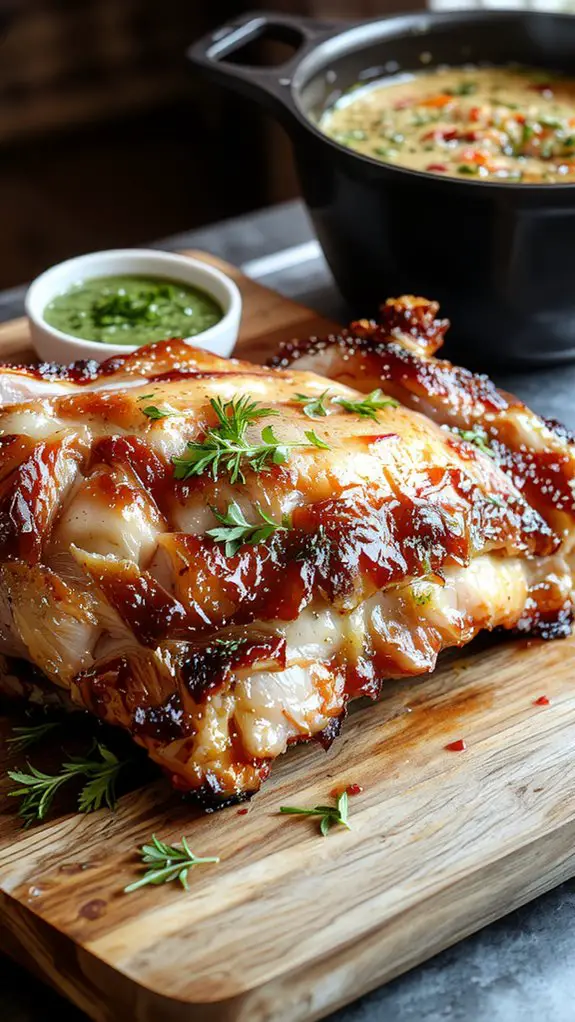
– Shred and serve: Use two forks to pull the pork apart, discarding any large pieces of fat.
Serve with rice, beans, or in sandwiches.
*Flexibility: Leftovers freeze well for up to 3 months.*
Nutrition
The homemade pernil recipe provides a rich source of protein and essential nutrients. Here is the nutritional breakdown per serving:
| Nutrient | Amount per Serving |
|---|---|
| Calories | 420 kcal |
| Protein | 35 g |
| Fat | 28 g |
| Carbohydrates | 3 g |
| Fiber | 0 g |
| Sugar | 1 g |
| Sodium | 780 mg |
Chef Tips
When I make homemade pernil, I always start by choosing a well-marbled pork shoulder—it’s key for keeping the meat moist and flavorful.
I score the skin deeply to let the marinade penetrate and guarantee crispy skin.
Cooking it low and slow, around 300°F, guarantees tenderness.
Finally, I let it rest for 20 minutes before carving to lock in the juices, making every bite perfect.