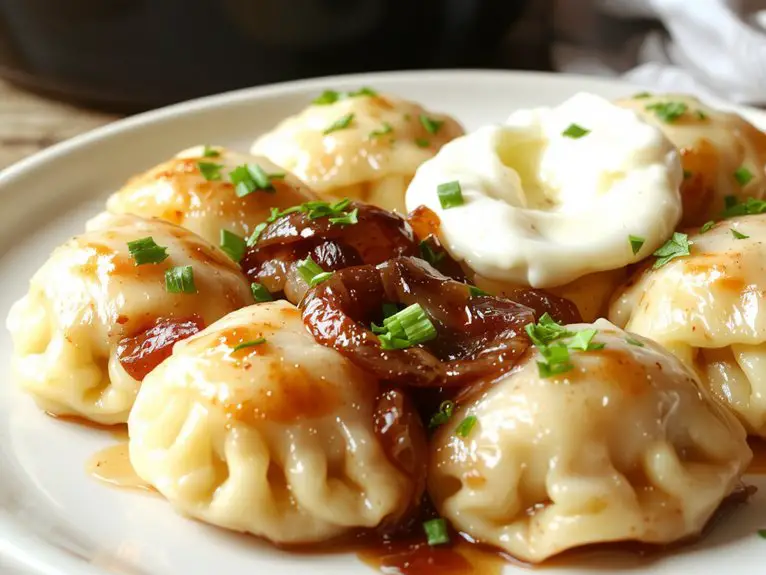
I’ve always found that homemade perogies have a charm store-bought ones can’t match. The dough is soft and elastic, and the filling, often a mix of creamy potatoes and sharp cheddar, feels like comfort in every bite. But there’s a trick to getting them just right—sealing the edges perfectly so they don’t burst during boiling, then finishing them with a golden fry. What’s your secret for making them irresistible?
Recipe
There’s something magical about homemade perogies—pillowy dough wrapped around a savory filling, boiled to tender perfection, then pan-fried until golden and crisp. These little pockets of comfort are worth every minute of effort, and once you taste them, you’ll never go back to store-bought.
The secret? A foolproof dough that’s soft yet sturdy, and a filling so flavorful (think buttery potatoes, sharp cheddar, and caramelized onions) that you’ll sneak bites straight from the bowl.
Whether you grew up eating them or are discovering their deliciousness for the first time, this recipe delivers that perfect balance of melt-in-your-mouth tenderness and satisfying crunch. Trust me, once you master these, they’ll become a staple in your kitchen—just like they’re in mine.
Ingredients
Gathering the right ingredients is the first step to making homemade perogies that are tender, flavorful, and authentic. The dough is simple but relies on quality flour for elasticity, while the filling can be customized to your taste. Here’s what you’ll need, along with some chef-approved tips to guarantee success:
- For the Dough:
- All-purpose flour: Use unbleached for a softer texture.
- Salt: Enhances the dough’s flavor—don’t skip it.
- Water: Lukewarm water helps bind the dough smoothly.
- Egg: Adds richness and structure to the dough.
- For the Filling:
- Potatoes: Yukon Golds are ideal for their creamy texture.
- Sharp cheddar cheese: Freshly grated melts better than pre-shredded.
- Onion: Finely diced and sautéed for depth of flavor—don’t skip this step!
- Butter: Adds richness; unsalted is best for controlling seasoning.
Pro Tips:
- If you’re short on time, frozen mashed potatoes can be a quick swap for fresh.
- No sharp cheddar? Use any melty cheese like mozzarella or Monterey Jack.
- For a richer dough, substitute sour cream for part of the water.
Non-Negotiables:
Fresh potatoes and cheese are worth the effort—they make the filling irresistibly creamy and flavorful.
Little Wins:
Adding a pinch of garlic powder to the filling elevates the flavor without overpowering it. Garnish with caramelized onions and a dollop of sour cream for a restaurant-worthy touch.
How to Make the Best Polish Dumplings Recipe
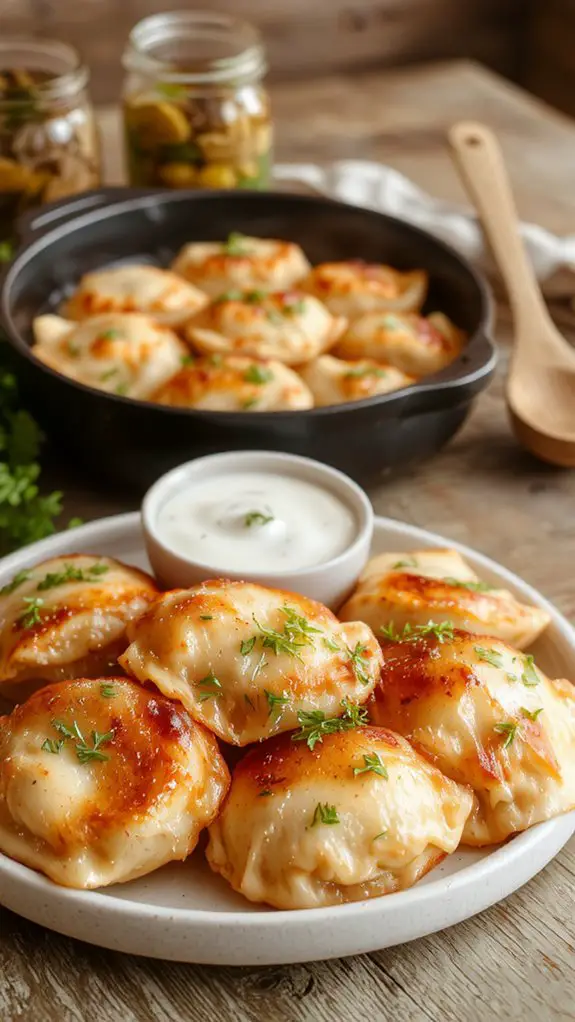
– Serve and enjoy: Serve hot with a dollop of sour cream, sautéed onions, or crispy bacon bits.
Leftover perogies can be refrigerated for up to 3 days or frozen for later use—just boil or fry them straight from the freezer.
Flexibility tip: Experiment with fillings like sauerkraut, mushrooms, or sweet options like blueberries and cream cheese.
Nutrition
Perogies are a delicious and comforting dish, but it’s important to be mindful of their nutritional content.
Calories: 200
Total Fat: 7g
Saturated Fat: 3g
Cholesterol: 20mg
Sodium: 300mg
Total Carbohydrates: 28g
Dietary Fiber: 2g
Sugars: 1g
Protein: 6g
Chef Tips
When making perogies, I always recommend keeping the dough slightly thicker than you might think, as it helps prevent tearing during boiling.
I also suggest sealing the edges firmly with a fork or your fingers to guarantee no filling leaks out.
Don’t overcrowd the pot when boiling—give them space to cook evenly.
Finally, I like to fry them in butter after boiling for extra crispiness.