I’ve spent years perfecting my homemade red curry, and I’ve learned the secrets lie in the balance of flavors and techniques. Toasting the curry paste until fragrant and using full-fat coconut milk creates a rich base, while fresh herbs and spices elevate it to something unforgettable. There’s one trick I use that makes all the difference, but I’ll save that for later. Let’s talk about the steps to get there.
Recipe
Get ready to make the most flavorful red curry you’ve ever tasted—this recipe is a game-changer. I’ve tweaked it over the years, and trust me, the combination of creamy coconut milk, fiery red curry paste, and fresh herbs is pure magic.
What sets it apart? Toasting the spices just right and using full-fat coconut milk for that velvety richness.
Every bite is a burst of bold, aromatic goodness—tender meat (or veggies), silky sauce, and just the right kick of heat.
Whether you’re a curry newbie or a seasoned pro, this one’s foolproof and guaranteed to impress. Let’s get cooking!
Ingredients
To nail this homemade red curry, it’s all about balance and freshness. While some ingredients are flexible, others are non-negotiable for that signature flavor. Here’s your insider guide to assembling the best curry:
The Sauce Essentials:
- *Red curry paste* – The heart of the dish. Go for a high-quality brand like Mae Ploy or Maesri for depth and spice. Don’t skimp here—it’s worth it.
- *Coconut milk* – Full-fat is a must for that creamy richness. Light versions just won’t deliver the same luxurious texture.
- *Fish sauce* – Adds that umami punch. If you’re vegetarian, sub with soy sauce or tamari.
- *Palm sugar* – Balances the heat with a subtle sweetness. Brown sugar works in a pinch.
Protein & Veggies:
- *Protein* – Chicken thighs are my go-to for their tenderness, but shrimp, tofu, or beef are great swaps.
- *Thai eggplant* – Adds a unique texture. If unavailable, substitute with zucchini or bell peppers.
- *Bamboo shoots* – Optional but adds a nice crunch.
Fresh Herbs & Garnishes:
- *Thai basil* – Essential for that fragrant finish. Italian basil doesn’t quite cut it, but cilantro makes a decent backup.
- *Kaffir lime leaves* – Adds a citrusy zing. Skip if you can’t find them, but they’re worth hunting down.
- *Chili peppers* – For extra heat. Bird’s eye chilies are traditional, but any hot pepper works.
- *Lime wedges* – A squeeze of lime at the end brightens everything up.
Pro Tips:
Toasting the curry paste before adding liquids intensifies its flavor. Simmer coconut milk gently—boiling can cause it to separate. Garnish with extra basil leaves for a fresh pop of color and aroma.
With these ingredients, you’re set to create a curry that’s restaurant-worthy and totally customizable to your taste.
How to Make the Best Authentic Thai Red Curry
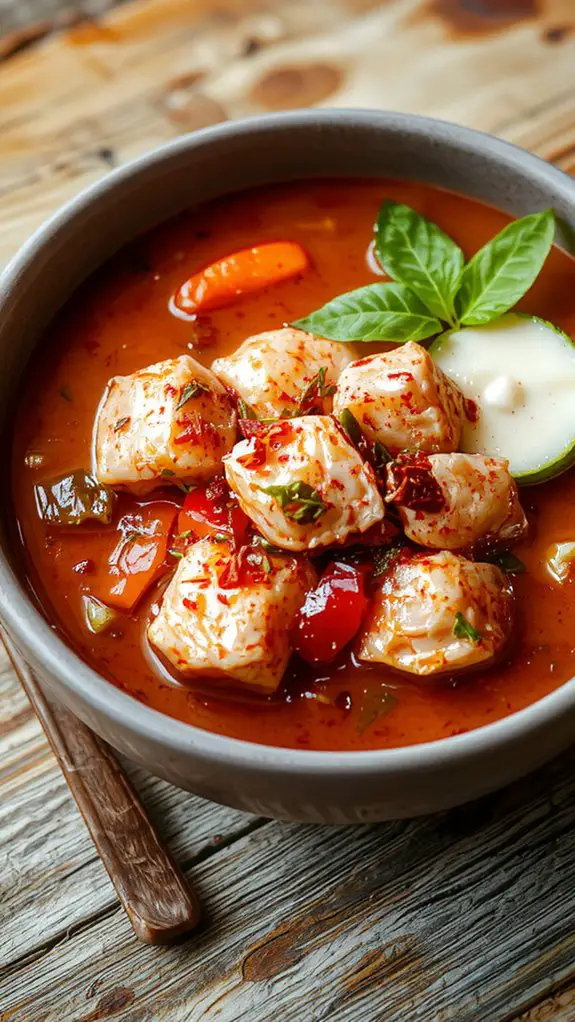
- Prepare Ingredients Ahead: Chop all vegetables, measure spices, and have coconut milk ready. This guarantees smooth cooking without interruptions.
- Heat Oil in a Pan: Use medium heat to warm oil before adding curry paste. Too high heat can burn the paste, while low heat won’t release its flavors.
- Sauté Curry Paste: Stir the paste for 1-2 minutes until fragrant. This step activates the depth of flavors—don’t rush it.
- Add Protein: Cook meat or tofu until lightly browned. For tender results, avoid overcrowding the pan—sear in batches if needed.
- Pour Coconut Milk: Stir gently to combine with the paste. Simmer for 3-4 minutes to thicken slightly—this builds the curry’s creamy base.
- Add Vegetables: Start with firmer veggies (carrots, bell peppers), then delicate ones (zucchini, basil) later. This prevents overcooking.
- Season to Taste: Adjust with fish sauce, sugar, or lime juice. Balance sweet, salty, and tangy flavors gradually—taste as you go.
- Simmer Briefly: Cook just until veggies are tender-crisp. Overcooking makes them mushy—5-7 minutes is usually enough.
- Garnish & Serve: Top with fresh basil or cilantro. Let it rest for 2 minutes to allow flavors to meld before serving.
Pro Tips:
- Use full-fat coconut milk for richness.
- For extra heat, add sliced Thai chilies at the end.
- Leftovers taste better the next day—store in an airtight container.
Watch Out:
- Don’t boil vigorously after adding coconut milk—it can separate.
- Avoid substituting curry paste with powder—it alters the texture and taste.
Nutrition
This homemade red curry is packed with nutrients from fresh ingredients. Below is the nutritional breakdown per serving.
| Nutrient | Amount per Serving |
|---|---|
| Calories | 320 kcal |
| Protein | 12 g |
| Carbohydrates | 18 g |
| Fat | 22 g |
| Fiber | 4 g |
| Sodium | 800 mg |
Chef Tips
When I make this red curry, I always start with fresh, high-quality ingredients because they make a noticeable difference in flavor. I toast the curry paste briefly to deepen its aroma before adding coconut milk.
Simmering the curry on low heat allows the flavors to meld perfectly. Finally, I balance the dish with a squeeze of lime juice and garnish with fresh basil or cilantro.