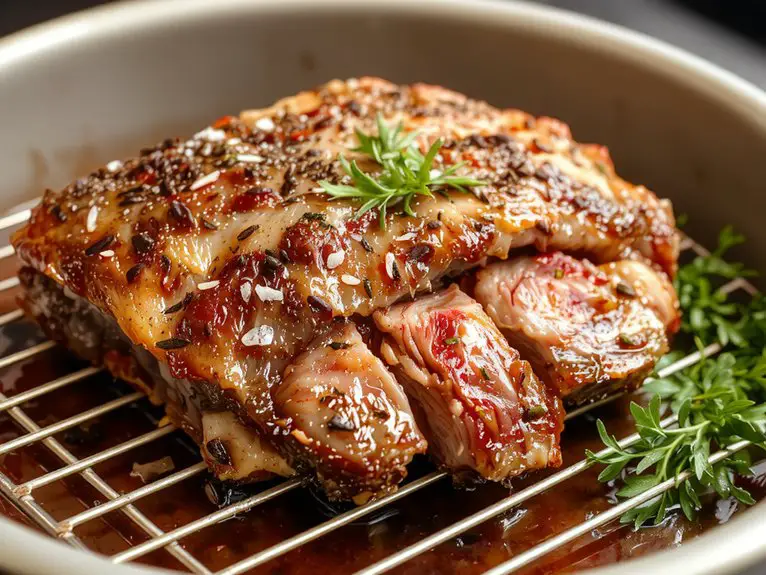
I’ve spent years perfecting my homemade rib roast recipe, and it all starts with quality ingredients and precise cooking techniques. The key lies in the combination of a caramelized crust, tender meat, and aromatic herbs that infuse every bite. There’s a subtle smoky depth that ties it all together, elevating an already impressive dish. If you’re curious about achieving that balance, there’s more to uncover about the process and the final result.
Recipe
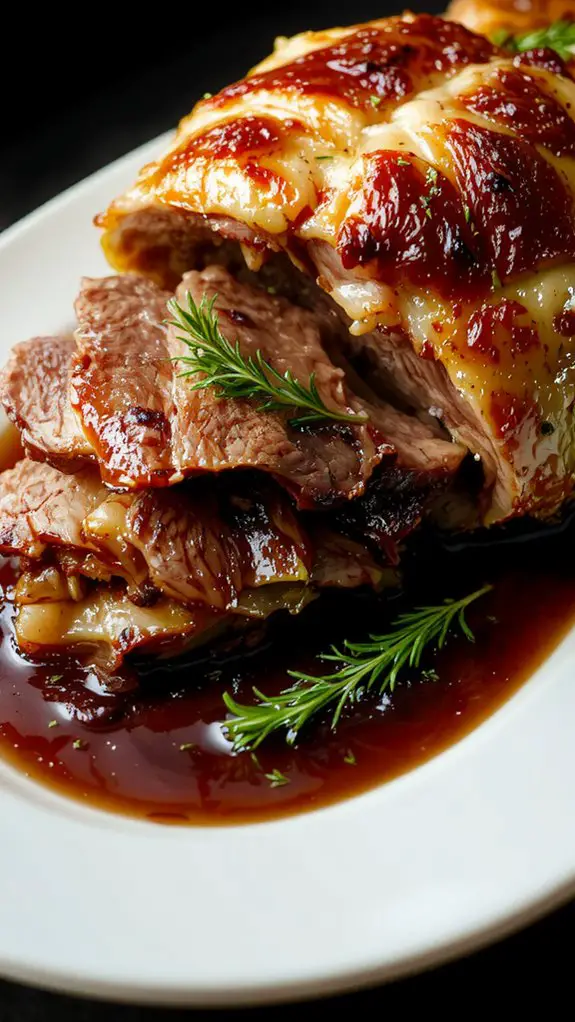
Let me tell you, this rib roast recipe is *the* showstopper you’ve been looking for—seriously, it’s foolproof and guaranteed to impress. Imagine tender, juicy beef with a perfectly caramelized crust, infused with garlic, rosemary, and a hint of smoky depth.
The secret? A simple herb rub and a slow roast at just the right temperature, locking in all that incredible flavor. I’ve made this countless times, and every single time, it’s met with gasps, empty plates, and requests for seconds.
Whether it’s a holiday feast or a Sunday dinner, this rib roast transforms your kitchen into a steakhouse-worthy experience. Trust me, this is the recipe that’ll make you feel like a culinary rockstar. Let’s get cooking!
Ingredients
To craft the perfect rib roast, the quality and selection of ingredients are key. A well-marbled cut guarantees juiciness, while the right seasonings enhance the natural flavors without overpowering them. Here’s what you’ll need to elevate this classic dish:
- Prime Rib Roast (4-6 lbs): The star of the show. Opt for a bone-in cut for extra flavor and moisture retention.
- Coarse Kosher Salt: Essential for seasoning the meat evenly and drawing out its natural juices.
- Freshly Cracked Black Pepper: Adds depth and a subtle kick—freshly ground is non-negotiable for maximum flavor.
- Garlic Cloves (4-6): Minced or sliced, garlic infuses the roast with rich, aromatic notes.
- Fresh Rosemary or Thyme: These herbs bring an earthy, fragrant touch. Fresh is preferred over dried for vibrant flavor.
- Extra Virgin Olive Oil: Helps the seasoning adhere to the roast and creates a beautiful crust while roasting.
- Unsalted Butter (optional): Adds richness and helps baste the roast for an extra succulent finish.
Optional Enhancements:
- Red Wine or Beef Broth: For deglazing the pan and creating a flavorful au jus.
- Shallots or Onions: Sliced and roasted alongside the meat for added depth.
- Dijon Mustard: A thin layer spread on the roast before seasoning adds tang and complexity.
Pro Tip: Let the roast sit at room temperature for 1-2 hours before cooking to guarantee even roasting and tender results. Don’t skip this step—it’s a game-changer.
Substitutions: If rosemary or thyme isn’t available, dried herbs can work in a pinch, but use them sparingly as they’re more concentrated. Olive oil can be swapped with avocado oil for a high-smoke point alternative.
Non-Negotiables: Fresh garlic, coarse salt, and freshly cracked pepper are must-haves—they form the foundation of flavor.
How to Make the Best Perfect Rib Roast Recipe
- Preheat the oven to 450°F (232°C): This high initial temperature helps to sear the outside of the rib roast, locking in juices and creating a flavorful crust. Make sure your oven is fully preheated to avoid uneven cooking.
- Bring the roast to room temperature: Take the rib roast out of the refrigerator at least 1-2 hours before cooking. This guarantees even cooking and prevents the center from being too cold while the edges overcook.
- Season generously: Pat the roast dry with paper towels, then season liberally with salt, pepper, and any desired herbs or spices. Salt draws out moisture, which then reabsorbs, enhancing the meat’s flavor and tenderness.
- Set up a roasting rack: Place the rib roast on a roasting rack inside a shallow pan. Elevating the roast allows air to circulate evenly around it, guaranteeing all sides cook uniformly.
- Sear the roast (optional): For extra browning, sear the roast on all sides in a hot skillet with a bit of oil before placing it in the oven. This step adds a deep, caramelized crust.
- Roast at high heat, then lower the temperature: Start by roasting at 450°F for 15 minutes, then reduce the oven to 325°F (163°C) for the remainder of the cooking time. This method creates a perfect balance of crust and tender interior.
- Use a meat thermometer: Insert a thermometer into the thickest part of the roast, avoiding bones. For medium-rare, aim for an internal temperature of 120°F (49°C); the temperature will rise as it rests. Avoid opening the oven frequently to check, as this can lower the oven temperature.
- Let it rest: Once the roast reaches the desired temperature, remove it from the oven and let it rest, loosely tented with foil, for at least 20-30 minutes. Resting allows the juices to redistribute, guaranteeing a moist and tender roast.
- Carve and serve: Slice the roast against the grain for maximum tenderness. Use a sharp carving knife and steady, even strokes for clean slices.
- Save the drippings: If desired, use the pan drippings to make a quick gravy or au jus for serving alongside the roast. Strain the drippings, skim off excess fat, and add broth or wine for flavor.
Nutrition
Rib roast is a rich source of protein and essential nutrients. Here’s the nutritional breakdown per serving (based on a 3-ounce portion):
| Nutrient | Amount |
|---|---|
| Calories | 280 kcal |
| Protein | 20 g |
| Fat | 22 g |
| Saturated Fat | 9 g |
| Cholesterol | 70 mg |
| Sodium | 50 mg |
| Iron | 1.5 mg |
| Potassium | 250 mg |
Chef Tips
While preparing a rib roast might seem straightforward, I always recommend letting it come to room temperature before cooking to guarantee even doneness.
Season generously with salt, pepper, and herbs, and don’t skip searing it first for a flavorful crust.
Use a meat thermometer to avoid overcooking—125°F for rare, 135°F for medium.
Let it rest for 15-20 minutes before slicing to lock in juices.