When it comes to slow cooking, I’ve found that the secret lies in patience and layering flavors. Start with browning the meat to build a rich base, then add aromatics and liquid to let everything meld over hours. The result is tender, comforting dishes that feel like they’ve come straight from grandma’s kitchen. But there’s one ingredient that takes it to the next level—discover what it is.
Recipe
I can confidently say this slow-cooked masterpiece will change the way you think about cooking—forever.
Imagine this: tender, melt-in-your-mouth goodness that’s been simmering for hours, soaking up all the rich, savory flavors.
The secret? A blend of aromatic herbs, a splash of your favorite broth, and that magical slow-cooker patience that turns even the simplest ingredients into something extraordinary.
Every bite is a warm hug, a comforting reminder that good food doesn’t have to be complicated.
Whether you’re a kitchen rookie or a seasoned pro, this recipe is foolproof and utterly delicious.
Trust me, once you try it, you’ll be hooked. Let’s get cooking—you’re about to create something unforgettable.
Ingredients
The secret to a perfect slow-cooked dish lies in choosing the right ingredients—ones that meld together over time to create deep, layered flavors. Here’s what you’ll need, along with pro tips to make your meal unforgettable.
- Tough cuts of meat (like chuck roast, short ribs, or pork shoulder) – These become fork-tender after hours of low heat. *Pro tip: Skip lean cuts—they’ll dry out.*
- Aromatics (onions, garlic, carrots, celery) – The flavor foundation. *Don’t skimp—they sweeten as they cook.*
- Tomato paste or canned tomatoes – Adds umami depth. *No fresh tomatoes—they break down too much.*
- Broth (beef, chicken, or vegetable) – The liquid gold. *Homemade is ideal, but store-bought works (just opt for low-sodium).*
- Herbs (thyme, rosemary, bay leaves) – Tie them in a bundle for easy removal. *Dried works, but fresh adds brightness.*
- Root vegetables (potatoes, parsnips, or sweet potatoes) – Add them later to avoid mush. *Pro tip: Cut them large so they hold shape.*
- Wine or beer (optional but recommended) – Deglazes the pot and adds complexity. *No alcohol? Use extra broth with a splash of vinegar.*
- Fat (olive oil, butter, or bacon grease) – Essential for browning. *Never skip this step—it builds flavor.*
*Non-negotiable:* Salt and pepper—season generously at every stage.
*Bonus win:* A dash of Worcestershire sauce or fish sauce at the end amps up savoriness.
How to Make the Best Slow-Cooked Beef Stew
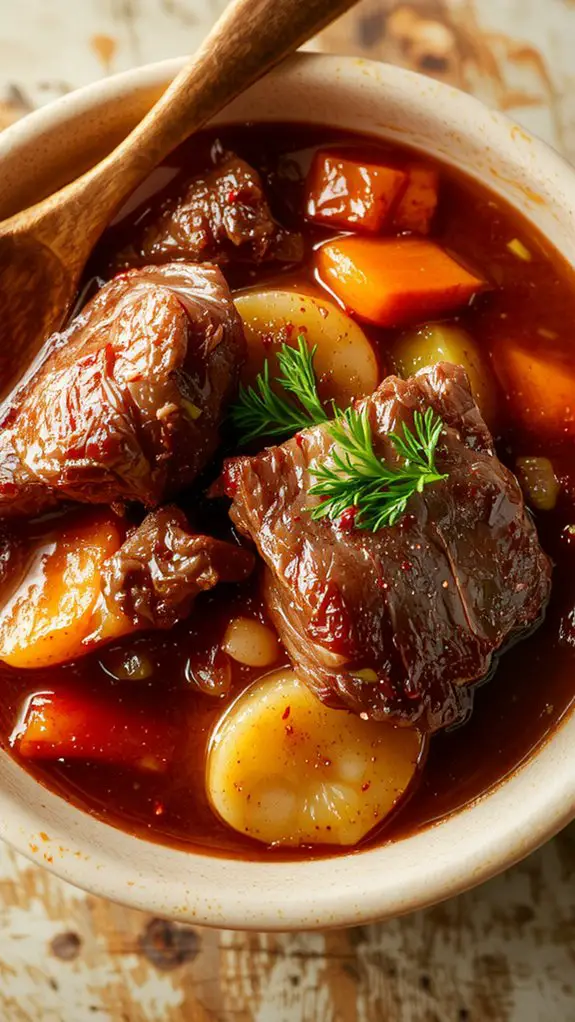
- Add liquid and seasoning: Pour in beef broth until ingredients are just covered.
- Adjust seasoning with salt, pepper, and a pinch of paprika for warmth. Don’t over-salt; you can adjust later.
- Cook low and slow: Set your slow cooker to low for 8 hours or high for 4-5 hours.
- Slow cooking tenderizes the beef and melds flavors beautifully.
- Thicken the stew: In the last 30 minutes, mix a slurry of cornstarch and water, then stir it into the stew to thicken the gravy.
- This guarantees a rich, velvety texture.
- Taste and adjust: Before serving, taste the stew and adjust seasoning if needed.
- Remove bay leaves and thyme sprigs for a clean finish.
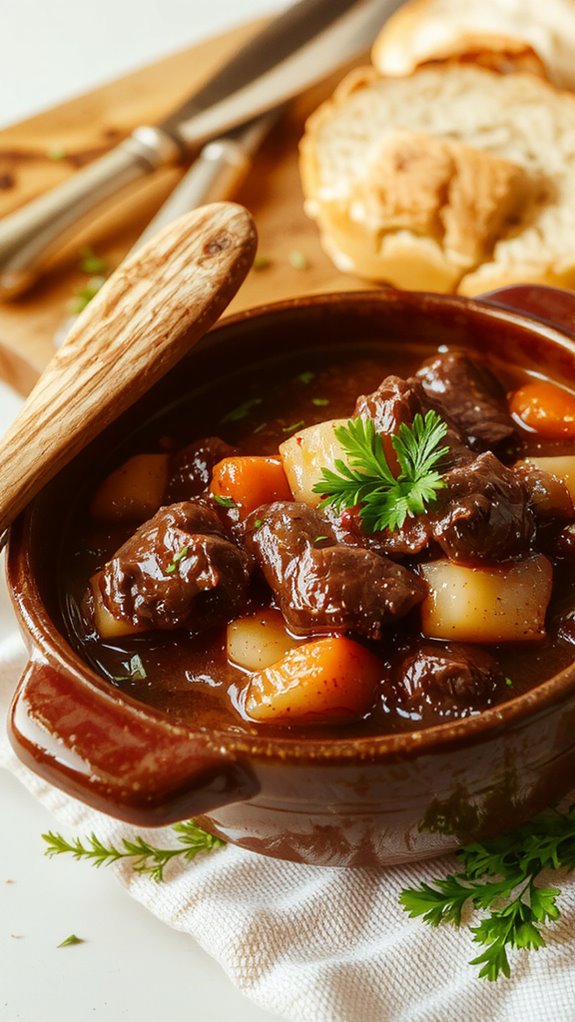
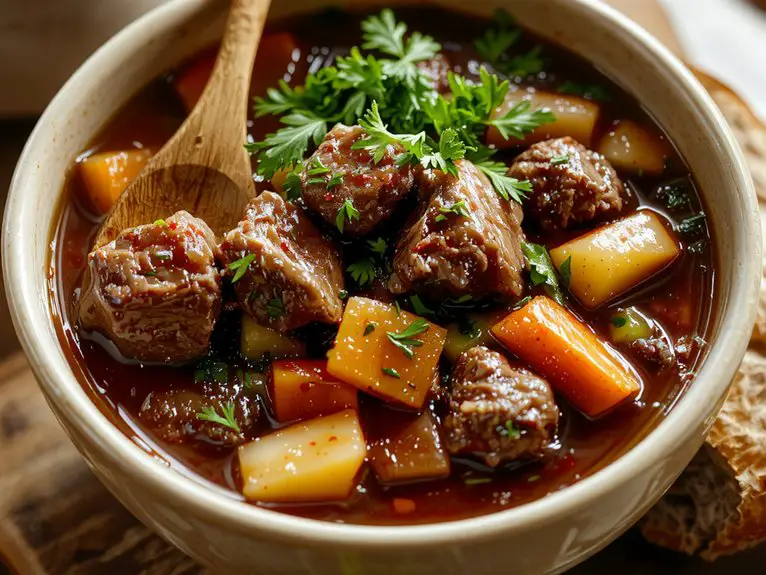
- Serve and enjoy: Ladle the stew into bowls and garnish with fresh parsley.
- Pair with crusty bread or over mashed potatoes for a hearty meal.
Nutrition
Slow cooking recipes are known for preserving nutrients while enhancing flavors. Here’s the nutritional breakdown for a typical slow-cooked stew per serving:
| Nutrient | Amount |
|---|---|
| Calories | 320 |
| Protein | 25g |
| Carbohydrates | 20g |
| Fat | 15g |
| Fiber | 5g |
| Sodium | 450mg |
Chef Tips
Getting the most out of slow cooking isn’t just about ingredients—it’s how you use them. I always brown meat first to deepen flavor and cut veggies uniformly for even cooking.
Layer ingredients strategically—root veggies at the bottom, delicate ones on top. Don’t lift the lid; it traps heat. Adjust liquid sparingly; slow cookers retain moisture.
Finally, season toward the end to balance flavors perfectly.