

There’s something timeless about a bowl of homemade soup, a dish that seems to bring both comfort and nourishment in equal measure. I’ve spent years perfecting a recipe that balances simplicity with depth of flavor, using fresh ingredients and a few key techniques to elevate it beyond the ordinary. Whether you’re a seasoned cook or just starting out, this approach might just change the way you think about soup forever.
Recipe
This soup is hands down the coziest, most comforting dish you’ll ever make—I’ve made it countless times, and it never fails to hit the spot.
Packed with fresh vegetables, aromatic herbs, and a rich, savory broth, it’s like a warm hug in a bowl.
The secret? Simmering everything slowly to let the flavors meld into perfection.
Imagine tender chunks of veggies, a hint of garlic, and a broth so flavorful you’ll want to drink it straight from the pot.
Whether you’re cooking for a crowd or just need a soul-soothing meal for yourself, this recipe is foolproof and oh-so-satisfying.
Trust me, once you try it, it’ll become your go-to for chilly nights or anytime you need a little extra comfort.
Let’s get cooking!
Ingredients
The secret to a truly unforgettable homemade soup lies in the quality and balance of your ingredients. Fresh, seasonal produce and a few pantry staples can transform a simple pot of soup into something extraordinary. Here’s what you’ll need—plus a few chef-approved swaps to make it your own.
- Aromatics (The Flavor Foundation)
- *Onion*: Yellow or white, finely chopped—this is your base. No onion? Shallots work in a pinch.
- *Garlic*: Fresh cloves, minced. Pre-minced jars lack punch, but in a hurry, they’ll do.
- *Carrots & Celery*: Dice these small for even cooking. Skip the celery? Fennel adds a similar depth.
- Protein (Optional but Hearty)
- *Chicken*: Bone-in thighs add richness, but boneless breasts work for a leaner option.
- *Beans*: Cannelini or chickpeas for vegetarian bulk. Canned is fine—just rinse well!
- Liquid (The Soul of the Soup)
- *Broth*: Homemade stock is gold, but low-sodium store-bought works. For depth, add a Parmesan rind while simmering.
- *Tomatoes*: Canned San Marzanos for brightness. Fresh only if they’re peak-ripe.
- Herbs & Spices (The Magic Touch)
- *Bay Leaf*: Remove before serving—it’s subtle but essential.
- *Fresh Herbs*: Parsley or thyme stems tied with twine for easy removal. Dried herbs? Use half the amount.
- Extras (Elevate Your Bowl)
- *Pasta or Grains*: Small shapes like orzo or pearled barley for texture.
- *Greens*: Kale or spinach stirred in at the end. Baby spinach wilts fast—no precooking needed.
Pro Tip: Sauté your aromatics in olive oil (not butter—it burns) until they’re *just* starting to caramelize. This builds a flavor base that’ll make your soup taste like it simmered all day.
How to Make the Best Classic Chicken Noodle Soup
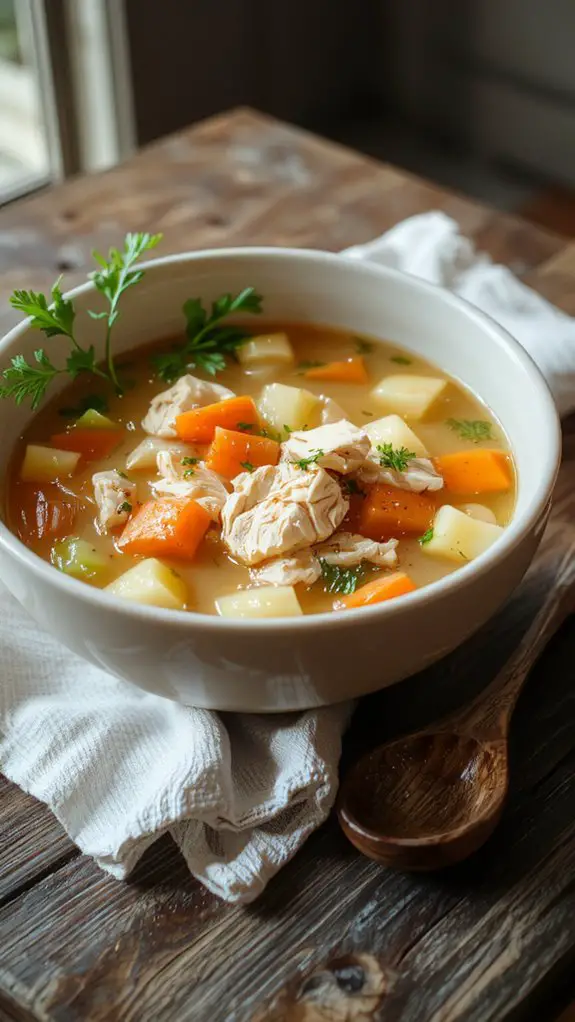
– Prepare Ingredients: Chop onions, carrots, and celery into uniform pieces to guarantee even cooking. Slice the chicken breast into bite-sized chunks. Pro Tip: Use kitchen shears to easily cut raw chicken.
Why: Uniformly sized vegetables cook at the same rate, preventing some from being undercooked while others are mushy.
– Sauté the Aromatics: Heat olive oil in a large pot over medium heat. Add the chopped onions, carrots, and celery. Cook until softened, about 5-7 minutes, stirring occasionally.
Why: Sautéing releases the vegetables’ natural sweetness and builds a flavorful base for the soup. Watch Out: Don’t let the vegetables brown; this can create a bitter flavor.
– Add Garlic and Herbs: Stir in minced garlic, thyme, and bay leaves. Cook for 1-2 minutes until fragrant.
Why: Garlic and herbs add depth and complexity. Cooking them briefly helps release their oils without burning.
– Simmer the Broth: Pour in the chicken broth and bring to a gentle boil. Add the chicken pieces and reduce the heat to a simmer. Cook for 15-20 minutes until the chicken is fully cooked and tender.
Why: Simmering guarantees the chicken absorbs the broth’s flavor while staying moist. Pro Tip: Skim off any foam or impurities that rise to the surface for a clearer broth.
– Cook the Noodles: While the soup simmers, cook the egg noodles separately according to package instructions. Drain and set aside.
Why: Cooking noodles separately prevents them from absorbing too much broth and becoming mushy. Pro Tip: Rinse noodles lightly to remove excess starch if you’re not serving immediately.
– Combine and Finish: Once the chicken is cooked, remove it from the pot and shred it into bite-sized pieces using two forks. Return the shredded chicken and cooked noodles to the pot. Heat through for 5 minutes.
Why: Shredding the chicken guarantees tender, easy-to-eat bites. Visual Cue: The soup should be piping hot with vegetables tender but not mushy.
– Adjust Seasoning: Taste the soup and add salt, pepper, or a squeeze of lemon juice to brighten the flavors. Stir in chopped parsley for freshness.
Why: Final seasoning adjustments guarantee a balanced flavor. Pro Tip: Add a touch of lemon juice to cut through the richness of the broth.
– Serve Immediately: Ladle the soup into bowls and serve warm. Store leftovers separately to maintain texture.
Why: Freshly served soup has the best texture and flavor. Watch Out: Avoid reheating noodles in the broth for too long, as they can become overly soft.
Nutrition
This homemade soup recipe provides a variety of essential nutrients. Here is the nutritional breakdown per serving:
| Nutrient | Amount |
|---|---|
| Calories | 150 kcal |
| Protein | 8 g |
| Carbohydrates | 20 g |
| Fat | 4 g |
| Fiber | 3 g |
| Sodium | 600 mg |
Chef Tips
When I make this soup, I always start by sautéing the vegetables to bring out their natural sweetness and depth of flavor. Don’t rush this step—it’s key.
I also simmer the broth gently; boiling can make it cloudy. Taste as you go and adjust seasoning at the end.
A splash of acid like lemon juice brightens everything. Fresh herbs? Add them just before serving for maximum impact.