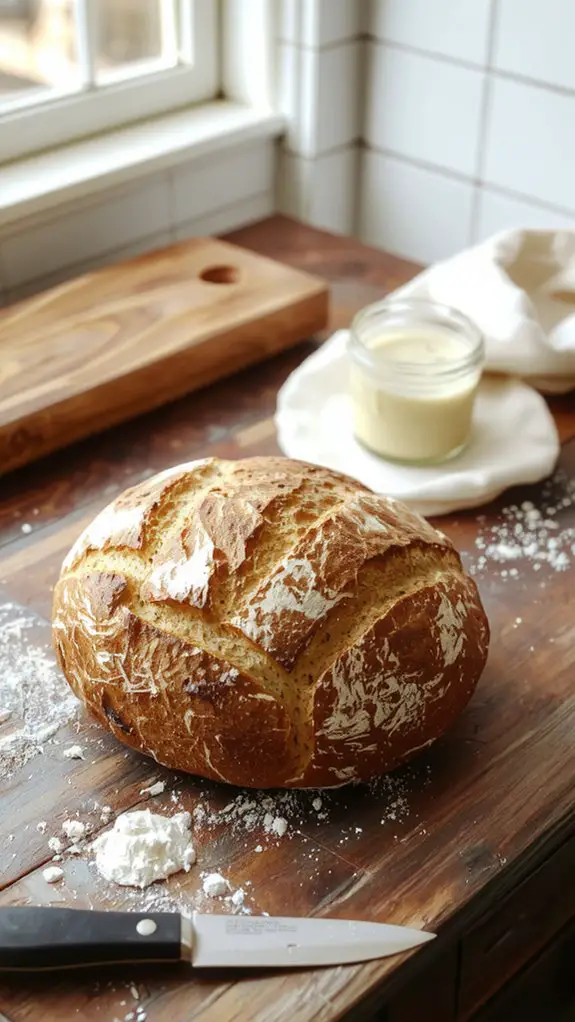
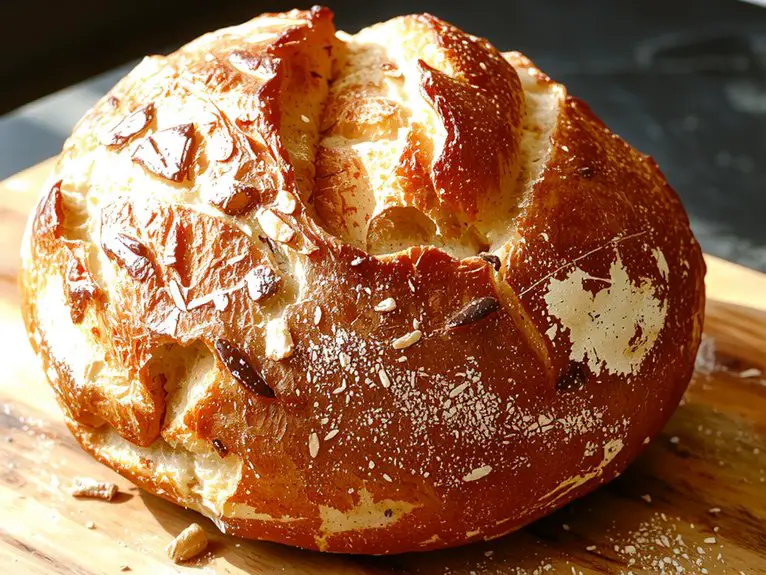
I’ve spent years perfecting my sourdough bread recipe, and it all starts with a lively starter that adds depth and tang. The key lies in balancing fermentation, hydration, and technique to achieve that ideal crust and crumb. If you’re looking for a loaf that’s crisp on the outside, tender inside, and full of complex flavor, this method might just change your baking routine. The details make all the difference.
Recipe
There’s something truly magical about sourdough bread—its tangy aroma, chewy crust, and soft, airy interior make it a staple in any kitchen.
This recipe isn’t just for bakers; it’s for anyone who craves the satisfaction of creating something from scratch. Using a vibrant, bubbly sourdough starter, this bread delivers that unmistakable homemade flavor you can’t find in store-bought loaves.
The secret? Patience and a little love for the process. Once you take that first bite of golden, crispy crust and tear into the tender crumb, you’ll understand why this bread is worth every minute.
Trust me, once you master this recipe, you’ll be baking it weekly—it’s that good. Let’s get started!
Ingredients
Great sourdough starts with simple, quality ingredients—each playing a vital role in flavor and texture. Here’s what you’ll need, plus insider tricks to make your loaf shine:
– Active sourdough starter – The heart of your bread. A bubbly, mature starter guarantees a strong rise and tangy flavor.
*Pro tip:* Feed it 4–12 hours before baking for peak activity.
– Bread flour (500g) – Higher protein content means better gluten development and chew.
*Swap:* All-purpose flour works, but expect a slightly denser crumb.
– Water (350g, lukewarm) – Hydration affects texture.
*Pro tip:* Use filtered water if yours is heavily chlorinated—yeast hates it.
– Fine sea salt (10g) – Enhances flavor and controls fermentation.
*Non-negotiable:* Table salt’s additives can dull taste.
– Rice flour (for dusting) – Prevents sticking during scoring.
*Swap:* All-purpose flour works, but rice flour won’t burn as easily.
*Little win:* A spray bottle of water for misting the oven creates that coveted crispy crust.
How to Make the Best Traditional Sourdough Bread Recipe
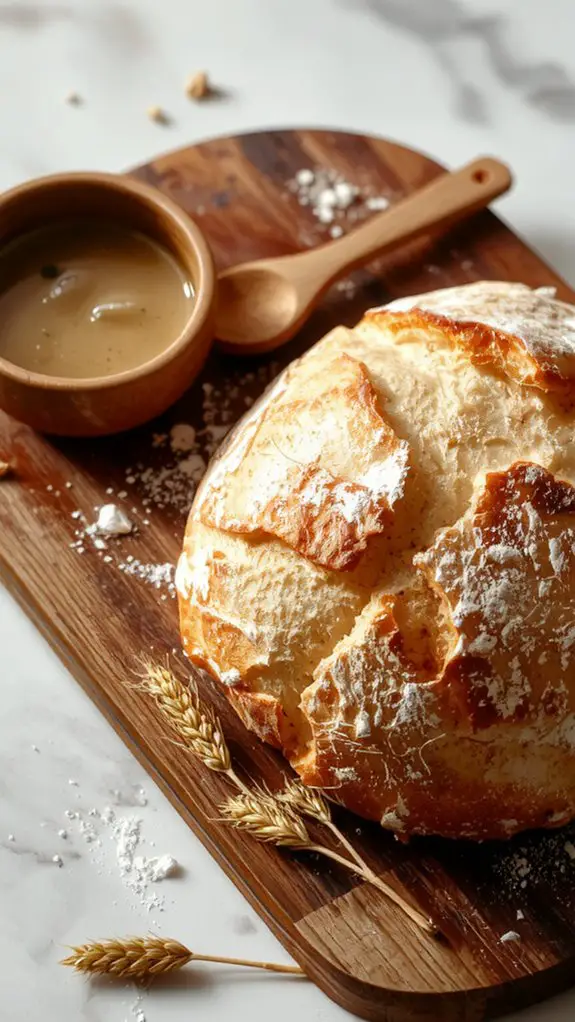
Start with Day 1: Prepare Your Sourdough Starter****
If you don’t already have a sourdough starter, mix 1 cup of whole wheat flour with ½ cup of lukewarm water in a jar. Stir until combined, cover loosely, and let it sit at room temperature for 24 hours.
On Day 2, discard half of the starter and feed it with another 1 cup of flour and ½ cup of water. Repeat this process for 5-7 days until the starter is bubbly and has a tangy aroma.
*Pro Tip: Warm environments help the starter develop faster—keep it in a cozy spot.*
Day 2: Mix the Dough****
In a large bowl, combine 1 cup of active sourdough starter with 1 ½ cups of lukewarm water. Stir until the starter dissolves. Add 4 cups of bread flour and 1 ½ teaspoons of salt. Mix until the dough comes together—it’ll be shaggy and sticky. This is normal!
*Watch-Out Warning: Don’t overmix; gluten development happens during fermentation.*
Autolyse and First Fermentation****
Cover the bowl with a damp towel or plastic wrap and let the dough rest for 30 minutes. This step, called autolyse, allows the flour to fully hydrate and makes kneading easier.
After 30 minutes, perform a series of stretch-and-folds: grab one side of the dough, stretch it upward, and fold it over itself. Rotate the bowl and repeat 3-4 times. Cover and let the dough rest for 8-12 hours (or overnight) at room temperature.
*Pro Tip: If your kitchen is cold, place the dough in a slightly warm area to encourage fermentation.*
Shape the Dough
After the first fermentation, turn the dough out onto a lightly floured surface. Gently shape it into a round or oval loaf by folding the edges toward the center. Place the shaped dough seam-side up in a floured proofing basket or bowl lined with a floured kitchen towel.
*Visual Cue: The dough should feel puffy and hold its shape without deflating.*
Second Proof
Cover the shaped dough and let it proof for 1-2 hours at room temperature, or refrigerate it for up to 24 hours for a more intense sour flavor.
*Pro Tip: If refrigerating, let the dough come to room temperature for 30 minutes before baking.*
Preheat and Score
Place a Dutch oven or heavy baking dish in the oven and preheat to 450°F (230°C) for at least 30 minutes. Carefully remove the hot Dutch oven, and transfer the dough into it seam-side down. Use a sharp knife or razor blade to score the top of the dough in a pattern of your choice—this allows steam to escape and helps the bread rise evenly.
*Watch-Out Warning: Be quick to avoid losing heat from the Dutch oven.*
Bake
Cover the Dutch oven with its lid and bake for 20 minutes. Remove the lid and bake for another 20-25 minutes, or until the crust is deeply golden brown and the internal temperature reaches 200°F (93°C).
*Visual Cue: The bread should sound hollow when tapped on the bottom.*
Cool and Enjoy
Transfer the bread to a wire rack and let it cool completely before slicing—at least 1 hour. This allows the crumb to set and prevents it from being gummy. Slice and savor your homemade sourdough!
*Pro Tip: Store leftovers in a paper bag or bread box to keep the crust crisp.*
Nutrition
Sourdough bread offers a nutritious alternative to commercial bread, rich in probiotics and easier to digest. Below is the nutritional breakdown per slice (approximately 30g).
| Nutrient | Amount |
|---|---|
| Calories | 80 kcal |
| Carbohydrates | 15g |
| Protein | 3g |
| Fat | 1g |
| Fiber | 1g |
| Sodium | 150mg |
Chef Tips
I find that making sourdough bread is as much about technique as it’s about ingredients. Always use a kitchen scale for accuracy—it’s a game-changer.
Keep your starter active by feeding it regularly.
Don’t rush the proofing process; let the dough rise until it’s airy and doubled.
Score the loaf deeply before baking to control expansion. Patience and attention to detail are key to success.