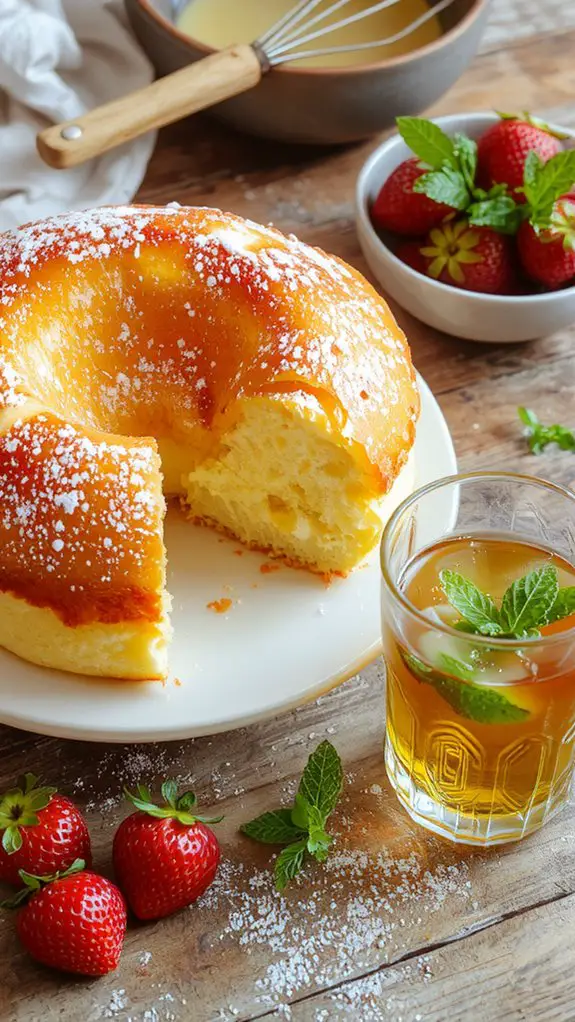
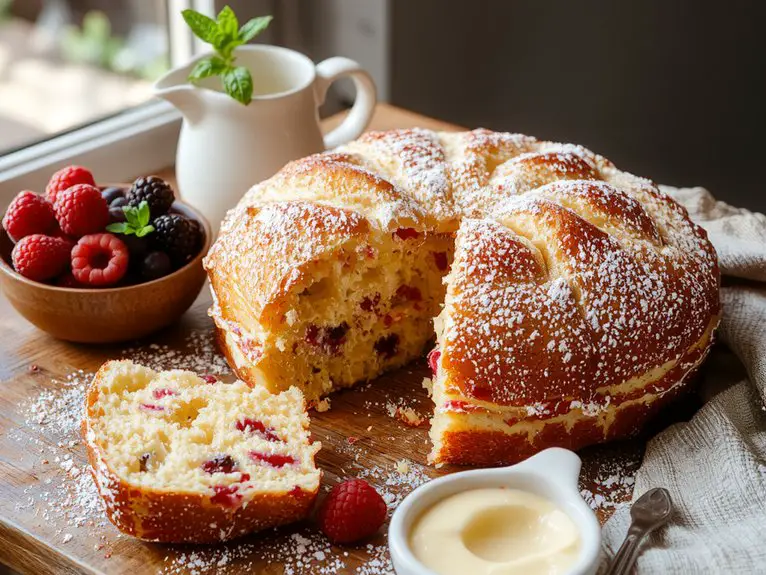
I’ve always believed that the best sponge cake comes from simplicity, yet it’s easy to overcomplicate the process. Balancing lightness and moisture takes precision, and I’ve found that small details—like the temperature of your ingredients—can make all the difference. There’s a reason this recipe has become my go-to, but mastering it requires attention to technique. Curious about what sets it apart? Let’s break it down step by step.
Recipe
There’s something magical about a perfectly baked sponge cake—light as air, tender, and just sweet enough to feel indulgent without being overwhelming. This recipe? It’s the one I swear by, the kind that turns first-time bakers into confident cake makers and leaves everyone asking for seconds.
The secret? A simple but foolproof method that relies on room-temperature eggs and gentle folding to create that dreamy, cloud-like texture. Imagine this: a golden crumb so soft it practically melts on your tongue, with a delicate vanilla sweetness that pairs beautifully with fresh berries, whipped cream, or just a dusting of powdered sugar.
Trust me, once you try this, you’ll never go back to store-bought. Let’s bake something unforgettable.
Ingredients
Start with the basics: a good sponge cake relies on precise ingredients to achieve that light, airy texture and delicate crumb. Don’t skimp on quality—every component plays a role. Here’s what you’ll need:
For the Cake:
- Eggs (large, room temperature): The foundation of a sponge cake. Fresh eggs whip better, giving the cake its signature lift.
- Granulated Sugar: Fine sugar dissolves easily, guaranteeing a smooth batter and balanced sweetness.
- All-Purpose Flour: Sift it twice for a lighter crumb. Cake flour can be used for an even more tender texture.
- Baking Powder: A pinch guarantees the cake rises beautifully. Don’t skip it!
- Salt: Just a pinch to enhance the flavors.
- Unsalted Butter (melted and cooled): Adds richness without overpowering the cake’s lightness.
- Vanilla Extract: Pure extract is non-negotiable for that warm, inviting aroma.
Pro Tip: Room temperature eggs whip up faster and create a more stable foam, which is vital for the cake’s structure.
Optional Additions:
- Lemon Zest: Brightens the flavor with a citrusy note. Use fresh zest only—dried just doesn’t cut it.
- Milk (whole or 2%): A tablespoon or two can make the batter smoother and easier to pour.
Substitutions:
- No cake flour? Use all-purpose flour but remove 2 tablespoons per cup and replace with cornstarch.
- Out of vanilla extract? Almond extract can add a nutty depth, but use half the amount to avoid overpowering the cake.
Non-Negotiables:
Fresh eggs and pure vanilla extract are essential—don’t compromise here.
Little Wins:
Dust the cake with powdered sugar or top with fresh berries for a simple yet elegant finish.
How to Make the Best “Follow Precise Ingredient Measurements
– Preheat your oven to 350°F (175°C) and prepare your cake pan by greasing it with butter and dusting it with flour. This guarantees the cake releases easily after baking.
Pro Tip:Use parchment paper at the bottom of the pan for extra insurance against sticking.
– Sift the flour, baking powder, and salt together in a bowl. Sifting aerates the dry ingredients, leading to a lighter texture in your cake.
Watch Out:Skip this step, and your cake might turn out dense and uneven.
– In a separate bowl, beat the eggs and sugar together on high speed until pale, thick, and ribbon-like. This step incorporates air, which helps the cake rise.
Visual Cue:When you lift the beaters, the mixture should fall in thick, slow ribbons that hold their shape briefly.
– Gently fold the sifted dry ingredients into the egg mixture using a spatula. Avoid overmixing; stop as soon as no streaks of flour remain.
Why It Matters:Overmixing deflates the air you worked so hard to incorporate, resulting in a flat cake.
– Melt the butter and mix it with warm milk. Gradually pour this mixture into the batter, folding gently until combined.
Pro Tip:Confirm the butter and milk are warm (not hot) to prevent the batter from seizing.
– Pour the batter into the prepared pan and tap it lightly on the counter to release any air bubbles.
Watch Out:Don’t skip tapping, or you might end up with uneven pockets in your cake.
– Bake in the preheated oven for 25-30 minutes, or until a toothpick inserted into the center comes out clean.
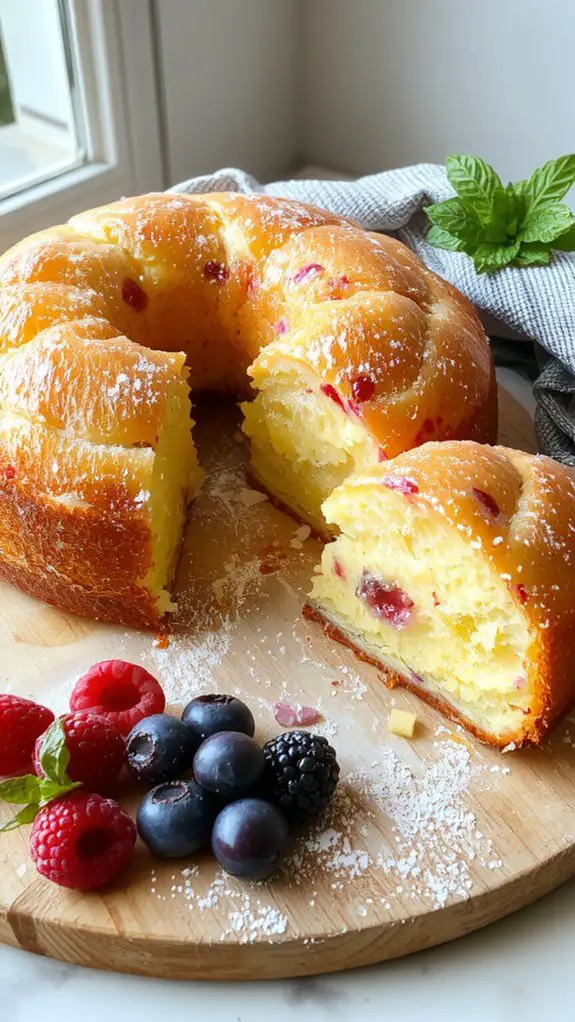
Visual Cue:The cake should spring back when lightly touched and have a golden-brown top.
– Let the cake cool in the pan for 10 minutes, then transfer it to a wire rack to cool completely.
Why It Matters:Cooling in the pan allows the cake to set, while transferring it prevents soggy bottoms.
– Dust with powdered sugar or frost as desired before serving.
Flexibility:This cake pairs beautifully with fresh berries, whipped cream, or a simple glaze.
– Store any leftovers in an airtight container at room temperature for up to 3 days.
Pro Tip:To keep it extra moist, place a slice of bread in the container—the cake will absorb its moisture!
Nutrition
Homemade sponge cake is a delightful dessert that is light and airy. Here is the nutritional information per serving.
| Nutrient | Amount |
|---|---|
| Calories | 220 kcal |
| Protein | 5 g |
| Carbohydrates | 35 g |
| Sugars | 20 g |
| Fat | 7 g |
| Saturated Fat | 4 g |
| Fiber | 1 g |
| Sodium | 150 mg |
Chef Tips
To guarantee your sponge cake turns out perfectly fluffy, I recommend sifting the flour twice—it makes a noticeable difference in texture.
Always beat the eggs and sugar until pale and thick—this creates the cake’s airy structure.
Preheat your oven thoroughly and avoid opening it during baking to prevent sinking.
Finally, let the cake cool completely in the pan before removing it to avoid cracking.