
I’ve spent years perfecting the art of crafting a standing rib roast that’s tender, juicy, and bursting with flavor. The secret lies in a few key steps—choosing the right cut, balancing the seasoning, and mastering the cooking process. It’s not just about following a recipe; it’s about understanding the nuances that make this dish shine. If you’re ready to elevate your roast game, there’s more to uncover about this timeless centerpiece.
Recipe
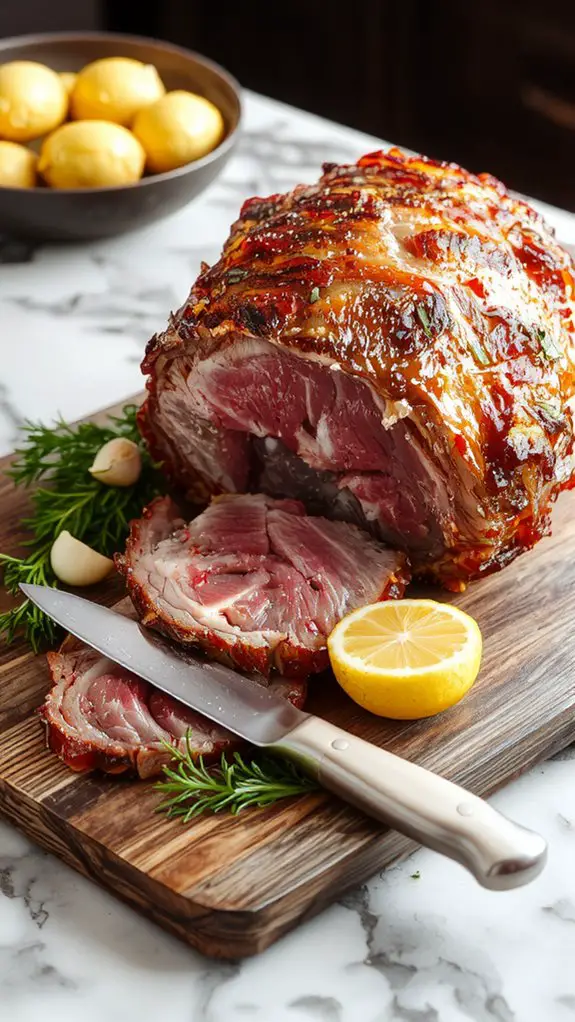
This standing rib roast recipe is a game-changer—it’s the kind of dish that turns a regular dinner into a memorable feast. With its perfectly seared crust, juicy, tender interior, and rich, beefy flavor, it’s guaranteed to impress even the toughest critics.
The secret? A simple yet powerful blend of garlic, rosemary, and thyme, combined with the magic of slow roasting to lock in all that incredible flavor. I’ve made this countless times, and every single bite feels like a celebration.
The aroma alone will have your kitchen smelling like a high-end steakhouse, and the first slice will confirm why this roast deserves a prime spot on your holiday table (or any table, really). Trust me, once you try this, you’ll never go back to guessing how to cook the perfect roast. It’s effortless, foolproof, and absolutely unforgettable.
Ingredients
For the perfect standing rib roast, selecting high-quality ingredients is essential. This cut of beef is already luxurious, but the right seasonings and techniques will elevate it to showstopper status. Here’s what you’ll need and why each ingredient matters:
- Standing Rib Roast (Bone-In): Opt for a prime-grade roast if possible—the marbling guarantees juiciness and flavor. The bone not only adds richness but also helps the roast cook evenly. A 3-rib roast feeds about 6-8 people.
- Kosher Salt: Coarse salt is key for seasoning the meat deeply. It helps form a flavorful crust and enhances the roast’s natural taste.
- Freshly Ground Black Pepper: Adds a warm, aromatic kick. Freshly ground is a must for maximum flavor.
- Rosemary and Thyme (Fresh): These herbs bring earthy, aromatic notes that pair beautifully with beef. Fresh herbs are worth it—they’re more vibrant than dried.
- Garlic (Fresh): Minced garlic infuses the roast with pungent, savory depth. Don’t substitute with garlic powder—it’s not the same.
- Olive Oil or Melted Butter: Helps the seasoning adhere to the roast and promotes browning. Butter adds richness, while olive oil is lighter but equally effective.
- Optional: Mustard or Horseradish Crust: A thin layer of Dijon mustard or prepared horseradish before roasting adds a tangy, zesty note that cuts through the richness.
Substitutions:
- No fresh herbs? Use 1/3 the amount of dried rosemary and thyme.
- Out of olive oil? Melted butter or even vegetable oil works in a pinch.
Pro Tips:
- Let the roast come to room temperature before cooking—it guarantees even cooking from edge to center.
- Use a meat thermometer to nail the perfect doneness.
Little Wins:
- Save the pan drippings for a simple gravy or au jus—it’s a flavorful bonus.
- Garnish with extra sprigs of rosemary and thyme for a stunning presentation.
How to Make the Best Perfect Rib Roast Technique

- Roast for 15 minutes at 450°F (232°C) to sear the exterior. This high-temperature burst creates a caramelized crust, locking in the juices. Pro tip: Avoid opening the oven during this step to maintain the oven’s heat.
- Reduce the oven temperature to 325°F (163°C) and continue roasting. Cook the roast until it reaches your desired internal temperature: 120°F (49°C) for rare, 130°F (54°C) for medium-rare, or 140°F (60°C) for medium.
Use a meat thermometer inserted into the thickest part of the roast (avoiding bone) for accuracy.
- Let the roast rest for 20-30 minutes before carving. Resting allows the juices to redistribute throughout the meat, ensuring a moist and tender result. Tent the roast loosely with foil to keep it warm.
- Carve against the grain for tender slices. This technique breaks down the muscle fibers, making each bite tender. For bone-in roasts, slice along the bone for clean, even portions.
- Serve immediately with your favorite sides. Pair the roast with classic accompaniments like mashed potatoes, roasted vegetables, or a rich au jus for a complete, comforting meal.
Nutrition
Standing rib roast is a rich and flavorful dish that perfectly complements festive occasions. Here’s a breakdown of its nutritional content per serving (approximately 3 oz).
| Nutrient | Amount |
|---|---|
| Calories | 215 kcal |
| Protein | 19 g |
| Fat | 15 g |
| Saturated Fat | 6 g |
| Cholesterol | 60 mg |
| Sodium | 55 mg |
| Iron | 1.5 mg |
Chef Tips
Mastering a standing rib roast requires attention to detail and a few tried-and-true techniques.
I always let the roast sit at room temperature for an hour before cooking to guarantee even doneness.
Use a meat thermometer—135°F is perfect for medium-rare.
Let it rest for 20 minutes post-cooking to lock in juices.
Season generously with salt, pepper, and herbs, and baste while roasting for extra flavor.