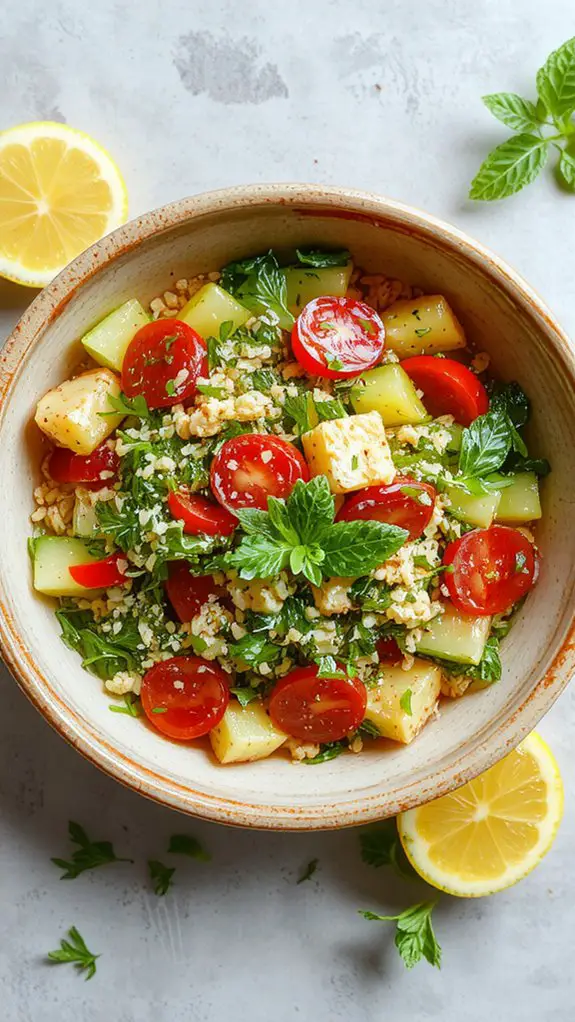

I’ve spent years perfecting my tabbouleh recipe, aiming for that balance of freshness and texture. The secret lies in the quality of ingredients and the right ratios of herbs to grains. It’s a dish that feels light yet satisfying, versatile enough to stand alone or complement a meal. But there’s a key element that elevates it—something I’ll share if you’re curious about crafting the ultimate version of this classic.
Recipe
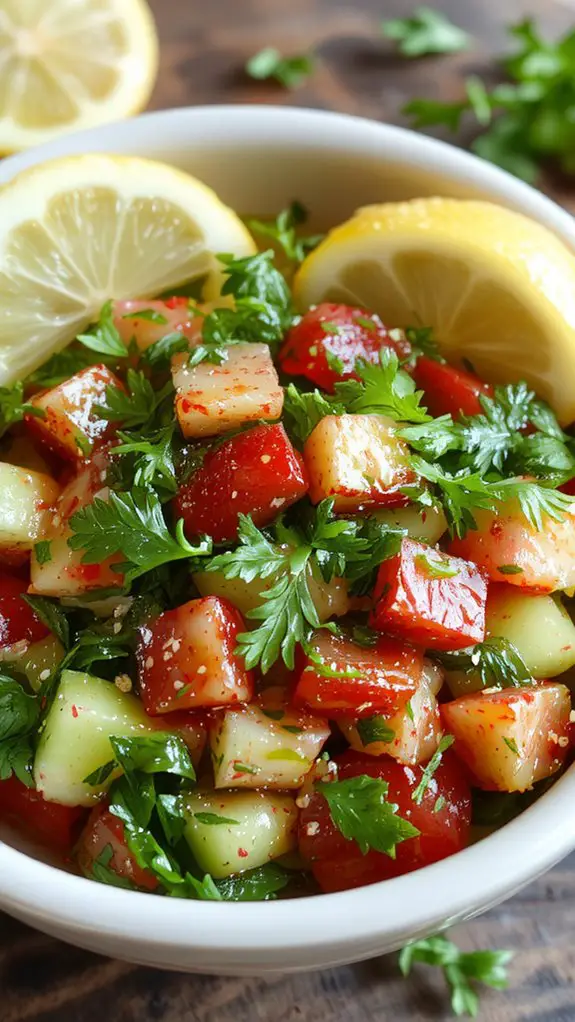
If there’s one dish that screams fresh, vibrant, and downright delicious, it’s this homemade tabbouleh. I’ve been making this recipe for years, and I can confidently say it’s the best version out there—crisp, citrusy, and bursting with herbaceous flavor.
What sets it apart? Freshly chopped parsley and mint, juicy tomatoes, and a zesty lemon-olive oil dressing that ties it all together. It’s the kind of salad that feels light yet satisfying, with every bite offering a perfect balance of crunch and tang.
Plus, it’s incredibly easy to throw together—no fancy techniques, just wholesome ingredients done right. Whether you’re serving it as a side or enjoying it as a main, this tabbouleh is guaranteed to impress.
Trust me, once you taste it, you’ll want to make it again and again.
Ingredients
Fresh, bright, and bursting with flavor, tabbouleh relies on simple ingredients that sing together. The key is using the best quality you can find—don’t skimp on freshness! Here’s what you’ll need:
- Bulgur wheat: The heart of tabbouleh. Fine or medium grain works best for that perfect texture. If you need a swap, quinoa or couscous can work, but bulgur is traditional for a reason—it’s nutty and light.
- Parsley: Fresh flat-leaf parsley is non-negotiable. It should dominate the dish, so grab a big bunch and chop it finely. Curly parsley can work in a pinch, but flat-leaf has a milder, more herbaceous flavor.
- Tomatoes: Ripe, juicy tomatoes are essential. Use vine-ripened or heirloom varieties for the best sweetness and moisture. Seed them if you want to avoid excess liquid in your salad.
- Cucumber: English cucumbers are ideal—they’re crisp and less seedy. Peel them for a smoother texture if you prefer.
- Green onions: Mild and fresh, they add a subtle oniony bite. You can swap in finely diced red onion for a sharper flavor.
- Mint: Fresh mint leaves bring a cool, invigorating note. Don’t skip it—this is what sets tabbouleh apart!
- Lemon juice: Freshly squeezed is a must for that zesty brightness. Bottled just won’t cut it—trust me, it’s worth the extra effort.
- Olive oil: Use a high-quality extra-virgin olive oil for richness and depth. It’s the backbone of the dressing, so don’t skimp here.
- Salt and pepper: Simple, but essential. Season generously to bring all the flavors together.
Optional but elevating: A pinch of sumac for tangy depth or a handful of pomegranate seeds for a pop of sweetness and color.
How to Make the Best Fresh Herb Tabbouleh Recipe
– Prepare the bulgur wheat****: Start by soaking the bulgur wheat in cold water for about 20-30 minutes. This softens it without turning it mushy.
Drain thoroughly using a fine-mesh strainer and press out any excess water. Properly drained bulgur guarantees your tabbouleh stays light and fluffy.
– Chop the herbs finely: Use a sharp knife to dice the parsley and mint leaves as finely as possible. This step is vital—larger pieces can overwhelm the delicate balance of flavors.
Pro tip: roll the herbs into tight bundles before chopping for more control.
– Dice the vegetables: Cut the tomatoes and cucumber into small, uniform pieces. Removing the seeds from the tomatoes prevents the salad from becoming too watery.
Consistent sizing guarantees every bite has a perfect mix of ingredients.
– Whisk the dressing: In a small bowl, combine olive oil, lemon juice, minced garlic, salt, and pepper. Whisk until emulsified.
Taste and adjust the seasoning—this is your flavor foundation, so get it right.
– Combine everything gently: In a large mixing bowl, toss the soaked bulgur, chopped herbs, and vegetables together.
Pour the dressing over the mixture and gently fold everything until evenly coated. Avoid overmixing to keep the ingredients intact and fresh.
– Let it rest: Cover the tabbouleh and refrigerate for at least 30 minutes before serving. This allows the flavors to meld beautifully.
If serving later, wait to add the tomatoes until just before serving to maintain their texture.
– Serve and enjoy: Before serving, give the tabbouleh a light toss and taste for seasoning adjustments.
Garnish with a sprinkle of fresh mint leaves for an extra pop of color and aroma. Serve chilled or at room temperature for the best experience.
Nutrition
Tabbouleh is a nutritious dish packed with fresh ingredients. Below is the nutritional information per serving.
| Nutrient | Amount per Serving |
|---|---|
| Calories | 120 |
| Total Fat | 7g |
| Saturated Fat | 1g |
| Cholesterol | 0mg |
| Sodium | 200mg |
| Total Carbohydrate | 13g |
| Dietary Fiber | 3g |
| Sugars | 2g |
| Protein | 3g |
Chef Tips
When preparing this dish, I’ve found that using a sharp knife to finely chop the parsley and mint makes a big difference in texture. Fresh, quality ingredients are key—opt for firm tomatoes and crisp cucumbers.
Let the tabbouleh sit for 30 minutes after mixing to let flavors meld. Taste and adjust seasoning before serving—adding a splash of lemon juice or olive oil can elevate the dish.