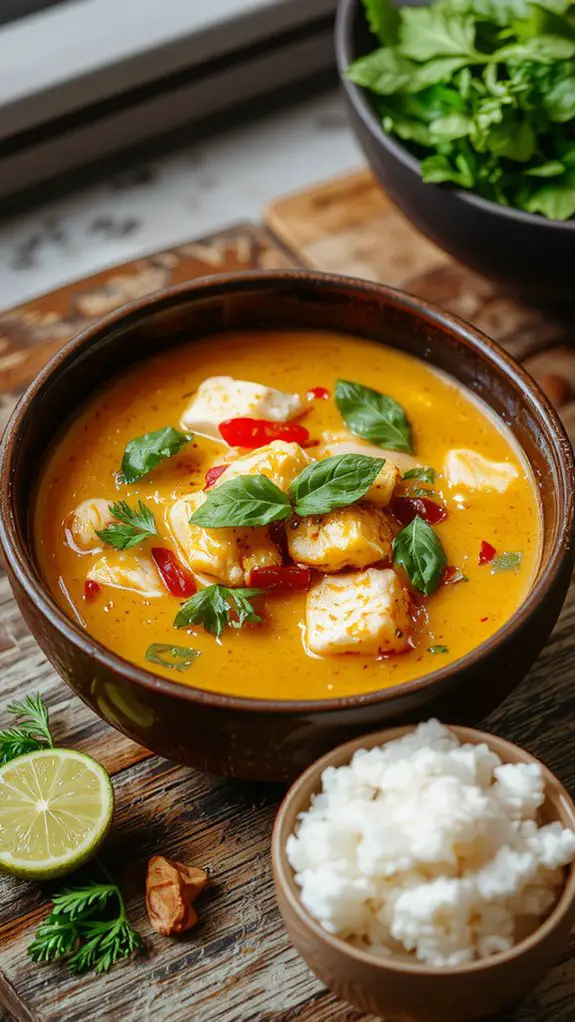
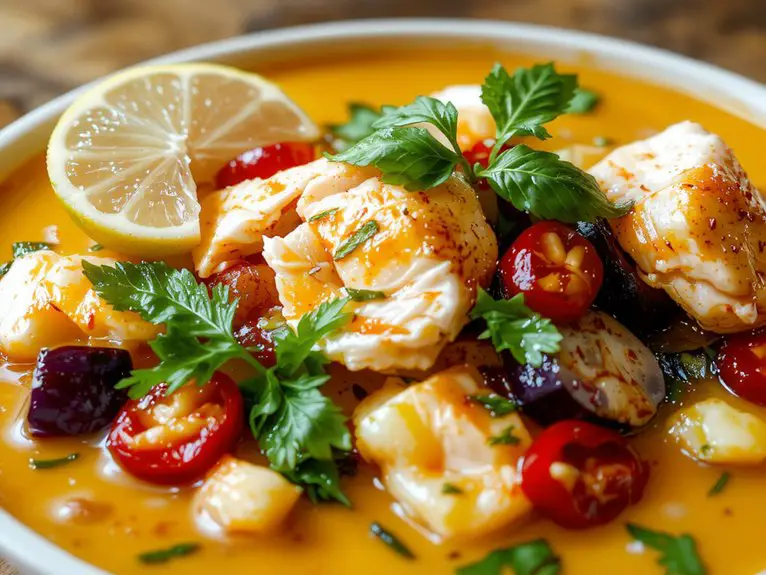
I’ve always found that the secret to an unforgettable Thai curry lies in the balance of flavors—spicy, tangy, and sweet—all working together in harmony. It’s about using fresh ingredients and taking the time to build the paste from scratch, which makes all the difference. Whether you’re a seasoned cook or just starting out, there’s something deeply satisfying about mastering this dish. Let me show you how to create a curry that feels authentic and unique.
Recipe
I swear by this homemade Thai curry recipe—it’s the real deal, bursting with vibrant flavors you won’t find in any takeout. The secret? Fresh lemongrass, galangal, and a touch of creamy coconut milk that transforms it into a rich, aromatic dream.
I’ve been making this for years, tweaking it to perfection, and I promise it’s easier than you think. Picture tender chunks of protein simmering in a fragrant, slightly spicy sauce, infused with lime leaves and chilies, balanced by a hint of sweetness.
Whether you’re a Thai food newbie or a seasoned pro, this recipe will have you hooked from the first bite. Ready to impress your taste buds? Let’s get cooking!
Ingredients
The secret to an authentic Thai curry lies in the balance of fresh, vibrant ingredients. While some components can be swapped, others are non-negotiable for that signature flavor. Here’s what you’ll need to create a rich, aromatic curry that’s bursting with Thai flair:
For the Curry Paste (The Heart of the Dish):
- Fresh chilies – Adjust the heat level to your preference, but definitely include some for that essential kick.
- Lemongrass – The stalky, citrusy backbone of the paste; use the tender inner part only.
- Galangal – A must for its peppery, piney flavor. Ginger can substitute, but it’s not quite the same.
- Kaffir lime leaves – These impart a unique, tangy aroma; dried works if fresh isn’t available.
- Shallots and garlic – The aromatic base that builds depth.
- Shrimp paste – Adds umami richness; skip if vegetarian, but it’s a game-changer.
For the Curry Base:
- Coconut milk – Opt for full-fat for creaminess; light versions thin out the sauce.
- Fish sauce – A non-negotiable for authenticity; soy sauce works for a vegetarian version.
- Palm sugar – Balances the heat with subtle sweetness; brown sugar is a decent substitute.
For the Protein and Veggies:
- Chicken, shrimp, or tofu – Choose your favorite; marinating in a bit of curry paste enhances flavor.
- Vegetables – Bell peppers, eggplant, and bamboo shoots are classic, but feel free to improvise.
Garnishes and Extras:
- Fresh Thai basil – Adds a peppery, licorice-like finish; regular basil won’t cut it.
- Cilantro – For a fresh, herbal pop.
- Lime wedges – A squeeze of lime juice brightens the entire dish.
- Roasted peanuts or crispy fried shallots – Optional but highly recommended for texture.
Pro Tip: If you’re short on time, a quality store-bought curry paste can work, but adjust the seasoning to guarantee it’s not too bland. Always taste and tweak!
How to Make the Best Authentic Thai Curry Method

- Prepare your ingredients ahead of time—chop vegetables, measure spices, and have your protein ready. This guarantees a smooth cooking process and prevents any last-minute scrambling.
- Toast the curry paste in a hot pan to release its flavors. Heat oil in a wok or skillet, add the curry paste, and stir for 1-2 minutes until fragrant. Toasting enhances the depth of the curry.
- Add coconut milk gradually to create a rich, creamy base. Start by pouring in a small amount and stirring it into the paste until combined, then add the rest. This prevents clumping and guarantees even flavor distribution.
- Simmer your protein and vegetables in the curry base. Cook until the protein is fully done and the vegetables are tender but still crisp. Overcooking vegetables can make them mushy, so keep an eye on the texture.
- Balance the flavors with fish sauce, sugar, and lime juice. Add these ingredients in small increments, tasting as you go. The goal is a harmonious blend of salty, sweet, and tangy notes.
- Garnish with fresh herbs and serve immediately. Thai basil, cilantro, or sliced chilies add a vibrant finish. Enjoy your curry with steamed jasmine rice for the ultimate experience.
- Store leftovers properly in an airtight container for up to 3 days. Reheat gently on the stovetop, adding a splash of water or coconut milk to revive the texture.
Nutrition
This homemade Thai curry recipe provides a balanced mix of macronutrients and essential vitamins. Below is the nutritional breakdown per serving.
| Nutrient | Amount per Serving |
|---|---|
| Calories | 350 kcal |
| Carbohydrates | 25 g |
| Protein | 15 g |
| Fat | 20 g |
| Fiber | 4 g |
| Sugar | 6 g |
| Sodium | 800 mg |
Chef Tips
Getting the perfect balance of flavors in Thai curry isn’t always easy, but I’ve found a few tricks that make a big difference. Toasting the curry paste releases its aroma, and balancing sweet, sour, salty, and spicy elements is key.
Use fresh herbs like Thai basil for brightness, and coconut milk for creaminess. Simmer gently to avoid splitting, and taste repeatedly to adjust seasoning. Patience elevates every bite.