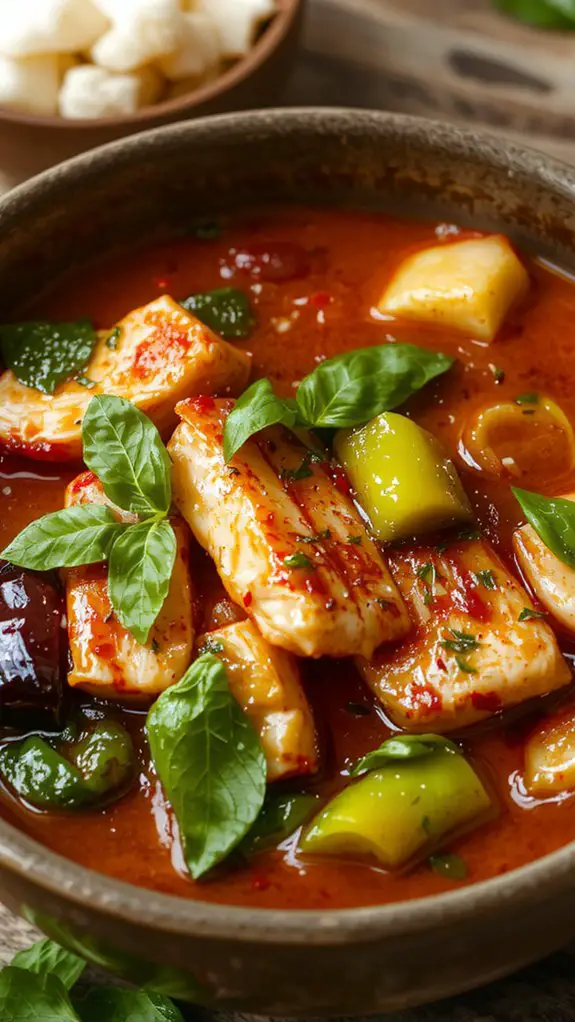
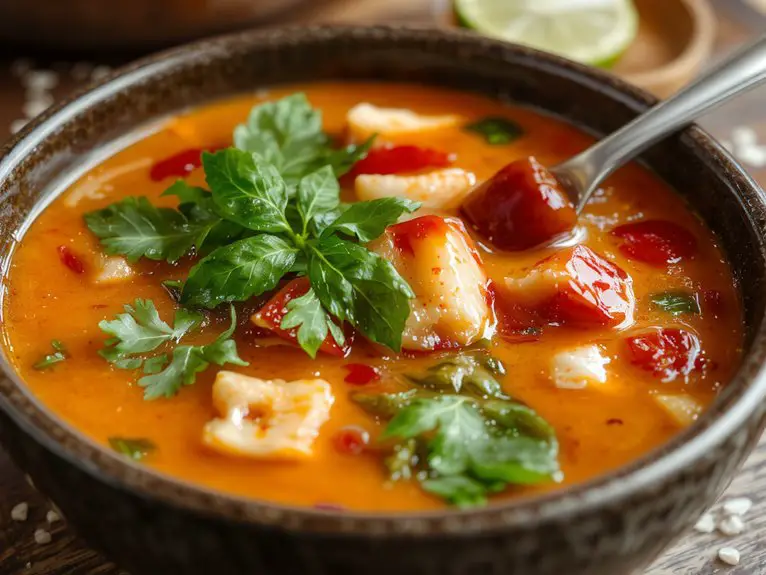
If there’s one dish that captures the essence of Thai cuisine, it’s a perfectly balanced red curry. Crafting it at home means controlling the heat, sweetness, and richness to suit your palate. The secret lies in the paste—fresh chilies, galangal, and lemongrass—simmered in creamy coconut milk. But there’s a twist that elevates it beyond the ordinary, and you’ll want to discover how to make it unforgettable.
Recipe
If there’s one dish that can transport your taste buds straight to the vibrant streets of Thailand, it’s this homemade Thai red curry. I’ve made this recipe countless times, and it never fails to impress—quick, flavorful, and packed with layers of aromatic spices, it’s a guaranteed crowd-pleaser.
The secret? A homemade curry paste that’s bursting with fresh ingredients like lemongrass, kaffir lime leaves, and fiery red chilies. Forget the store-bought stuff; this version is bold, fragrant, and just the right balance of sweet, spicy, and savory.
Picture tender chunks of chicken or tofu simmered in a creamy coconut broth, infused with hints of garlic, ginger, and cilantro, and finished with a squeeze of lime for that bright, tangy kick. Trust me, once you try this, you’ll never go back to takeout.
And don’t worry—it’s easier to make than you think, even if you’re a curry newbie. Ready to make your kitchen smell like a Thai street food stall? Let’s jump right in.
Ingredients
To nail an authentic Thai red curry, the right ingredients make all the difference. Freshness is key—skip the dried-out herbs or stale spices, and your curry will sing with vibrant flavors. Here’s what you’ll need, with insider tricks to level up your dish:
For the Curry Paste (or Store-Bought Shortcut):
- Red chili peppers (fresh or dried): The backbone of heat. For a milder curry, remove seeds.
- Lemongrass (fresh): *Non-negotiable*. The white part only—pound it first to release its citrusy oils.
- Galangal (or ginger in a pinch): Galangal’s peppery bite is ideal, but ginger works if you’re in a bind.
- Kaffir lime leaves (fresh or frozen): *Chef’s secret*: Tear them to release their aroma before adding.
- Shallots & garlic: Fresh only—powdered versions will taste flat.
- Coriander roots (or stems): The roots pack more punch, but stems add freshness if you can’t find them.
For the Curry:
- Coconut milk (full-fat): *Don’t skimp*—cheap brands can split or taste watery.
- Protein (chicken, shrimp, or tofu): Slice thinly for quick cooking.
- Fish sauce (or soy sauce for vegetarian): Adds umami depth. Tip: Add a splash at the end for maximum flavor.
- Palm sugar (or brown sugar): Balances heat. Grate it for easier dissolving.
- Thai basil (or Italian basil in a pinch): Thai basil’s anise notes are irreplaceable, but Italian basil adds freshness.
Little Wins:
- Bamboo shoots or eggplant: For texture. Parboil eggplant first to avoid bitterness.
- Red bell pepper: Adds sweetness and color—toss in late to keep it crisp.
- Fresh lime wedges: A squeeze at the end brightens the whole dish.
Pro tip: If using store-bought paste, fry it in coconut cream (the thick layer from the top of the can) first to wake up the flavors.
How to Make the Best Authentic Thai Red Curry

Add the vegetables – Toss in your chopped vegetables (like bell peppers, bamboo shoots, or eggplant). Simmer until they’re tender but still vibrant. This keeps the veggies fresh and crisp.
Season with fish sauce and sugar – Stir in the fish sauce and a pinch of sugar to balance the flavors. Taste and adjust as needed—this is your chance to tweak the saltiness and sweetness to your preference.
Incorporate the basil leaves – Tear the basil leaves and add them at the end for a fresh, aromatic finish.
Avoid overcooking the basil to maintain its vibrant flavor.
Serve immediately – Ladle the curry over steamed jasmine rice or noodles. The curry is best enjoyed fresh while the flavors are at their peak.
Nutrition
This homemade Thai red curry is packed with flavor and nutrients. Here’s the nutritional breakdown per serving:
| Nutrient | Amount per Serving |
|---|---|
| Calories | 350 kcal |
| Protein | 18 g |
| Carbohydrates | 25 g |
| Fat | 20 g |
| Fiber | 4 g |
| Sugar | 6 g |
| Sodium | 800 mg |
Chef Tips
Though making Thai red curry at home might seem intimidating, a few simple tricks can elevate your dish. Always toast your curry paste in oil first—it deepens the flavor. Use full-fat coconut milk for richness, and balance sweetness with palm sugar or honey.
Add veggies in stages so they don’t overcook. Finish with fresh herbs and lime juice for brightness. Taste and adjust seasoning as you go.