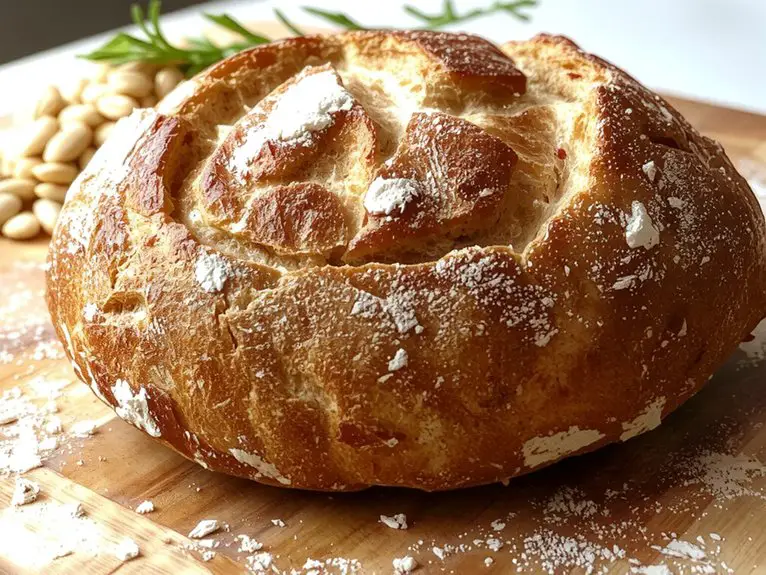
I’ve spent years perfecting my sourdough technique, and I’ve found that the secret lies in the balance of patience and precision. From selecting the right flour to mastering the fermentation process, each step plays a role in achieving that signature tang and chewy crust. If you’re curious about how small adjustments can transform a simple loaf into something extraordinary, you’ll want to explore this recipe further.
Recipe
There’s something magical about pulling a golden, crackly-crusted sourdough loaf from your own oven—the kind with an open, airy crumb and that tangy depth of flavor you just can’t get from store-bought. This recipe? It’s the real deal.
No fancy equipment, no fussy steps—just flour, water, salt, and a bubbly, active starter doing the heavy lifting. I’ve tweaked this method over years of weekend baking (and plenty of “learning loaves”), and it’s foolproof.
Imagine slicing into that first warm piece: crisp crust giving way to a chewy, slightly sour interior, perfect for slathering with butter or dunking into soup. Trust me, once you taste homemade sourdough, there’s no going back.
Ingredients
Creating the perfect sourdough starts with the right ingredients. Sourdough is all about simplicity, but each component plays a vital role in achieving that signature tangy flavor and chewy texture. Let’s break it down:
- Active sourdough starter: This is the heart of the recipe—wild yeast and bacteria create the rise and flavor. If your starter isn’t bubbly and active, your bread won’t rise properly. Feed it at least 4-6 hours before baking.
- Bread flour: High protein content (12-14%) is key for structure and chew. All-purpose flour can work in a pinch, but bread flour gives that classic sourdough texture.
- Whole wheat flour (optional): Adds depth of flavor and a slightly nutty taste. Swap out 10-20% of the bread flour for whole wheat if you’re feeling adventurous.
- Water: Use filtered or bottled water if your tap water is heavily chlorinated, as chlorine can inhibit fermentation.
- Salt: Essential for flavor and to control yeast activity. Fine sea salt dissolves evenly, but kosher salt works too.
Pro tip: Use a kitchen scale to measure ingredients by weight—it’s more accurate than cups and guarantees consistent results.
Non-negotiable: Never skip the sourdough starter—it’s what makes sourdough, well, sourdough!
Little win: Add a tablespoon of honey to the dough for a subtle sweetness that balances the tang.
How to Make the Best Authentic Sourdough Recipe Title
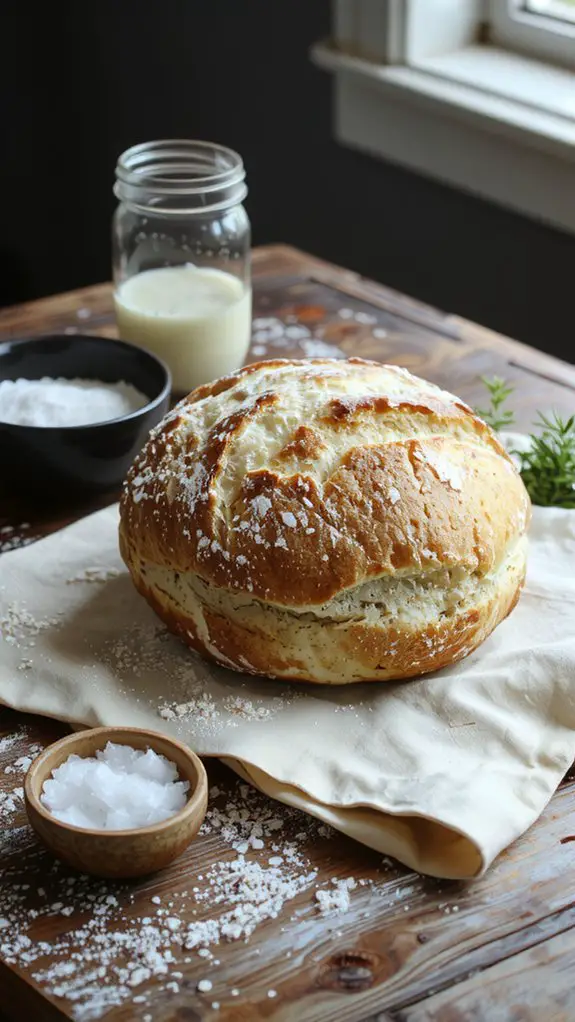
- Prepare your sourdough starter: Guarantee your starter is active and bubbly before starting. Feed it a few hours before you plan to mix the dough. A lively starter guarantees good rise and flavor.
- Mix the dough: Combine flour, water, and a portion of your active starter in a large bowl. Mix until no dry spots remain.
Let it rest for 30 minutes to hydrate the flour fully. This step, called autolyse, improves texture and elasticity.
- Add salt: Sprinkle salt over the dough and gently incorporate it by folding the dough a few times. Salt not only enhances flavor but also strengthens the gluten structure.
- Bulk fermentation: Let the dough rise at room temperature for 4-6 hours, folding it every 30 minutes to an hour. This builds structure and distributes the yeast evenly.
- Shape the dough: After bulk fermentation, gently shape the dough into a round or oval loaf. Use a bench scraper to help handle the sticky dough. Proper shaping guarantees an even rise.
- Proof the dough: Place the shaped dough in a floured proofing basket or bowl, seam side up. Cover and let it proof at room temperature for 1-2 hours or in the fridge overnight. Overnight proofing develops deeper flavor.
- Preheat your oven: Place a Dutch oven or baking stone in the oven and preheat to 450°F (232°C) for at least 30 minutes. A hot oven guarantees a good crust.
- Score and bake: Carefully transfer the dough to the preheated Dutch oven or baking stone. Score the top with a sharp knife or razor blade to control expansion.
Bake covered for 20 minutes, then uncovered for 20-25 minutes until deeply golden.
– Cool completely: Let the bread cool on a wire rack for at least an hour before slicing. Cutting too early can result in a gummy texture.
Pro Tips:
- Use a kitchen scale for accurate measurements—it’s a game-changer for consistency.
- If the dough feels too sticky, wet your hands slightly to handle it more easily.
- For a crispier crust, spritz the dough with water before baking.
Watch-Out Warnings:
- Avoid overhandling the dough during shaping—it can deflate the air bubbles.
- Don’t skip the cooling step, no matter how tempting it’s to slice into your fresh loaf!
Flexibility:
- If you don’t have a Dutch oven, use a baking sheet with steam (place a pan of water in the oven).
- Adjust fermentation times based on room temperature—warmer environments speed up the process.
Nutrition
Sourdough bread is a nutritious option for those looking for a wholesome, naturally fermented alternative to regular bread. It offers a range of vitamins, minerals, and beneficial bacteria.
| Nutrient | Amount per slice (64g) |
|---|---|
| Calories | 188 |
| Total Fat | 1.1 g |
| Saturated Fat | 0.2 g |
| Sodium | 391 mg |
| Total Carbohydrate | 36 g |
| Dietary Fiber | 1.6 g |
| Sugars | 0.4 g |
| Protein | 7 g |
Chef Tips
Why does sourdough taste so incredible? It’s the fermentation process and natural yeast.
I always recommend using a strong, active starter to guarantee a good rise.
Don’t rush the proofing—let the dough develop flavor slowly.
A Dutch oven traps steam, giving that perfect crust.
Scoring the loaf helps it expand evenly.
Finally, trust your instincts; sourdough is as much about feel as it’s about precision.