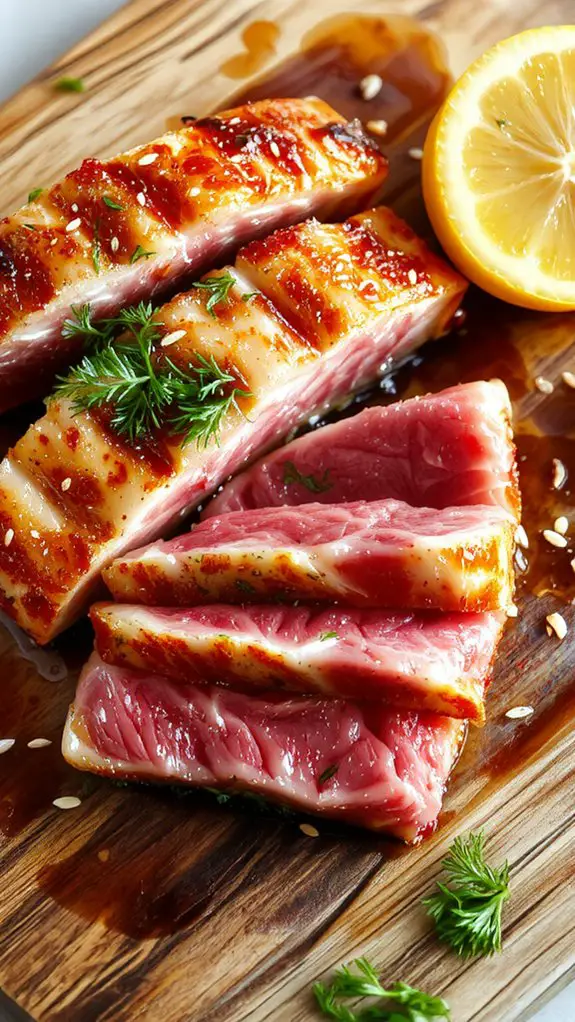
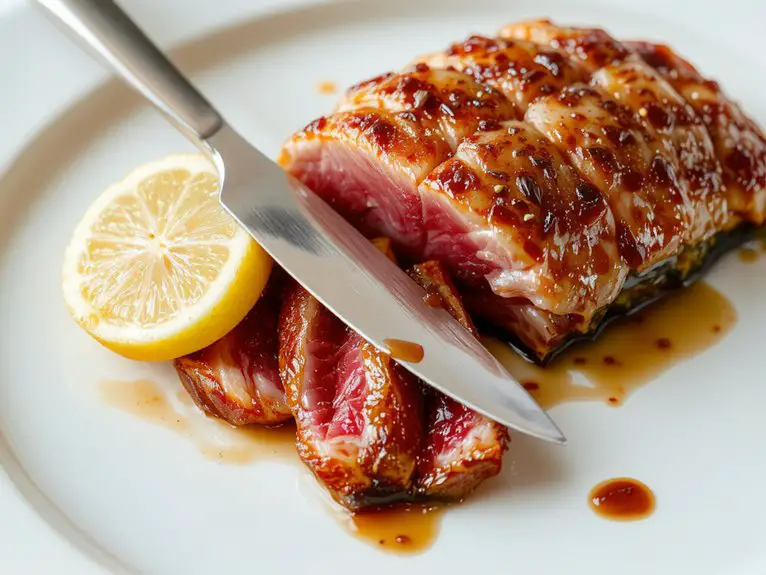
I’ve spent years perfecting my tuna steak recipe, and I’m convinced it’s the best way to enjoy this lean, flavorful fish at home. The key lies in a simple marinade and a hot sear that locks in moisture while creating a crisp crust. But there’s one technique I use that most home cooks overlook—something that elevates the dish from good to unforgettable. Let’s get into the details.
Recipe
This tuna steak recipe is a game-changer—perfectly seared, tender, and bursting with flavor every single time. Here’s what makes it stand out: a simple marinade of soy sauce, garlic, and a splash of citrus that transforms the tuna into something truly special.
I’ve been making this for years, and it never fails to impress, whether it’s a quick weeknight dinner or a fancy weekend feast. Envision this: a golden, slightly crispy crust giving way to a buttery, melt-in-your-mouth center, all enhanced by a zesty, umami-packed sauce.
Trust me, once you try this, it’ll become your go-to method for cooking tuna. Plus, it’s so easy you’ll wonder why you haven’t been making it all along. Let’s get started!
Ingredients
To create the perfect tuna steak at home, sourcing high-quality ingredients is key. Fresh tuna is non-negotiable—its firm texture and rich flavor are the foundation of this dish.
Don’t skimp on the seasonings either; they elevate the tuna without overpowering its natural taste. Here’s what you’ll need:
- Fresh tuna steaks (1-inch thick) – Opt for sushi-grade if possible; it’s safe to sear rare and delivers the best flavor and texture.
- Olive oil (extra virgin) – A high-quality oil guarantees a crispy crust and adds depth.
- Soy sauce – This adds umami and a subtle saltiness; low-sodium works if you’re watching salt intake.
- Garlic (minced) – Fresh garlic is a must for its bold, aromatic kick.
- Ginger (grated) – Adds a zesty warmth; swap with garlic ginger paste if fresh isn’t available.
- Sesame oil – Just a drizzle enhances the dish with a nutty aroma.
- Sesame seeds – Toasted seeds add crunch and visual appeal.
- Salt and freshly ground black pepper – Simple but essential for seasoning.
- Green onions (optional) – For a fresh, vibrant garnish.
Pro Tip: Toast the sesame seeds lightly before using—they release an incredible aroma and intensify the flavor.
If sesame oil is too strong for your taste, substitute with more olive oil, but don’t skip the soy sauce—it’s the secret to that savory depth.
How to Make the Best Perfect Seared Tuna Steak
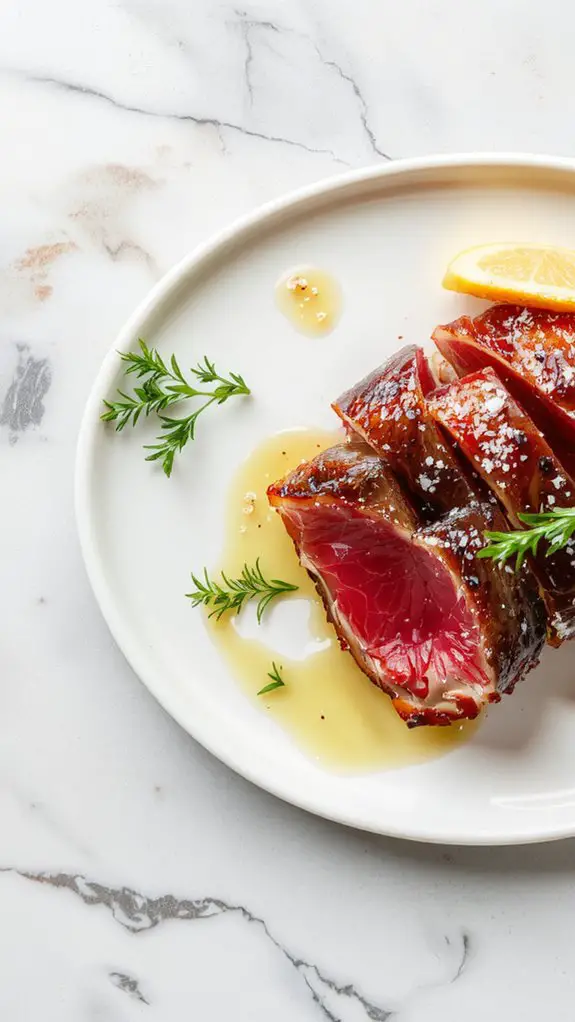
6. Check for doneness by pressing the center—it should feel firm but still slightly soft. Overcooking will dry out the tuna.
7. Rest for 2-3 minutes before slicing to let the juices redistribute. Cutting too soon can cause them to leak out.
8. Slice against the grain for tender bites. Use a sharp knife to avoid tearing the delicate flesh.
9. Serve immediately with a squeeze of lemon or a drizzle of soy-ginger glaze for brightness.
Pro Tips:
- For sushi-grade tuna, sear just the edges and leave the center raw for a contrast in texture.
- If using frozen tuna, thaw completely in the fridge overnight to prevent excess moisture.
- Let the skillet reheat between batches if cooking multiple steaks to maintain high heat.
Watch Out:
- Don’t overcrowd the pan—this lowers the temperature and leads to uneven cooking.
- Avoid flipping more than once; constant movement prevents a proper crust from forming.
Nutrition
Homemade tuna steak is a nutritious and protein-packed dish. Here is the nutritional breakdown per serving:
| Nutrient | Amount |
|---|---|
| Calories | 220 kcal |
| Protein | 38 g |
| Fat | 5 g |
| Carbohydrates | 0 g |
| Sodium | 60 mg |
Chef Tips
Getting the best results from your tuna steak starts with a few simple techniques. I always pat the fish dry before seasoning—it helps the crust form.
Sear it hot and fast, just 1-2 minutes per side for rare. Let it rest 5 minutes before slicing against the grain.
A squeeze of lemon brightens the flavor. Don’t overcook it—tuna’s best when it’s still pink inside.