The Best Homemade Okonomiyaki Recipe
Perfect your okonomiyaki skills with this homemade recipe that promises a crispy edge and endless customization options—discover the secret to mastering this classic dish.
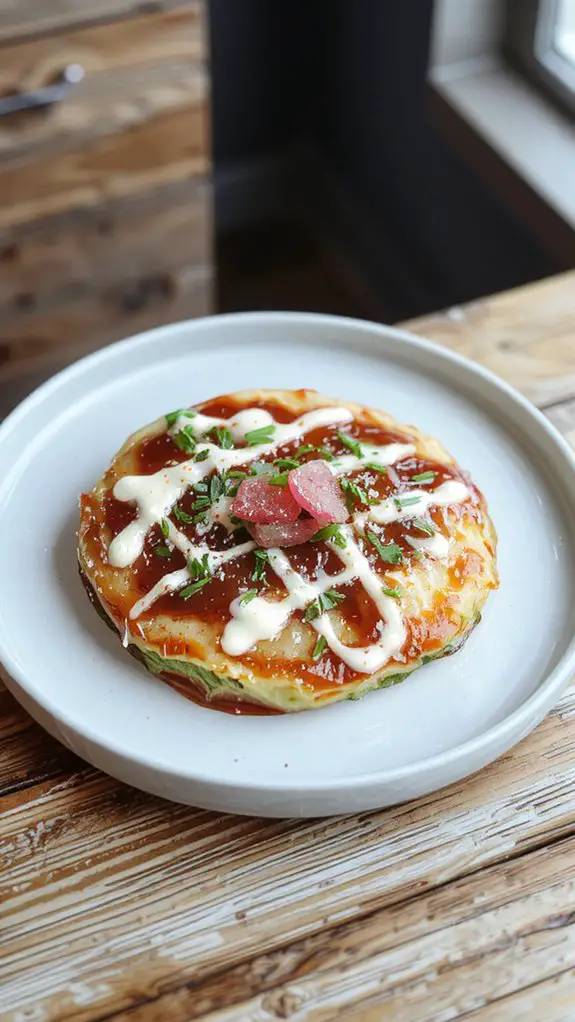
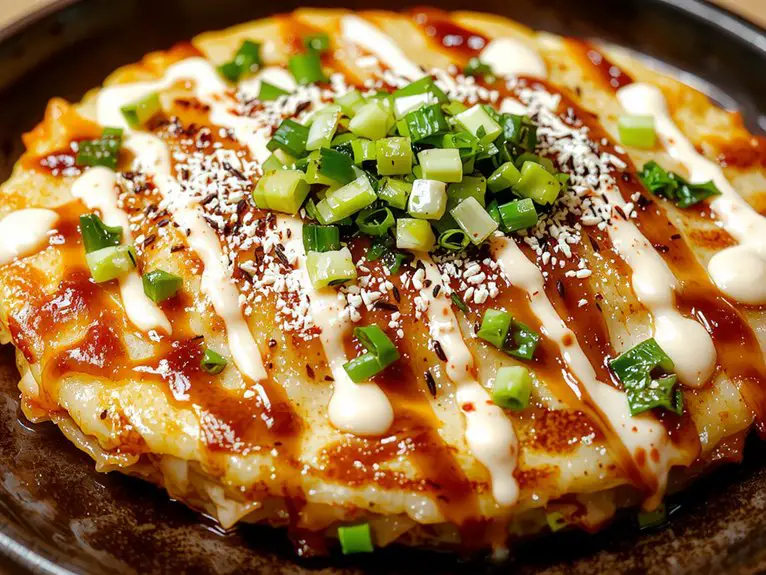
I’ve spent years perfecting a homemade okonomiyaki recipe that balances texture, flavor, and simplicity. The key lies in the batter—light yet savory—and the toppings that elevate it to umami perfection. What makes this version stand out is its adaptability, allowing you to customize ingredients without losing the essence of the dish. There’s a trick to achieving that crispy exterior, but I’ll let you discover that as you explore further.
Recipe
If there’s one dish that’s guaranteed to bring the comfort of Japanese street food into your kitchen, it’s okonomiyaki. This savory pancake is a flavor-packed masterpiece, crispy on the outside, tender and fluffy on the inside, and loaded with your favorite toppings.
What makes this recipe unbeatable? The secret lies in the umami-rich okonomi sauce and the perfectly balanced batter that hugs every bite of cabbage, protein, and veggies. Whether you’re a first-timer or a seasoned cook, this dish is forgiving, fun, and endlessly customizable—no stress, just deliciousness.
Trust me, once you taste that golden, savory-sweet stack, you’ll wonder why you didn’t make it sooner. Let’s turn your kitchen into a Japanese izakaya and get flipping!
Ingredients
For the perfect okonomiyaki, the balance of ingredients is key—it’s all about achieving that savory, fluffy, and umami-packed pancake. Freshness matters, but there’s room to improvise if you’re missing something. Here’s what you’ll need:
For the Batter:
- All-purpose flour: The base of the batter—don’t skip it. For a gluten-free option, use rice flour.
- Dashi stock: This is the secret to authentic flavor. If you don’t have dashi, a mix of water and a dash of fish sauce or soy sauce works in a pinch.
- Eggs: They add richness and help bind the batter.
- Salt: A pinch to enhance all the flavors.
For the Fillings (Choose Your Favorites):
- Cabbage: The star of the show—finely shredded for that crisp texture. Green cabbage works best, but savoy cabbage is a great alternative.
- Pork belly or bacon (optional): A must for meat lovers, but you can skip it for a vegetarian version.
- Green onions: Adds a fresh, sharp note.
- Tempura scraps (tenkasu): For extra crunch. Substitute with panko breadcrumbs if needed.
For the Toppings:
- Okonomiyaki sauce: Non-negotiable for that sweet, tangy kick. If you can’t find it, mix ketchup, Worcestershire sauce, and a touch of sugar.
- Japanese mayonnaise: Creamy and slightly tangy—don’t skip this!
- Bonito flakes (katsuobushi): They dance in the heat and add umami. Optional but highly recommended.
- Aonori (dried seaweed flakes): Adds a burst of oceanic flavor.
Little Wins:
- Sesame seeds: Sprinkle on top for extra nuttiness.
- Pickled ginger: A tangy garnish that cuts through the richness.
How to Make the Best Traditional Japanese Pancake Recipe
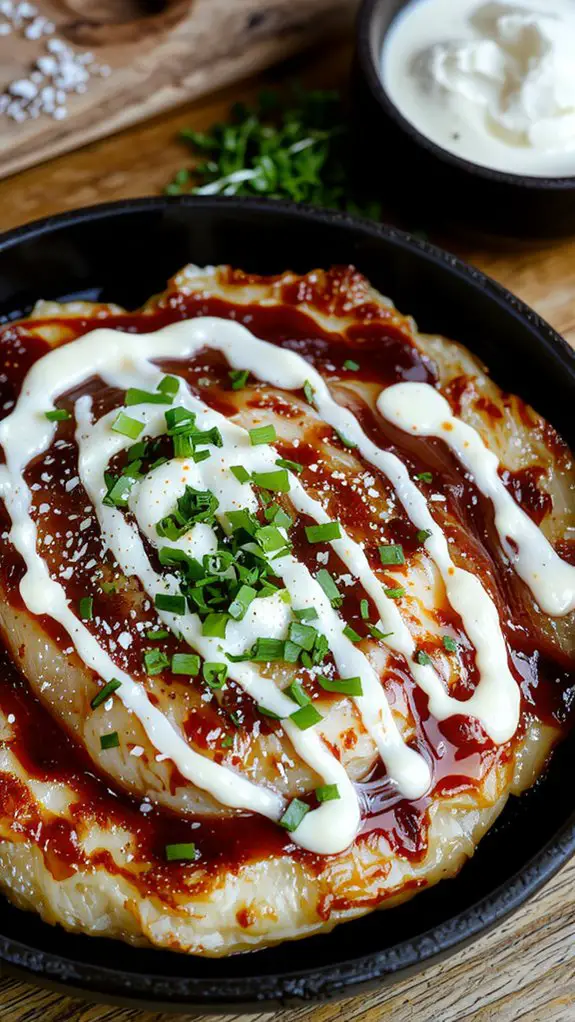
1. Prepare the cabbage: Thinly slice the cabbage into fine shreds. This guarantees it cooks evenly and integrates well into the batter.
Pro tip: Use a mandoline slicer for consistent thickness.
*Why:* Finely shredded cabbage cooks quickly and blends seamlessly into the pancake, preventing chunky, undercooked bits.
2. Mix the batter: In a large bowl, combine flour, dashi stock, eggs, and a pinch of salt. Whisk until smooth but avoid overmixing.
*Watch-out:* Overmixing can make the batter dense. Mix just until no lumps remain for a light, airy texture.
3. Combine ingredients: Add the shredded cabbage to the batter and gently fold it in. Include any additional mix-ins like green onions, tenkasu (tempura scraps), or cooked protein.
*Pro tip:* Toss mix-ins in a little flour before adding to prevent them from sinking to the bottom.
4. Heat the pan: Preheat a nonstick skillet or griddle over medium heat and lightly coat with oil.
*Visual cue:* The oil should shimmer but not smoke. An overly hot pan can burn the pancake before it cooks through.
5. Cook the pancake: Pour the batter into the pan, spreading it evenly into a round shape. Cook for 4-5 minutes until the edges set and the bottom is golden brown.
*Pro tip:* Use a spatula to gently press the pancake for even cooking.
6. Flip and cook the other side: Carefully flip the pancake using a spatula or plate. Cook for another 4-5 minutes until fully cooked and golden brown.
*Watch-out:* Flip too early, and the pancake may fall apart. Wait until the edges are firm.
7. Toppings and sauce: Transfer the pancake to a plate. Drizzle with okonomiyaki sauce, Japanese mayo, and sprinkle with bonito flakes, aonori (seaweed flakes), and pickled ginger.
*Flexibility:* Customize toppings to your preference—common additions include fried egg, extra protein, or sesame seeds.
8. Serve immediately: Enjoy the okonomiyaki while hot for the best flavor and texture.
*Pro tip:* Pair with a side of miso soup or a fresh salad for a complete meal.
Nutrition
Okonomiyaki is a nutritious dish that can be tailored to include various ingredients. Here are the nutritional values for a standard serving:
| Nutrient | Amount per serving |
|---|---|
| Calories | 350 kcal |
| Protein | 12 g |
| Carbohydrates | 30 g |
| Fat | 18 g |
| Fiber | 3 g |
| Sodium | 800 mg |
Chef Tips
Mastering okonomiyaki doesn’t have to be intimidating—it’s all about technique and timing.
I recommend prepping ingredients beforehand for smooth cooking.
Use medium heat to avoid burning while letting the batter cook through.
Flip confidently but gently—don’t rush.
Customize toppings but keep them balanced.
Finally, drizzle sauces generously without overpowering flavors.
Practice makes perfect, so don’t stress if your first attempt isn’t flawless—it’s part of the process.
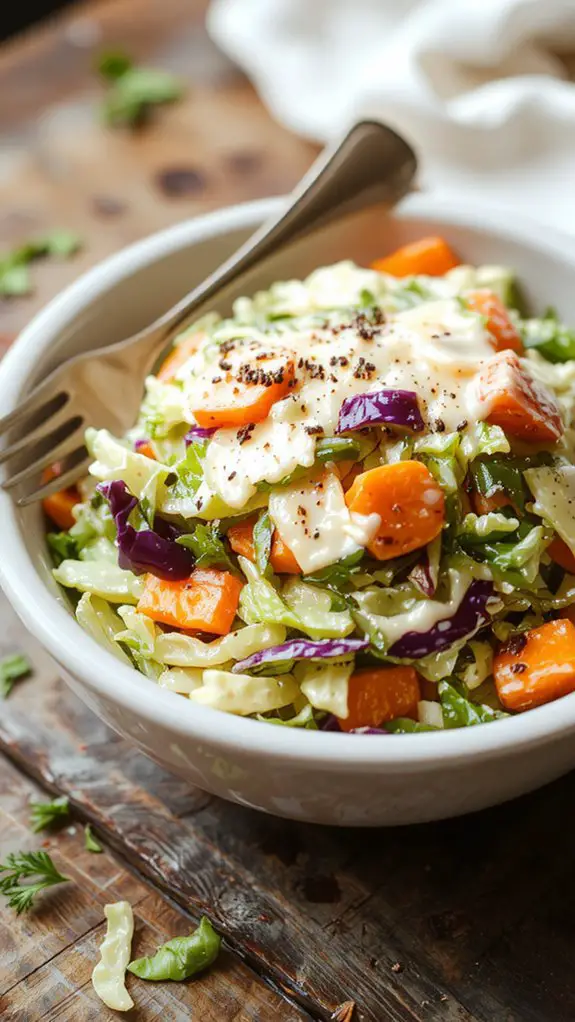
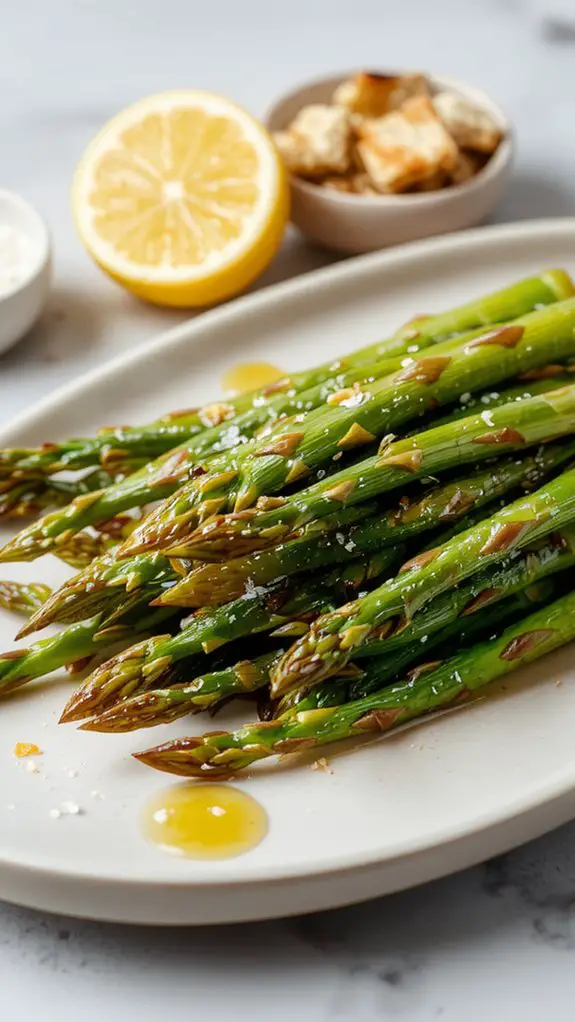
What to Serve With This Recipe

Leave a Review or Ask a Question
Your rating, tips, and questions help other home cooks. Tell us how it turned out or ask anything before you make it.