I’ve spent years perfecting my white rice recipe, and I’ve learned that small details make all the difference. The right water ratio, a proper rinse, and precise timing transform simple grains into something extraordinary. But there’s one step most home cooks overlook—it’s the secret to achieving that restaurant-quality fluffiness every time. If you’ve ever wondered why your rice turns out sticky or uneven, the answer might surprise you.
Recipe
Let me tell you, this homemade white rice recipe is the blueprint for perfect, fluffy rice every single time—no guesswork, no mush, just pure, comforting goodness.
The secret? A simple technique I’ve been using for years that guarantees each grain stays separate and tender, never sticky or overcooked.
Whether you’re pairing it with your favorite curry, stir-fry, or just enjoying it with a pat of butter, this rice is a game-changer.
It’s the kind of dish that feels both effortlessly easy and impressively satisfying, like you’ve discovered a chef-level skill in your own kitchen.
Trust me, once you nail this method, you’ll never go back to the trial-and-error approach. Ready to make the best rice of your life? Let’s do it.
Ingredients
Making perfect white rice at home is easier than you think—if you start with the right ingredients. The key is simplicity and quality.
While rice might seem like a straightforward dish, the type of rice and a couple of pantry staples can make all the difference. Here’s what you’ll need:
- Long-Grain White Rice: This is the star of the show. Long-grain rice (like Jasmine or Basmati) cooks up fluffy and separate, not sticky. Avoid short-grain rice unless you’re aiming for a stickier texture.
- Water: The ratio of water to rice is critical. Use 1¾ cups of water for every 1 cup of rice for perfectly cooked grains.
- Salt: Just a pinch enhances the rice’s natural flavor—don’t skip it.
- Optional: Butter or Oil: A teaspoon of butter or a drizzle of oil adds richness and prevents sticking. Use unsalted butter or a neutral oil like canola or vegetable.
- Optional: Garlic or Bay Leaf: For a subtle aromatic boost, add a smashed garlic clove or a bay leaf while cooking.
Pro Tip: Rinse the rice before cooking! It removes excess starch, giving you that restaurant-quality fluffiness. No time for rinsing? A splash of lemon juice or vinegar in the cooking water can help balance the starchiness.
Substitutions: If you’re out of long-grain rice, medium-grain can work, but adjust the water slightly (use 2 cups of water per 1 cup of rice). Brown rice can also be used, but it requires more water and a longer cook time.
Non-Negotiables: Long-grain rice and water are essential—everything else is customizable based on your taste preferences.
Little Wins: Garnish with chopped herbs like parsley or cilantro for a fresh pop of color and flavor. It’s a simple touch that makes your dish look and taste extra special.
How to Make the Best Perfectly Fluffy White Rice
– Bring water to a boil first, then add the rice. This guarantees even cooking from the start.
Once boiling, reduce the heat to the lowest setting and cover the pot immediately to trap the steam, which is key to fluffy rice.
– Avoid stirring the rice while it cooks. Stirring can break the grains and release starch, leading to a sticky texture.
Trust the process and let the steam do the work.
– Cook undisturbed for 18-20 minutes. Set a timer to prevent overcooking. The rice should absorb all the water and look tender but firm.
Resist the urge to peek too often, as this releases steam and disrupts the cooking process.
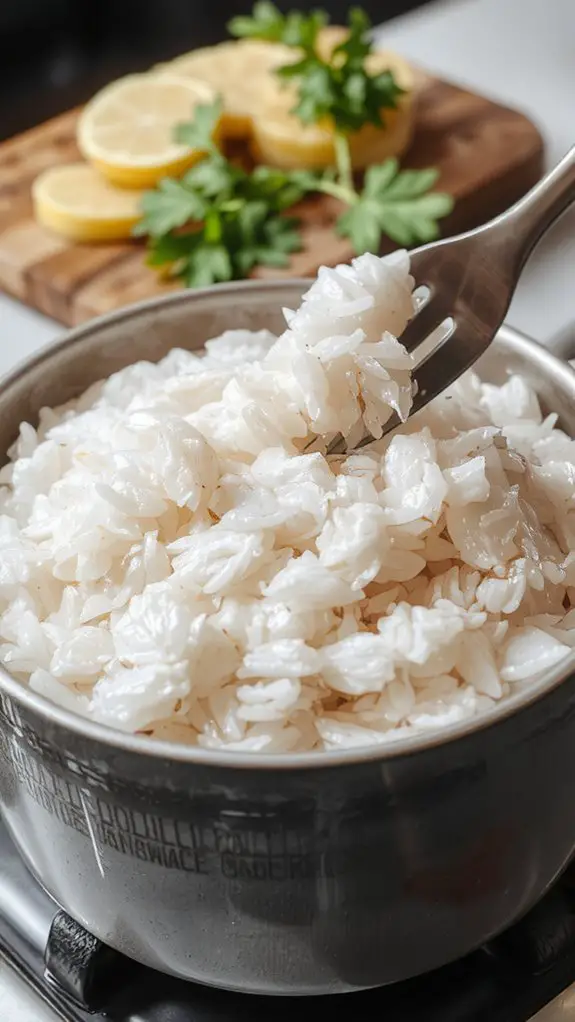
– Let the rice rest off the heat for 5-10 minutes after cooking. Fluff it gently with a fork to separate the grains.
Resting allows the rice to finish steaming and guarantees a light, fluffy texture.
– Store leftover rice properly. Transfer it to an airtight container and refrigerate within 2 hours.
Reheat with a splash of water in the microwave or on the stovetop to restore moisture.
Pro Tip: For added flavor, substitute water with chicken or vegetable broth. Add a pinch of salt or a teaspoon of butter during cooking for extra richness.
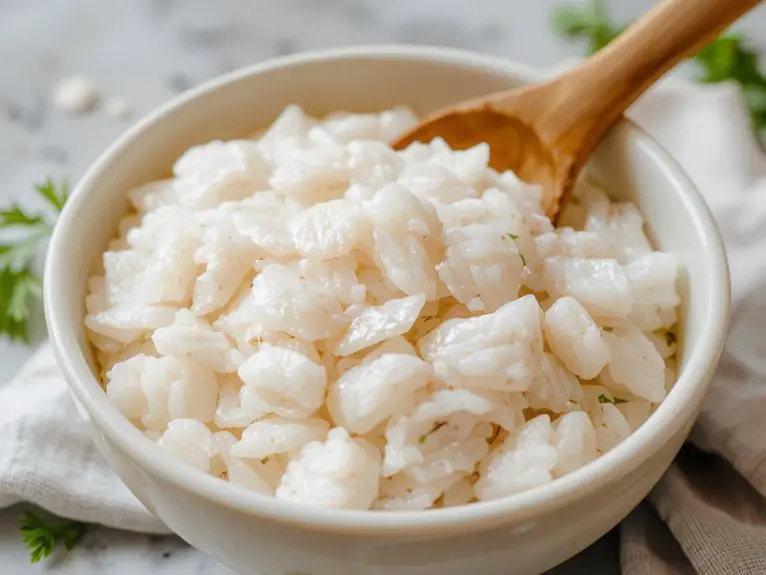
Visual Cue: Perfectly cooked rice will be tender with separate grains that hold their shape. If it’s sticking together or looks wet, it may have absorbed too much water or been overcooked.
Flexibility: This method works for most types of white rice, but adjust cooking times slightly for different varieties (e.g., basmati or jasmine rice may cook a bit faster).
Nutrition
White rice is a staple food that provides essential carbohydrates and some micronutrients. Here’s the nutritional breakdown per serving (1 cup, cooked):
| Nutrient | Amount |
|---|---|
| Calories | 205 kcal |
| Carbohydrates | 44.5 g |
| Protein | 4.2 g |
| Fat | 0.4 g |
| Fiber | 0.6 g |
| Sodium | 1.6 mg |
Chef Tips
Though white rice seems simple to prepare, a few key techniques can make all the difference in texture and flavor. I always rinse it until the water runs clear to remove excess starch.
Use a 1:1.5 rice-to-water ratio for fluffy grains. Let it steam off the heat for 10 minutes after cooking.
A pinch of salt enhances taste, and a splash of oil prevents sticking. Perfect rice every time!